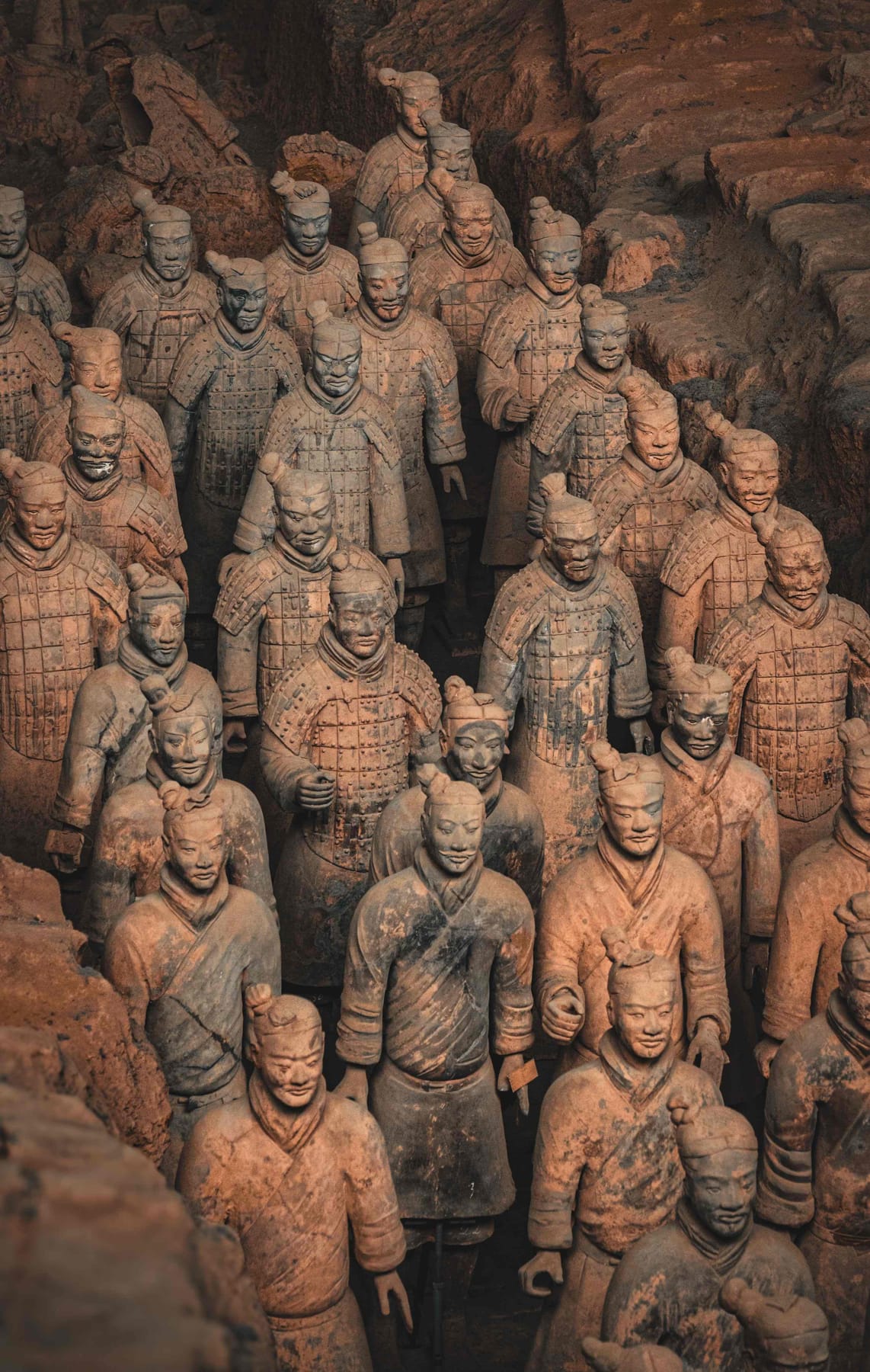
If you are planning a first trip to China and have time for three stops, Beijing, Xi'an and Chengdu are the combination most repeat travelers recommend. Each city does something the others cannot: Beijing holds the imperial monuments, Xi'an has the deep-history highlights and a walkable old quarter, and Chengdu is where you slow down — pandas, teahouses, and the spiciest food of the three. Here is how they differ in pace, weather and crowds, and how many days each deserves.
Beijing: the imperial anchor, 3 to 4 days
What it offers
Beijing concentrates the sights people picture when they think of China: the Forbidden City, the Temple of Heaven, the Summer Palace, and of course the Great Wall, which runs within day-trip distance of the city. The wall itself stretches roughly 21,000 kilometers across northern China, but visitors usually pick one restored section — Mutianyu is a favorite because it is less crowded than Badaling and has a cable car and toboggan ride down.
Pace and logistics
Beijing is big and spread out. Distances between sights are long, so group your days geographically: one day for the Forbidden City and surrounding hutongs, one for the wall, one for the Temple of Heaven and the Summer Palace. The subway works well, but a private car saves real time on the wall day. Three days is the minimum for a satisfying visit; four lets you breathe.
Weather and crowds
Spring (April–May) and autumn (September–October) are the comfortable seasons — dry, mild, and photogenic. Summer is hot with peak domestic crowds; winter is cold but quiet and often surprisingly clear. National holidays in early October and late January bring heavy travel, so plan around them.
Xi'an: the deep history, 2 days
What it offers
Xi'an was the capital of several dynasties and the eastern end of the old Silk Road. The headline sight is the Terracotta Army in Lintong, east of the city — thousands of life-size clay soldiers made around 2,200 years ago, each with a different face. Back in town, the intact Ming-era city wall is best experienced by bicycle on top of it, and the Muslim Quarter serves some of the best street food in northern China.
Pace and logistics
Two days covers it: day one for the Terracotta Army (half a day with travel) plus the city wall and Bell Tower, day two for the Big Wild Goose Pagoda and the food streets. The wall sits right in the center, so much of Xi'an is genuinely walkable — a contrast with Beijing that many visitors appreciate. Beijing to Xi'an is about 4.5 to 6 hours by high-speed train; see trains versus flights for how to choose.
Weather and crowds
Similar seasons to Beijing. Summer heat is intense in this inland basin, and the Terracotta Army is busy year-round — early morning entry helps. Winter is cold and gray but far quieter.

Chengdu: the slowdown, 2 to 3 days
What it offers
Chengdu is famous for three things: giant pandas, tea-house culture, and Sichuan food. The Chengdu Research Base of Giant Panda Breeding is best visited right at opening — pandas are most active in the cooler morning hours, and by midday most are asleep. Beyond the pandas, the city's pleasure is atmospheric: people's parks with teahouses and ear cleaners, lacquered bamboo chairs, slow afternoons. Many visitors also add the Leshan Giant Buddha, a day trip south of the city.
Pace and logistics
Chengdu runs slower, and your itinerary should too. Two days is enough for pandas plus the city itself; three lets you add Leshan or the teahouse-and-side-street wandering the city is loved for. Xi'an to Chengdu is roughly 3 to 4 hours by high-speed train through the mountains.
Weather and crowds
Sichuan is cloudier and more humid than the north. Spring and autumn are pleasant; winters are mild but gray; summers are hot and sticky. The panda base is crowded at all times of year, so timing matters more than season.

Putting the three together
The natural order is Beijing (fly in) → Xi'an → Chengdu, running roughly 7 to 10 days total including transfer days. That gives each city its due without sprinting: 3–4 days in Beijing, 2 in Xi'an, 2–3 in Chengdu, plus travel time. From Chengdu you can fly home directly or continue south toward Guilin and Yangshuo — see Guilin and Yangshuo for that extension — or loop back east to Shanghai, as in the 10-day classic route.
If you hold one of the 57 nationalities covered by China's 30-day visa-free entry policy (as of 2026), a three-city trip fits comfortably inside that window; the 240-hour transit visa-free option can also work for shorter plans. Check the details on official channels before booking, since policies are adjusted from time to time — our visa guide walks through the options.

How HXXC Travel helps
HXXC Travel specializes in private, customized itineraries, and the Beijing–Xi'an–Chengdu triangle is one of our most requested first-trip shapes. We handle the high-speed rail tickets, book early-morning panda and Terracotta Army entries, and adjust the pace for your travel style — more wall, more teahouses, or more food streets, your call.
Ready-made examples include the Golden Triangle — Beijing, Xi'an & Shanghai (10 days, from $1,000), which swaps Chengdu for Shanghai, and Chengdu Pandas & Chongqing Cyberpunk (5 days, from $500), which pairs Chengdu with Chongqing's neon river city. Both can be customized into your own three-city route.
Tell us your dates and interests through our contact page and our Guangdong-based team will reply within one working day with a first draft. Plan my China trip — three cities, paced properly.
Related private tours
- Best Of China — 20-Day Private Tour — 20 days
- Grand China Explorer — 15 Days — 15 days · From US$1,500
- Best Tour In China - 19 Days Trip — 19 days · From US$2,896