
An 8-day Lhasa-Gyantse-Shigatse loop is the most efficient way to see central Tibet's major cultural sites without rushing. This route covers the Potala Palace, Jokhang Temple, Sera and Drepung Monasteries, Yamdrok Lake, the Gyantse Kumbum, and Tashilhunpo Monastery — the traditional seat of the Panchen Lama.
Day 1: Arrive in Lhasa and Acclimatize
Fly into Lhasa Gonggar Airport (LXA), located about 65 km south of the city. Most travelers arrive via Chengdu, Beijing, or Xi'an. At 3,650 meters elevation, your first day should involve nothing more strenuous than walking to a restaurant and drinking water. Hotels in Lhasa are required to report foreign guests to local police, so your guide or hotel staff will handle registration on arrival.
Spend the evening around the Barkhor area if you feel well enough, but avoid climbing stairs or exerting yourself. Symptoms of altitude sickness — headache, nausea, shortness of breath — typically appear 6-12 hours after arrival.
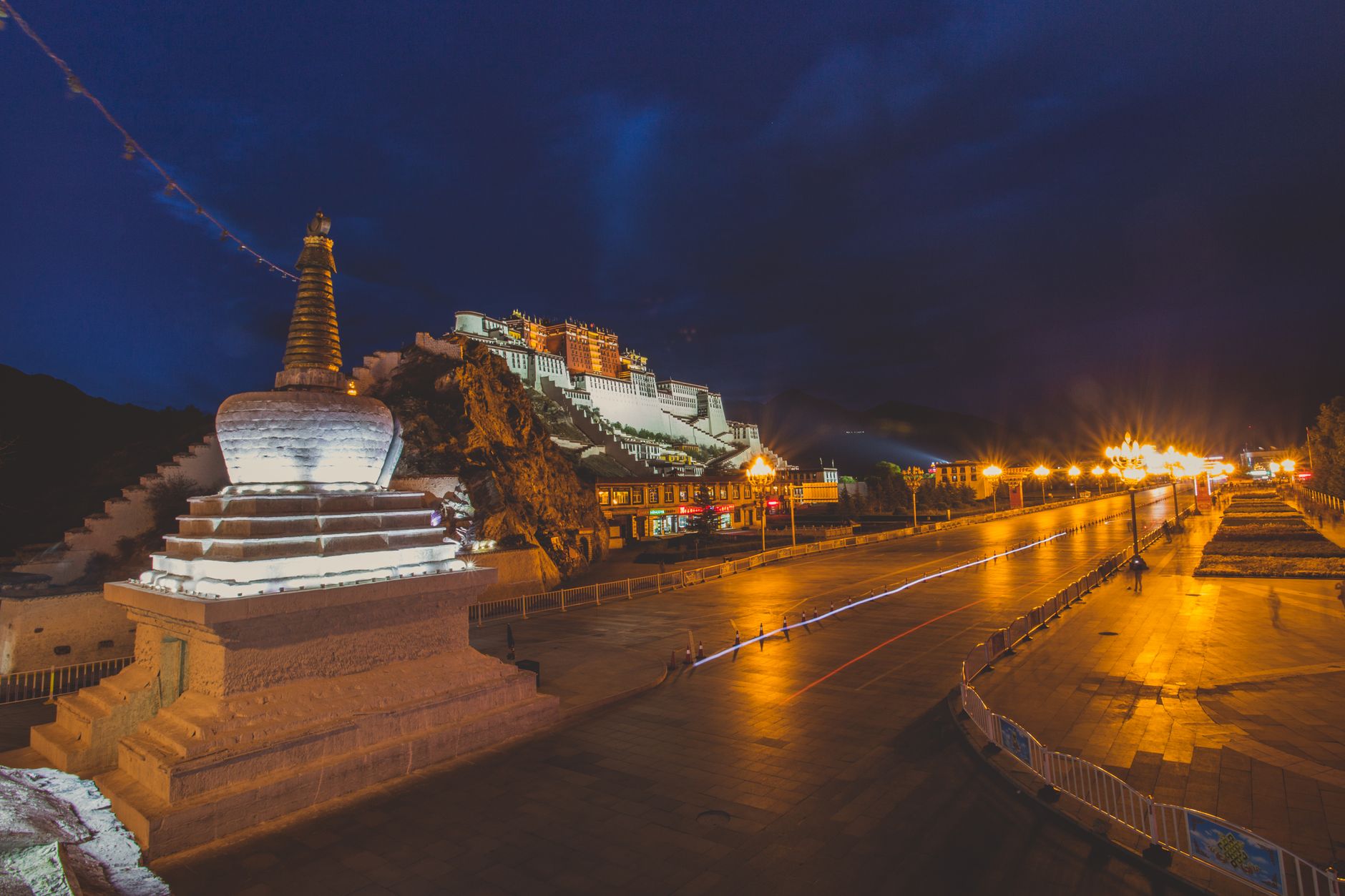
Day 2: Potala Palace and Jokhang Temple
The Potala Palace is Lhasa's defining landmark and the former winter residence of the Dalai Lama. Visits are currently limited to one hour inside the palace, and you must be accompanied by a licensed guide. As of November 2026, tickets cost approximately 200 RMB per person during peak season (May to October) and 100 RMB in winter. Advance booking through your tour operator is essential — same-day tickets are rarely available.
In the afternoon, visit Jokhang Temple, the spiritual center of Tibetan Buddhism. Pilgrims from across the Tibetan plateau travel here to prostrate at the Jokhang's entrance. The temple houses the Jowo Shakyamuni, a statue believed to have been blessed by the Buddha himself. Entry is typically around 85 RMB.

After Jokhang Temple, walk the Barkhor Circuit — a pilgrim path encircling the temple, roughly 800 meters around. This is the best place to observe Tibetan devotional practice and browse stalls selling prayer beads, turquoise, and incense.
Day 3: Sera and Drepung Monasteries
Drepung Monastery, about 8 km west of Lhasa, was once the largest monastery in the world, housing up to 7,000 monks at its peak. The Ganden Podrang inside Drepung served as the Dalai Lama's residence before the Potala was built. Entry is typically around 50 RMB.
In the afternoon, head to Sera Monastery, 5 km north of central Lhasa. Sera is famous for its monk debates, held in the courtyard every afternoon except Sundays. The debates are physical — monks clap, stomp, and gesture emphatically — and are a core part of Gelugpa monastic education. Entry is typically around 50 RMB.
Day 4: Lhasa to Gyantse via Yamdrok Lake
Leave Lhasa early and drive west on the G318 Friendship Highway. The road climbs over the Kamba La pass (4,794 m), where you get your first view of Yamdrok Lake — one of Tibet's three holy lakes. The turquoise water against snow-capped mountains is the most photographed landscape in central Tibet.
Continue west to Gyantse, a drive of roughly 260 km from Lhasa, typically taking 6 to 7 hours including stops. The road descends from the plateau through the Nangartse area.
Day 5: Gyantse Kumbum and Pelkor Chode Monastery
Gyantse's main attraction is the Pelkor Chode Monastery complex, dominated by the Gyantse Kumbum — a 32-meter-tall stupa with 108 chapels stacked across its multiple tiers. The Kumbum is architecturally unique in Tibet; each chapel contains different murals and statues, and you can climb the interior levels. Entry to the Pelkor Chode complex is typically around 60 RMB.
Gyantse itself is a small town of about 20,000 people and retains more of its traditional character than Lhasa or Shigatse. The old town has Tibetan-style houses and a fort (Gyantse Dzong) on the hill above, though the fort requires a steep climb.
In the afternoon, drive about 90 km to Shigatse, Tibet's second-largest city and the seat of the Panchen Lama.
Day 6: Tashilhunpo Monastery in Shigatse
Tashilhunpo Monastery is the traditional seat of the Panchen Lama and one of the six great Gelugpa monasteries. Founded in 1447, it houses over 800 monks and contains a 26-meter-tall statue of Maitreya (the future Buddha), covered in 279 kg of gold. Entry is typically around 55 RMB.

Plan to spend 3 to 4 hours at Tashilhunpo. The monastery complex covers 300,000 square meters and includes the Maitreya Chapel, the Panchen Lama's stupas, and assembly halls. Walk the pilgrim kora (circuit) around the monastery wall for views over Shigatse and the surrounding valley.
Day 7: Shigatse Back to Lhasa
The return drive from Shigatse to Lhasa follows the Yarlung Tsangpo (Brahmaputra) River valley. It is roughly 280 km and takes about 5 to 6 hours. You can take the same G318 route or, depending on road conditions, the Lhasa-Shigatse Expressway, which has reduced travel time in recent years.
Use the afternoon in Lhasa for any sites you missed — the Tibet Museum, Norbulingka (the Dalai Lama's summer palace, entry around 60 RMB), or a second walk around Barkhor.
Day 8: Depart Lhasa
Most international flights depart Lhasa in the morning or early afternoon. Your guide will arrange airport transfer. If you have time before your flight, a final walk through Lhasa's old town or a cup of Tibetan butter tea at a local teahouse is a quiet way to end the trip.
Tibet Travel Permit Requirements
As of November 2026, foreign travelers cannot enter the Tibet Autonomous Region independently. You must have:
- A valid Chinese visa (L visa for tourism is most common)
- A Tibet Travel Permit (TTP), issued by the Tibet Tourism Bureau
- A licensed tour guide and organized itinerary for your entire stay
- A vehicle and driver arranged through a registered travel agency
HXXC Travel can arrange the TTP and full ground arrangements. The TTP application typically requires your passport copy and Chinese visa scan submitted 20 to 30 days before travel. Re-check current permit processing times before booking your flights, as policies can change without notice.
Travelers from certain countries may face additional restrictions or longer processing times. Check with your tour operator for the latest status.
Altitude and Health
Lhasa sits at 3,650 meters. Shigatse is at 3,840 meters. The Kamba La pass on the Lhasa-Gyantse road reaches 4,794 meters. Altitude sickness affects most first-time visitors to some degree.
- Drink 3 to 4 liters of water daily for the first 3 days
- Avoid alcohol for the first 48 hours
- Consider consulting your doctor about acetazolamide (Diamox) before travel
- Descend immediately if symptoms worsen — severe headache, vomiting, confusion
Travel insurance that covers high-altitude evacuation is strongly recommended. Standard travel insurance often excludes altitudes above 3,000 meters, so read the fine print.
Getting to Lhasa
The most common entry points by air:
- Chengdu to Lhasa: about 2 hours, multiple daily departures
- Beijing to Lhasa: approximately 4.5 hours with a stopover
- Xi'an to Lhasa: approximately 3 hours
- Kathmandu to Lhasa: about 1.5 hours (requires a group visa if entering China from Nepal)
The Qinghai-Tibet Railway (Xining to Lhasa) is an alternative — a 22-hour train journey that allows gradual altitude acclimatization. Tickets sell out quickly in summer, so book through your tour operator well in advance.
Best Time to Visit
- April to October: best weather and clearest skies. July and August are peak season with the most rain, though Tibet is relatively dry overall.
- November to March: fewer tourists and lower prices, but cold. Some high passes may close due to snow.
- February: avoid if possible — Tibetan New Year (Losar) brings closures and heavy domestic travel.
As of November 2026, the Potala Palace enforces a daily visitor cap. Summer months sell out weeks ahead. Book through HXXC Travel or your operator well in advance.
FAQ
Do I need a special permit to visit Tibet?
Yes. As of November 2026, all foreign passport holders need a Tibet Travel Permit in addition to a Chinese visa. You must travel with a licensed guide and pre-arranged itinerary for your entire stay in the Tibet Autonomous Region. Independent travel is not permitted. Re-check the latest rules before booking.
Can I take the train to Tibet instead of flying?
Yes. The Qinghai-Tibet Railway runs from Xining to Lhasa, a journey of about 22 hours. Some travelers prefer the train because the gradual ascent helps with altitude acclimatization. You still need a Tibet Travel Permit, which railway staff will check before boarding. Re-check ticket availability and schedules before booking.
How bad is the altitude in Lhasa?
Lhasa is at 3,650 meters, comparable to La Paz, Bolivia. Most people experience mild symptoms — headache, breathlessness, fatigue — for the first 2 to 3 days. Serious altitude sickness is less common but possible. Build in at least one full rest day on arrival, stay hydrated, and avoid exertion for the first 48 hours.
What currency is used and can I use cards?
The Chinese yuan (RMB) is the only accepted currency. ATMs in Lhasa accept international cards at major banks like Bank of China and ICBC. Outside Lhasa, carry cash. Mobile payment (WeChat Pay, Alipay) is widespread but typically requires a Chinese bank account linked to the app.
Is this itinerary suitable for families with children?
Children can do this route, but altitude is the main concern. Children under 7 may not articulate altitude sickness symptoms clearly. The long drives (6 to 7 hours on Day 4) can be tiring. HXXC Travel can adjust the pace and add rest days for family groups.
Related private tours
- Lhasa, Nyingchi & Shigatse — 10-Day Tibet Tour — 10 days
- Beijing Icons, Avatar Peaks & Panda Trails — 8 Days — 8 days · From US$1,628
- Pandas, Peaks & Palaces — 12-Day Family Journey — 12 days