
Sichuan-Tibet Route: Chengdu to Lhasa Overland Guide
The Sichuan-Tibet Route (G318 National Highway) from Chengdu to Lhasa is a 2,150-kilometer overland journey that typically takes 10–15 days, with the best travel windows in May–June and September–October as of November 2026. All international travelers require a Chinese visa and Tibet Travel Permit for the trip.
This guide breaks down the route segment by segment, outlines current permit rules, gives safety tips for high-altitude travel, and shares 2026 pricing details for organized tours. It is reviewed by the Sichuan-Tibet tour specialists at HXXC Travel, a Jiangmen-based China inbound tour operator with 12 years of experience arranging overland Tibet trips.

Key Facts at a Glance
- Total distance: ~2,150 km (1,336 miles) via G318 National Highway (southern Sichuan-Tibet route)
- Typical duration: 10–15 days (12–14 days is most common for sightseeing and acclimatization)
- Best travel months: May–June and September–October
- Required documents for international travelers: Valid Chinese visa + Tibet Travel Permit + Alien’s Travel Permit for restricted border areas
- Highest point: Dongda Pass (5,130 m / 16,831 ft)
- Start point: Chengdu, Sichuan Province
- End point: Lhasa, Tibet Autonomous Region
- Road condition: 95% paved as of 2026, with occasional summer landslide delays and winter snow closures
Route Breakdown: Chengdu to Lhasa G318
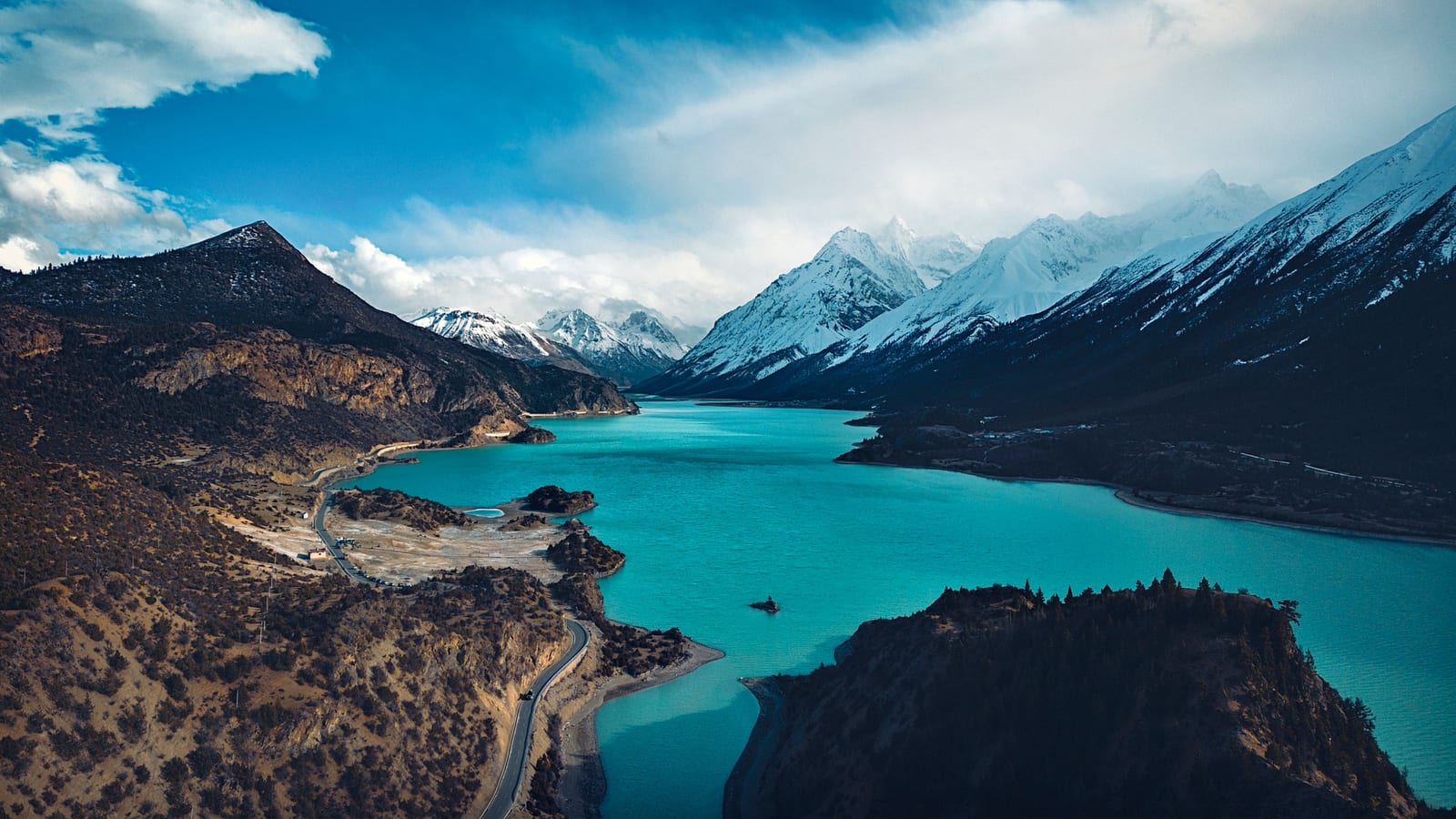
The southern Sichuan-Tibet Route (G318) is the most popular overland path between Chengdu and Lhasa, with more scenic stops and better road conditions than the northern G317 route. It crosses 14 mountain passes over 4,000 m and passes through diverse landscapes, from subtropical forests in Sichuan to alpine grasslands and glacial lakes in Tibet.
Chengdu to Batang (Sichuan Segment, ~850 km, 4–6 days)
This segment starts in Chengdu and climbs west through the Hengduan Mountains, the eastern edge of the Tibetan Plateau. Key stops include Ya’an, the historical starting point of the Tea-Horse Road; Kangding, a cultural crossroads of Han and Tibetan communities; Xinduqiao, a wide valley with Tibetan villages and grazing yaks; Litang, home to the 16th-century Litang Monastery and one of the world’s highest county seats at 4,014 m; and Batang, the final Sichuan town before the Tibet border.
Travelers can try Sichuan-Tibetan fusion dishes along this segment, such as yak meat hot pot, tsampa (roasted barley flour), and yak butter tea. Most towns have mid-range hotels and guesthouses with basic amenities.
Batang to Lhasa (Tibet Segment, ~1,300 km, 6–9 days)
After crossing the Jinsha River into the Tibet Autonomous Region, the route passes through Mangkam (Markam), the first Tibetan county on G318, known for its ancient salt wells. Further west, travelers cross Dongda Pass, the highest point on the route at 5,130 m, before descending to Ranwu Lake, a glacial lake surrounded by snow-capped peaks and forests.
The route continues through Bomi, a lush forested valley, and Linzhi (Nyingchi), a region known for its peach blossoms in late March and early April, before following the Yarlung Zangbo River valley to Lhasa. Key stops in the Tibet segment include the 15th-century Pelkor Chode Monastery in Gyantse and Yamdrok Lake, one of Tibet’s three sacred lakes, if you take a short detour south of the main route. Most travelers spend 2–3 days exploring Lhasa’s major sites, including the Potala Palace and Jokhang Temple, at the end of the journey.
Best Time to Travel the Sichuan-Tibet Route
The best time to travel the Chengdu to Lhasa Sichuan-Tibet Route is May to June and September to October.
May and June bring mild temperatures, blooming wildflowers in high-altitude meadows, and lower rainfall than summer months, reducing the risk of landslides and road closures. September and October offer clear skies, dry weather, and golden autumn foliage in lower elevations, making them ideal for mountain photography.
July and August are the peak rainy season, with frequent afternoon storms and a higher risk of landslides and mudflows in mountainous sections. This is also the busiest domestic travel period, so accommodation prices are higher and sites are more crowded.
November to April is winter, with heavy snow and ice on high mountain passes. Many guesthouses and restaurants close for the season, and road closures are common. Most tour operators do not run regular Sichuan-Tibet trips during winter months.
As of November 2026, seasonal weather patterns remain consistent with recent decades, but travelers should check local road conditions 1–2 weeks before departure, especially during summer and winter.
Required Permits and Visa Rules for International Travelers
All international travelers must hold a valid Chinese visa and a Tibet Travel Permit to enter the Tibet Autonomous Region via the Sichuan-Tibet Route, as of November 2026.
You must obtain your Chinese visa in advance from a Chinese embassy or consulate in your home country; visa-on-arrival and visa-free transit policies do not apply to travel to Tibet.
The Tibet Travel Permit is issued by the Tibet Tourism Bureau. International travelers cannot apply for this permit independently; you must book a tour with a registered travel agency authorized to arrange Tibet travel, such as HXXC Travel. The agency will handle the permit application on your behalf, typically requiring a copy of your passport and Chinese visa 2–3 months before your trip.
Some remote areas along the route, including certain valleys near the Nepal and India borders, require an additional Alien’s Travel Permit. Your tour operator can arrange this permit as part of your package if your itinerary includes restricted areas.
Always re-check permit requirements with your tour operator 2–3 months before travel, as policies can change with little notice.
How to Travel the Route: Tour Options and 2026 Pricing
International travelers cannot travel independently in the Tibet Autonomous Region, so all overland trips from Chengdu to Lhasa for non-Chinese passport holders must be arranged through a registered tour operator, as of November 2026. The Sichuan portion of the route (up to Batang) can be traveled independently, but you will need your Tibet Travel Permit to cross the border into Tibet.
Most tour packages include a private 4WD or van, an experienced local driver, a licensed Tibetan or English-speaking guide, accommodation for the duration of the trip, permit processing, and some meals.
As of 2026, typical prices for a 12-day Chengdu to Lhasa overland tour are:
- Budget group tour (10–16 people, shared dormitory or 3-star hotel accommodation): $1,200–$1,800 USD per person
- Mid-range private tour (2–4 people, 3–4 star hotel accommodation): $2,200–$3,500 USD per person
- Luxury private tour (5-star hotel accommodation, private guide, custom itinerary): $5,000+ USD per person
HXXC Travel offers both group and custom private Sichuan-Tibet Route tours, with flexible departure dates and included permit processing for all international travelers.
Altitude Sickness and Safety Tips
Altitude sickness is a common concern on the Sichuan-Tibet Route, as the route climbs above 4,000 m within the first 3 days of travel from Chengdu.
To reduce risk:
- Acclimatize gradually: Spend 1–2 days in Kangding (2,560 m) and 1 day in Litang (4,014 m) before crossing into Tibet.
- Stay hydrated, avoid alcohol and strenuous exercise for the first 48 hours at high altitude.
- Consult a doctor before travel about altitude sickness medication such as acetazolamide.
- Watch for symptoms of severe altitude sickness, including persistent headache, shortness of breath at rest, confusion, or coughing up pink foam. If these occur, descend to a lower elevation immediately and seek medical help.
For road safety:
- Travel with an experienced local driver who is familiar with mountain road conditions.
- Avoid driving at night, as many sections of the route have no streetlights and wildlife may cross the road.
- Carry snacks and water in the vehicle, as road closures can cause delays of several hours.
As of November 2026, most major towns along the route have small clinics, but serious medical emergencies require evacuation to Lhasa or Chengdu by road or air.
What to Pack
Pack these essentials for the Sichuan-Tibet Route:
- Warm, layered clothing: Temperatures can drop below freezing on high passes even in summer. Bring a down jacket, thermal underwear, and waterproof outer layers.
- Sun protection: SPF 50+ sunscreen, lip balm with SPF, UV-protective sunglasses, and a wide-brimmed hat. UV radiation is 30–50% stronger at 4,000 m than at sea level.
- Medications: Prescription drugs, altitude sickness medication, pain relievers, anti-diarrheal medicine, and bandages.
- Reusable water bottle with a built-in filter, to reduce plastic waste and ensure safe drinking water in small towns.
- Power bank: Electricity can be unreliable in remote areas, and many guesthouses have limited power outlets.
- Physical and digital copies of your passport, Chinese visa, and Tibet Travel Permit. You may be asked to show these at multiple checkpoints along the route.
FAQ
How long does it take to drive from Chengdu to Lhasa on the Sichuan-Tibet Route?
The drive from Chengdu to Lhasa via the G318 Sichuan-Tibet Route takes 10–15 days for most travelers, with 12–14 days being the most common duration to allow for sightseeing stops and altitude acclimatization. A non-stop drive (not recommended for safety and acclimatization) would take approximately 40–45 hours.
Do I need a permit to travel from Chengdu to Lhasa overland as an international traveler?
Yes. All international travelers need a valid Chinese visa and a Tibet Travel Permit to enter the Tibet Autonomous Region, as of November 2026. Some restricted border areas along the route also require an additional Alien’s Travel Permit. You cannot apply for the Tibet Travel Permit independently; it must be arranged through a registered tour operator like HXXC Travel. Always re-check permit rules before travel, as policies may change.
What is the best month to travel the Sichuan-Tibet Route?
The best months to travel the Chengdu to Lhasa Sichuan-Tibet Route are May, June, September, and October. These months offer dry weather, clear mountain views, and mild temperatures. July and August are rainy with higher landslide risk, while November to April brings heavy snow and ice on high passes.
How much does a Chengdu to Lhasa overland tour cost in 2026?
As of 2026, a standard 12-day Chengdu to Lhasa overland tour costs between $1,800 and $3,500 USD per person for a mid-range private or small-group tour. Budget group tours start around $1,200 USD per person, while luxury private tours can cost $5,000 USD or more per person. Most tours include permit processing, accommodation, transportation, a guide, and some meals.
Can I travel the Sichuan-Tibet Route independently as a foreigner?
No. International travelers cannot travel independently in the Tibet Autonomous Region, as of November 2026. You must book a tour with a registered Chinese travel agency authorized to arrange Tibet travel, and you will have a licensed guide and driver for the Tibet portion of the trip. The Sichuan segment (Chengdu to Batang) can be traveled independently, but you will need your Tibet Travel Permit to cross the border into Tibet.
Is altitude sickness dangerous on the Sichuan-Tibet Route?
Mild altitude sickness (headache, fatigue, nausea) is common and usually improves with rest and acclimatization. Severe altitude sickness (high altitude pulmonary edema or cerebral edema) is rare but can be life-threatening if left untreated. Traveling with an experienced guide, acclimatizing gradually, and descending immediately if severe symptoms occur reduces risk significantly.
Related private tours
- Lhasa, Nyingchi & Shigatse — 10-Day Tibet Tour — 10 days
- Lhasa & Zhangjiajie — 15-Day Expedition — 15 days · From US$3,378
- Tibetan Plateau to Avatar Peaks — Lhasa & Zhangjiajie Expedition — 15 days · From US$3,378