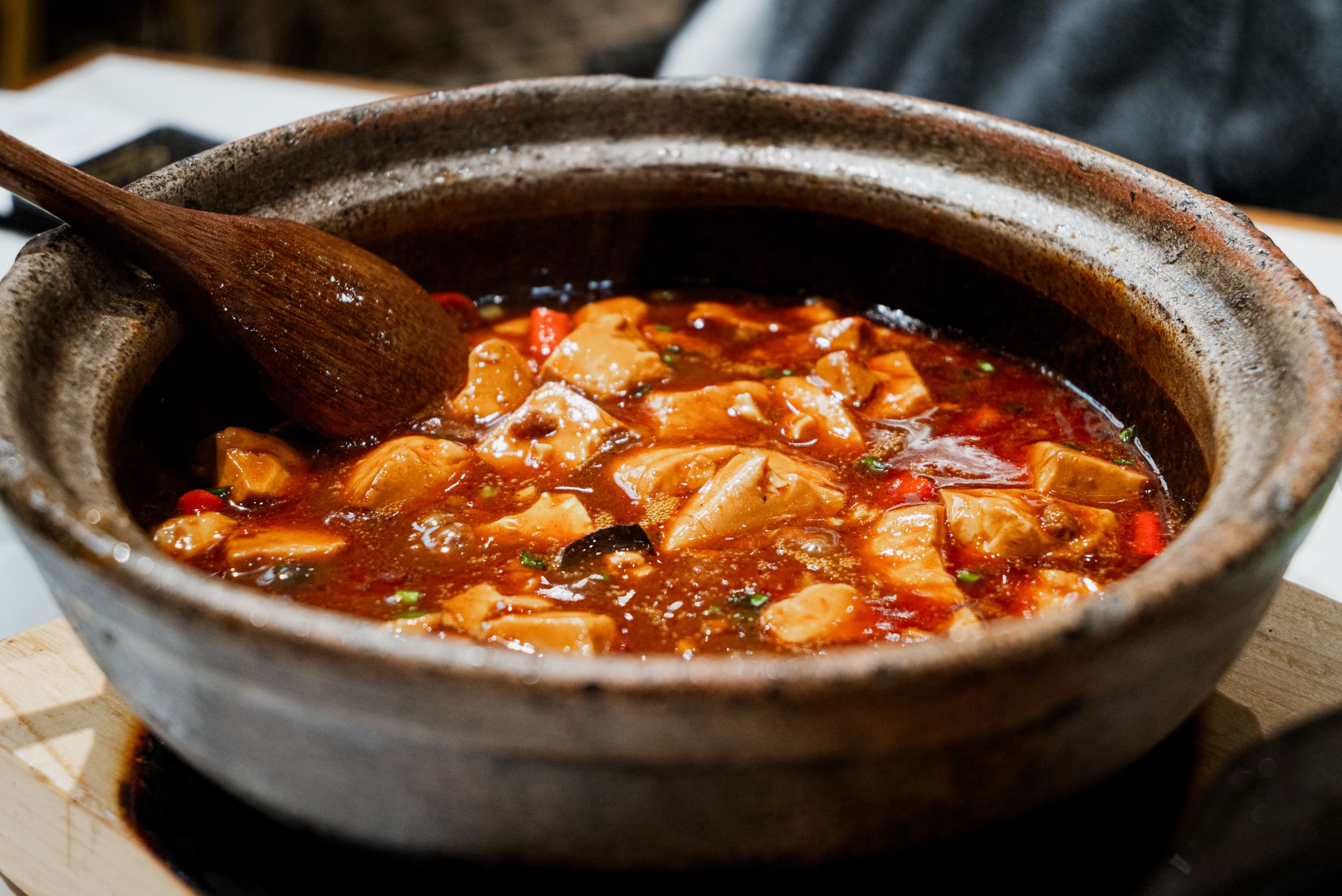
Order a split pot (yuanyang) at medium-mild spice, tick 6-10 ingredients on the order sheet, dip everything in sesame oil and garlic, and budget 80-150 RMB per person. Here is how to do each step well.
How Sichuan hotpot works
A pot of chili-and-Sichuan-pepper broth simmers on a burner at the center of the table. Raw ingredients arrive on plates, and you cook them yourself in the broth. The flavor is called mala: ma is the tingling numbness from Sichuan peppercorn (huajiao), la is chili heat. There are two main styles. Chongqing hotpot uses beef tallow for a dark, heavy, intense broth; Chengdu hotpot typically uses rapeseed oil, which is more aromatic and a notch milder. Plan for the meal to take 1.5 to 2 hours. It is a social dinner, not a quick bite.
Step 1: Choose your pot and spice level
You will be asked what kind of pot you want before anything else.
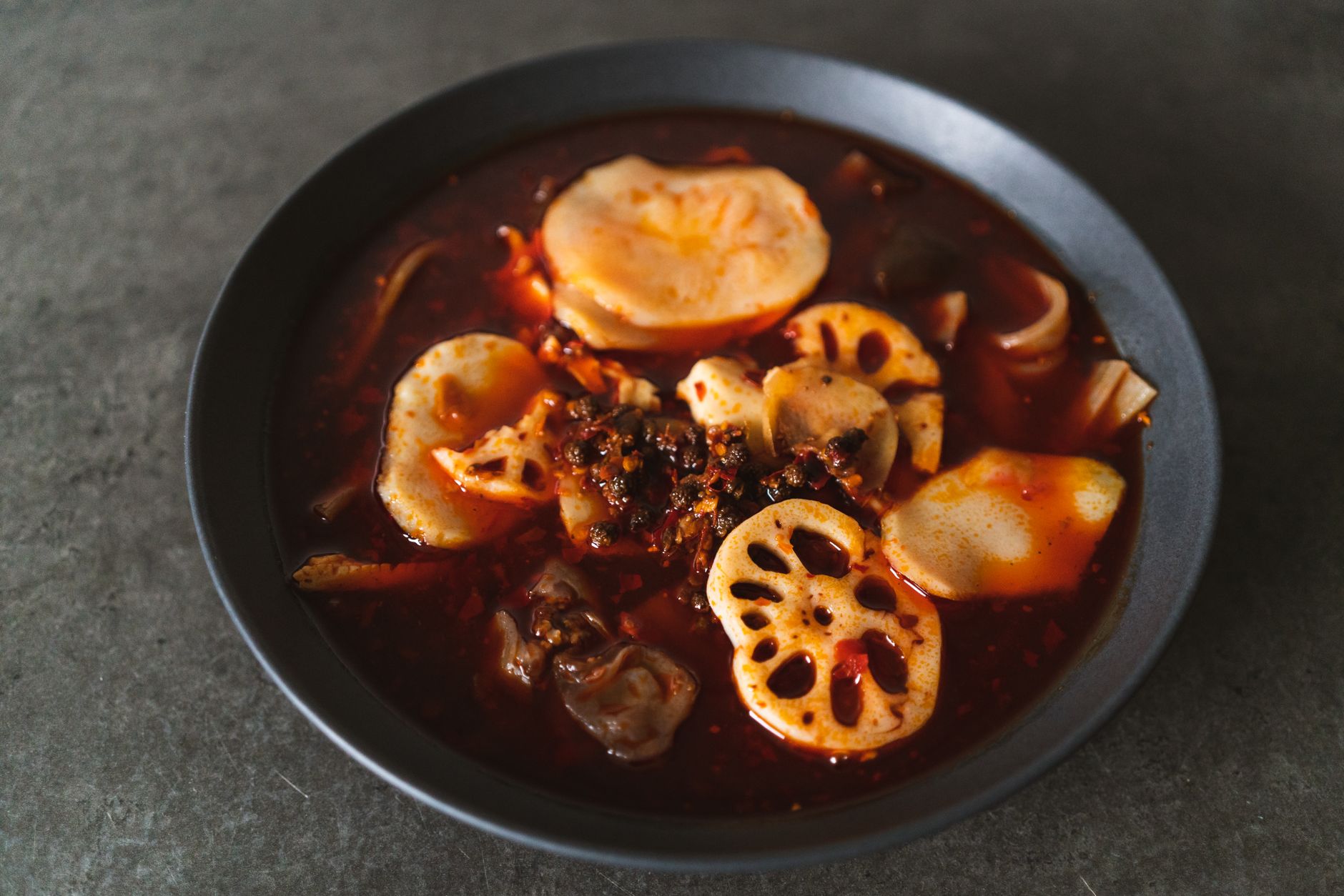
- Yuanyang (split) pot: half red spicy broth, half clear bone or mushroom broth. The default for mixed groups and first-timers.
- Whole red pot: only if everyone at the table eats spicy.
- Nine-grid pot (jiuzongge): a Chongqing specialty where one red broth is divided into nine grids that simmer at different intensities. Brisk center grids are for quick-cooking meats, slow corners for tofu and root vegetables. Ordering works exactly the same.
Then pick a spice level: weila (mild), zhongla (medium) or tela (extra). The reliable rule is to order one level below what you think you can handle. Mild in Chengdu is roughly hot by Western takeout standards. You can always add chili oil later; you cannot take it out.

Step 2: Fill in the order sheet
Most local places hand you a laminated checklist and a pencil; chains often use a tablet, and many big-city stores have English menus. Tick quantities next to each item. Many Chengdu spots offer half portions (ban fen), which lets you try more and waste less.
A first order for two to four people that rarely goes wrong:
- Thin-sliced beef (feiniu), the signature at many Chengdu spots; 30-60 seconds in the broth
- Lamb rolls, forgiving to cook
- Beef tripe (maodu), dip for 10-15 seconds; it goes from tender to rubbery fast
- Duck intestine (yachang), 10-20 seconds; crisp when done right
- Shrimp paste (xia hua), spoon it into the broth and it sets into soft dumplings
- Potato slices and lotus root, 5-10 minutes, so add them early
- Enoki mushrooms and frozen tofu, which soaks up broth
- Wide sweet-potato noodles (kuanfen), in for the last 10 minutes
- Greens such as lettuce or pea sprouts at the end, to cut the richness
The classic first-timer mistake is over-ordering. Six to eight plates for four people is plenty to start, and you can add more mid-meal.
The dip: sesame oil and minced garlic
Every table gets the fixings for the you die (oil dish): a bowl of sesame oil plus dishes of minced raw garlic, cilantro, salt and vinegar. Spoon the garlic into the oil, add a splash of vinegar if you like, and dip each cooked piece before eating. The oil cools the food, softens the numbing buzz and carries flavor. It is not optional. The thick tan sesame paste you may know from Beijing hotpot is not used in Sichuan. Expect a small per-person charge, usually a few RMB.
Cooking times and table etiquette
- Thin sliced meat: 30-60 seconds, swishing it through the broth
- Tripe and duck intestine: 10-20 seconds; locals count it out as qi shang ba xia, seven ups and eight downs, for tripe
- Root vegetables, tofu and mushrooms: 5-10 minutes
- Use the communal serving chopsticks (gong kuai) or the ladle to move raw meat into the pot; keep your own chopsticks for food going to your mouth
- Skim floating chilies and burnt spice from your side of the pot, and say jia tang (add soup) when the level drops; staff will top it up
- On a nine-grid pot, claim one grid and cook from it instead of fishing across the whole pot
If the spice wins: damage control
- Order soy milk (dou nai) or yogurt (suan nai). Dairy proteins bind chili oil far better than water, which just spreads the burn around.
- Push food to the clear side of a split pot and skim the red side.
- Dip more heavily in the sesame oil.
- Say jian la (reduce the spice) or ask for extra clear broth; staff will often dilute the pot for you.
- Ice-cold beer is traditional, but alcohol amplifies the burn for many people. Dairy is the reliable choice.
Where to go and what it costs
Go to Chengdu for the aromatic rapeseed-oil style, Chongqing for the heavy beef-tallow original. In Chengdu, the Yulin neighborhood and the food streets around Jianshe Road are full of places locals queue for. In Chongqing, look around Jiaochangkou and the Bayi Road food street in Yuzhong district. A practical rule: the restaurant full of Sichuanese families at 7 pm will beat any place with English signage out front. Haidilao is the easiest chain for beginners, with tablet ordering and famously attentive service, though it is a national chain rather than a Sichuan original.
Budget, as of November 2026: typically 80-150 RMB per person at a local Chengdu or Chongqing hotpot restaurant including the pot, ingredients and dip, and roughly 150-250 RMB in touristy areas or upscale chains. Hotpot restaurants open and close quickly, so ask your hotel or guide to confirm a specific spot is still trading before heading across town. Pay by WeChat Pay or Alipay; most places now accept international cards linked to these apps, and older family-run spots still take cash.
On HXXC Travel's Sichuan itineraries, a guide joins your first hotpot dinner, orders for the table and sets spice levels to the group. It is worth requesting if you would rather learn the ritual once with backup before ordering solo.
Sichuan hotpot FAQ
Is Sichuan hotpot too spicy for beginners?
No, if you order correctly. A split pot with mild red broth gives you the flavor without the pain, and the sesame-oil dip tames most of the burn. Start with mild and treat medium as a second-visit goal.
What is a yuanyang pot?
A pot divided into two compartments: one red spicy broth and one clear bone or mushroom broth. It costs slightly more than a single-flavor pot and is the standard choice for mixed groups.
How much does hotpot cost in Chengdu and Chongqing?
Typically 80-150 RMB per person at local restaurants and 150-250 RMB in touristy or upscale places, as of November 2026. Prices move often, so check a recent review or ask your guide before you go.
What is the oil dish for?
It cools each piece as it leaves the pot, softens the numbing Sichuan pepper and adds garlic flavor. Skipping it is the most common way first-timers end the night early.
Can vegetarians eat Sichuan hotpot?
Partly. The red broth almost always contains beef tallow, and even the clear side is usually pork or chicken bones. Ask for a mushroom or vegetarian base (su guo di), then order tofu, mushrooms, greens, lotus root, potato and noodles. Say wo chi su (I eat vegetarian) and staff will steer you right.
How do I order hotpot without speaking Chinese?
Point at the paper checklist and hold up fingers for quantities, or use a tablet with photos. Four words cover most of it: yuanyang (split pot), weila (mild), zhongla (medium) and mai dan (the bill). Staff at busy hotpot restaurants deal with non-Chinese speakers regularly and will help you through the rest.
Details such as prices and specific restaurants were checked as of November 2026; re-confirm them close to your travel date.
Related private tours
- Best Of China — 20-Day Private Tour — 20 days
- Pandas, Peaks & Palaces — 12-Day Family Journey — 12 days
- Best Tour In China - 19 Days Trip — 19 days · From US$2,896