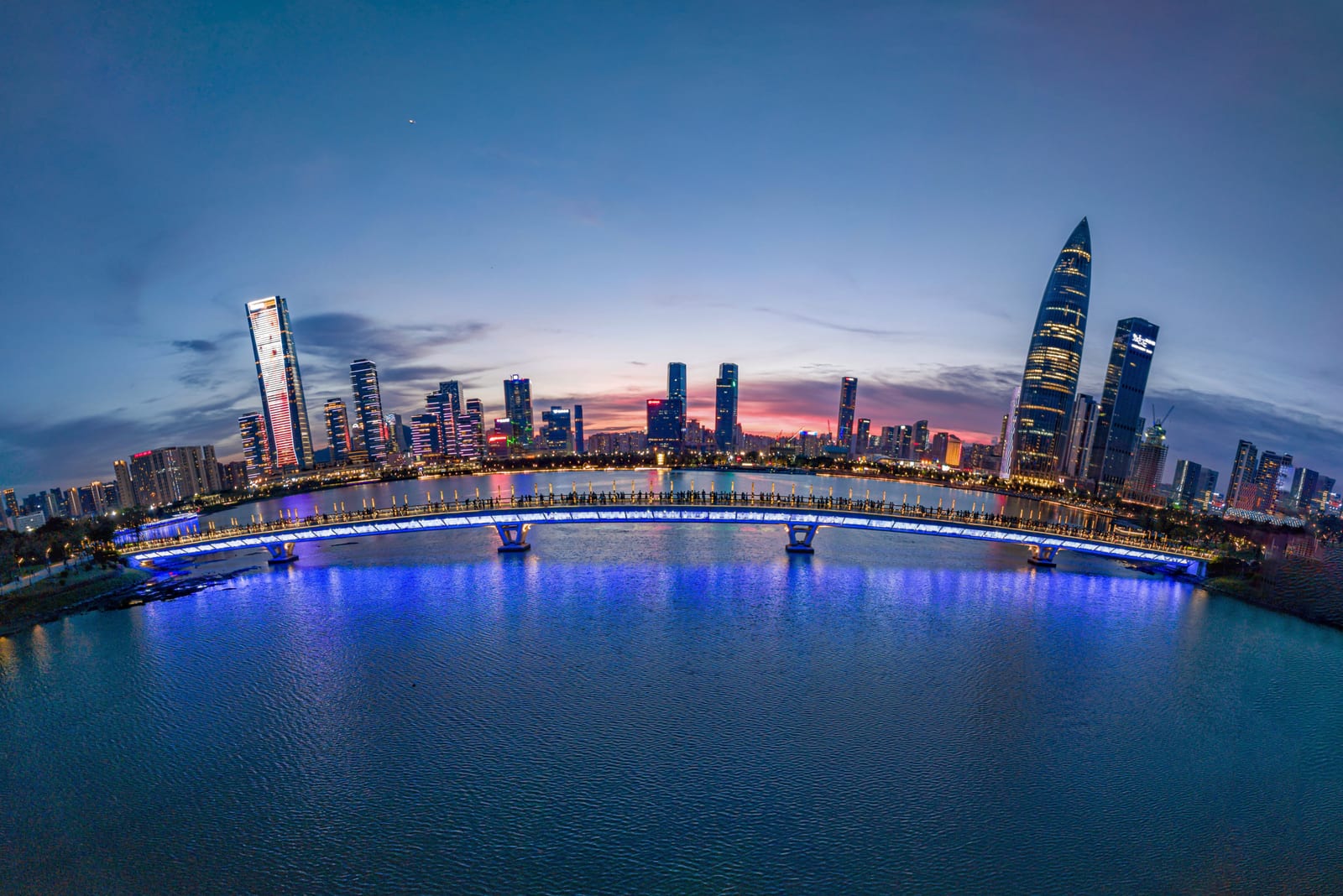
Quick answer: Shenzhen rewards 1–3 days of travel for first-time China visitors, with efficient public transit, public parks, design districts, and accessible local food that shows everyday modern Chinese urban life, no advanced Mandarin required for most core routes.
Is Shenzhen worth visiting for first-time China travelers?
Most international travelers first hear of Shenzhen as the tech and manufacturing hub across the border from Hong Kong, designated China’s first Special Economic Zone in 1980. In just over four decades, the area grew from a loose collection of Cantonese and Hakka market and fishing towns to a city of 17.5 million residents, with urban planning designed for 21st-century life rather than ancient imperial or colonial street layouts.
Unlike older Chinese cities built around narrow historic cores, Shenzhen has wide, well-maintained sidewalks, separated bike lanes, metro access to almost all major neighborhoods, and public park space integrated into every residential district. It is also one of the most accessible large mainland Chinese cities for English speakers, with trilingual signage on all transit lines, frequent international flights to Shenzhen Bao’an International Airport, and three major land border crossings connecting directly to Hong Kong’s rail network.
HXXC Travel’s Guangdong-based advisors often recommend adding 1–2 Shenzhen days to itineraries that start or end in Hong Kong, rather than treating it as a standalone week-long destination. It offers a low-friction first impression of mainland daily life before travelers move on to more historically focused destinations like Guangzhou, Guilin, or Chengdu, without the language barrier or navigation challenges common in older, less planned cities.

Core sights to prioritize
Shenzhen’s tourist sights are spread across three main zones: the central civic district in Futian, the design and tech corridor in Nanshan, and the coastal recreation areas on the Dapeng Peninsula. All central zones are connected via metro, with no need for a private car unless traveling to Dapeng.
Futian central district
The civic core of Futian is home to the Shenzhen Museum (free entry, as of November 2026, open 10am–6pm Tuesday to Sunday, closed Mondays, valid passport required for entry), which covers the city’s Special Economic Zone history with clear English captions for most permanent exhibits. A 10-minute paved walk from the museum leads to Lianhuashan Park, the 150-hectare central green space with gentle paved paths up to a hilltop viewpoint overlooking the Futian skyline and civic square.
Right adjacent to the park, Shenzhen Book City CBD store is the largest single-floor bookshop in China, with a dedicated foreign language section and free public seating that draws local students, remote workers, and families on weekends. As of November 2026, entry to all city-run public parks and museums in Shenzhen is free, with no advance reservation required for most sites, though national holiday weekends may require a free same-day booking via the city’s official public services WeChat mini-program. Always re-check entry requirements before travel, as reservation rules can change with short notice.

Nanshan design and tech district
Nanshan is the western district home to most of Shenzhen’s major tech company headquarters, but it also holds two of the city’s most visitor-friendly cultural sites. The first is OCT-LOFT Creative Culture Park, a repurposed industrial area built on the grounds of a former state-owned electronics factory, with independent bookshops, design studios, small coffee roasters, and rotating street photography and art exhibits that run year-round. Entry to the park complex is free, with most shops open 10am–10pm daily.
A 20-minute metro ride from OCT-LOFT, Shekou is the waterfront neighborhood originally built for overseas oil company workers, now home to international restaurants, a paved public promenade along Shenzhen Bay, and the Sea World Culture and Arts Center. Designed by architect Fumihiko Maki, the center hosts rotating international design and art exhibits, with ticket prices typically ranging 60–120 RMB for special exhibits as of November 2026; entry to the permanent collection and public lobby is free. For travelers crossing to or from Hong Kong, the Shenzhen Bay checkpoint is a 10-minute taxi ride from Shekou, making this district a logical first or last stop on a Shenzhen trip.
Dapeng Peninsula day trip
For travelers with a third day in Shenzhen, the Dapeng Peninsula is the coastal recreation area roughly 1.5 hours by metro and bus from Futian, with clean public beaches, preserved Hakka walled villages, and graded coastal hiking trails. The most accessible village for day visitors is Jiaochangwei, a small former fishing village with low-rise guesthouses and direct beach access, connected via public bus from the Dapeng New District metro stop. Beach entry is free, but peak summer weekends (July–August) and national holidays can bring heavy traffic, so travel before 9am if visiting in those periods.

Realistic itineraries for different trip lengths
Choose an itinerary based on how much time you have, and avoid overpacking days with cross-city travel that wastes time in transit:
- 1 day (cross-border from Hong Kong or airport layover): Start at Futian Checkpoint, take Line 4 to Civic Center, visit Shenzhen Museum, walk through Lianhuashan Park, take Line 2 to OCT-LOFT for coffee and a late lunch, return to Hong Kong or the airport by early evening. This route requires no taxi rides, with all steps connected via metro fares totaling 10–15 RMB per person for the day.
- 2 days: Add a full Nanshan day on day two, starting with the Shenzhen Bay promenade in Shekou in the morning, visiting the Sea World Culture and Arts Center, eating Cantonese dim sum in a local Shekou restaurant, then spending the late afternoon in OCT-LOFT before taking the metro back to Futian for dinner.
- 3 days: Add the Dapeng Peninsula day trip on day three, using a private car transfer (typically 300–400 RMB round trip from central Futian for a standard sedan) to avoid slow public transit connections, or take the earliest metro and bus to beat traffic.
Local food to seek out
Shenzhen’s food scene draws from Cantonese, Hakka, and migrant cuisines from across China, but the most accessible local dishes for first-time visitors are tied to its Guangdong roots. Skip overpriced hotel restaurants; instead, look for neighborhood dim sum spots open from 7am to 2pm, where a full meal of har gow, siu mai, cheong fun, and char siu bao typically costs 60–90 RMB per person. Other local staples to try:
- Cantonese rice congee with youtiao (crispy fried dough), served at most neighborhood breakfast spots for 10–15 RMB per serving.
- Hakka stuffed tofu, a regional dish from the historic Hakka communities in eastern Shenzhen, served at family-run restaurants in Longgang and Dapeng for 40–60 RMB per plate.
- Hainanese chicken rice, brought to Shenzhen by migrants from southern China, available at most casual food courts for 25–40 RMB per set.
As of November 2026, almost all chain restaurants and larger neighborhood spots in Shenzhen accept international Visa and Mastercard at payment terminals, though small street stalls may still require cash in small denominations (10, 20, 100 RMB notes) or local mobile payment. It is a good idea to carry 200–300 RMB in cash for small purchases to avoid payment issues.
Transport basics for international visitors
Shenzhen’s metro system had 17 lines as of November 2026, covering almost all core tourist districts, with stop announcements and signage in Mandarin, Cantonese, and English. Single-journey tickets can be purchased from vending machines at every station, which accept international Visa and Mastercard, or visitors can buy a 1-day unlimited metro pass for 25 RMB at customer service desks in major stations.
For shorter trips, the official Shenzhen taxi fleet starts at 10 RMB for the first 2 kilometers, with a 2.6 RMB per kilometer surcharge after that as of November 2026; ride-hailing services typically charge 10–20% less than metered taxis for the same route, though most require a local Chinese phone number to register.
As of November 2026, Shenzhen is included in China’s 240-hour visa-free transit policy for passport holders from 57 countries, allowing entry without a pre-arranged visa for stays of up to 10 days if travelers are transiting to a third country or region (for example, flying from Sydney to Shenzhen then continuing to Seoul, or entering from Hong Kong and departing to a third country from Shenzhen Bao’an Airport). All visa and transit rules are subject to change, so always verify the latest official entry requirements with your nearest Chinese embassy or consulate before booking travel. HXXC Travel’s Guangdong-based team can provide pre-trip support for transit eligibility checks and custom itinerary adjustments for travelers using the 240-hour transit policy.
Common pitfalls to avoid
- Do not exchange currency at land border checkpoints, as exchange rates there are consistently 5–10% worse than rates at official bank branches or bank ATMs in central Shenzhen.
- Do not plan to walk long distances between districts: even though sidewalks are well-maintained, city blocks are large, and metro or bus travel is far more efficient for trips longer than 1 kilometer.
- Do not assume all service staff speak fluent English: most metro and museum staff speak basic English, but carrying a translation app with offline Mandarin downloaded will make restaurant and small shop interactions much smoother.
- Do not visit Dapeng Peninsula during national public holidays (first week of October, first week of May, Spring Festival week) unless you are prepared for 3+ hour traffic delays each way and fully booked beach facilities.
References & updates
This guide is reviewed monthly by HXXC Travel’s on-the-ground advisors based in Jiangmen, Guangdong, with the most recent update completed on October 23, 2026. Time-sensitive details including ticket prices, visa and transit rules, metro service changes, and attraction entry requirements are verified against official Shenzhen municipal government sources at the time of update. Because policies and prices can shift with little advance notice, we recommend re-checking entry rules, attraction opening times, and transport fares in the 72 hours before your departure for Shenzhen.
Frequently asked questions
How many days do I need in Shenzhen as a tourist?
Most first-time visitors can cover all core central sights in 1–2 full days. Travelers who want to visit the Dapeng Peninsula coastal areas or spend time exploring design and art spaces should plan for 3 full days. There is little reason for most leisure travelers to stay longer than 3 days unless they are visiting for business or connecting to other destinations in the Pearl River Delta.
Can I visit Shenzhen on a day trip from Hong Kong?
Yes, day trips are very common. The fastest crossings are via the Futian or Lok Ma Chau checkpoints, which connect directly to Shenzhen’s metro network, with total crossing time typically 30–45 minutes outside peak hours. As of November 2026, most eligible passport holders can use the 240-hour visa-free transit policy for day trips if they meet transit eligibility requirements, or use a pre-arranged Chinese tourist visa for longer stays. Always re-check border crossing eligibility and wait times before travel.
Is Shenzhen English-friendly for international travelers?
Compared to many other large mainland Chinese cities, Shenzhen has relatively high levels of English signage and basic English proficiency in tourist-facing areas. All metro stops, museum exhibits, and major shopping centers have English signage, and most staff in central districts can communicate basic information in English. Small neighborhood restaurants and street stalls may have no English signage or English-speaking staff, so an offline translation app is recommended.
Related private tours
- Guangzhou Heritage & Wildlife — Lingnan Culture Meets Chimelong Safari — 5 days
- Best of China — 19-Day Private Tour — 19 days · From US$2,450
- 25-Day China Cross-Country Travel Itinerary — 25 days