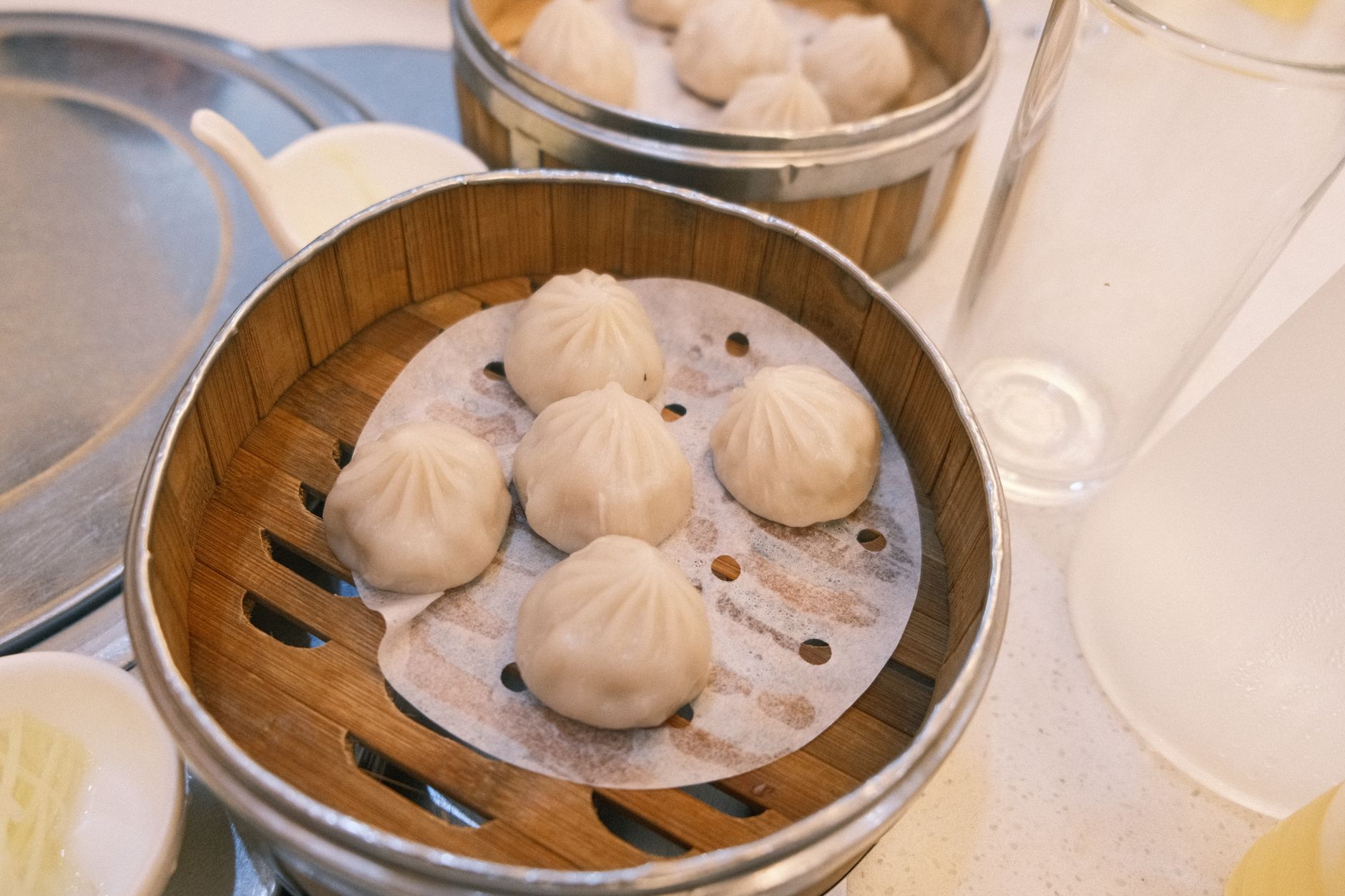
The best way to eat Shanghai xiaolongbao (soup dumplings) without burning your mouth is to follow a 4-step bite process, let dumplings rest 60 seconds after serving, and skip low-quality tourist-trap stalls near major landmarks. This guide was written and reviewed by HXXC Travel’s inbound food and culture team, based at our headquarters in Jiangmen, Guangdong, on October 23, 2026, for first-time English-speaking travelers visiting China. All practical details are current as of November 2026; re-check opening hours and pricing before your visit, as small restaurant operations can shift seasonally.
Key facts at a glance
- Authentic Shanghai xiaolongbao originated in Nanxiang, a town in Shanghai’s Jiading District, in the 1870s.
- A standard serving is 8 dumplings per bamboo steamer, typically costing 25–45 RMB at long-standing local restaurants as of November 2026.
- Each dumpling contains at least 1 tablespoon of hot pork gelatin broth that melts to liquid when steamed, reaching temperatures of 80–90°C (176–194°F) when first served.
- The highest concentration of tourist-trap xiaolongbao stalls is within 50 meters of Yu Garden (Yuyuan) entrances, where prices can run 3–4x local rates for lower-quality dumplings.
- The traditional dipping mix is black vinegar with thin-sliced fresh ginger; soy sauce is not a standard addition for local diners.
- No chopstick pierce is required to eat xiaolongbao correctly, contrary to common travel blog advice.
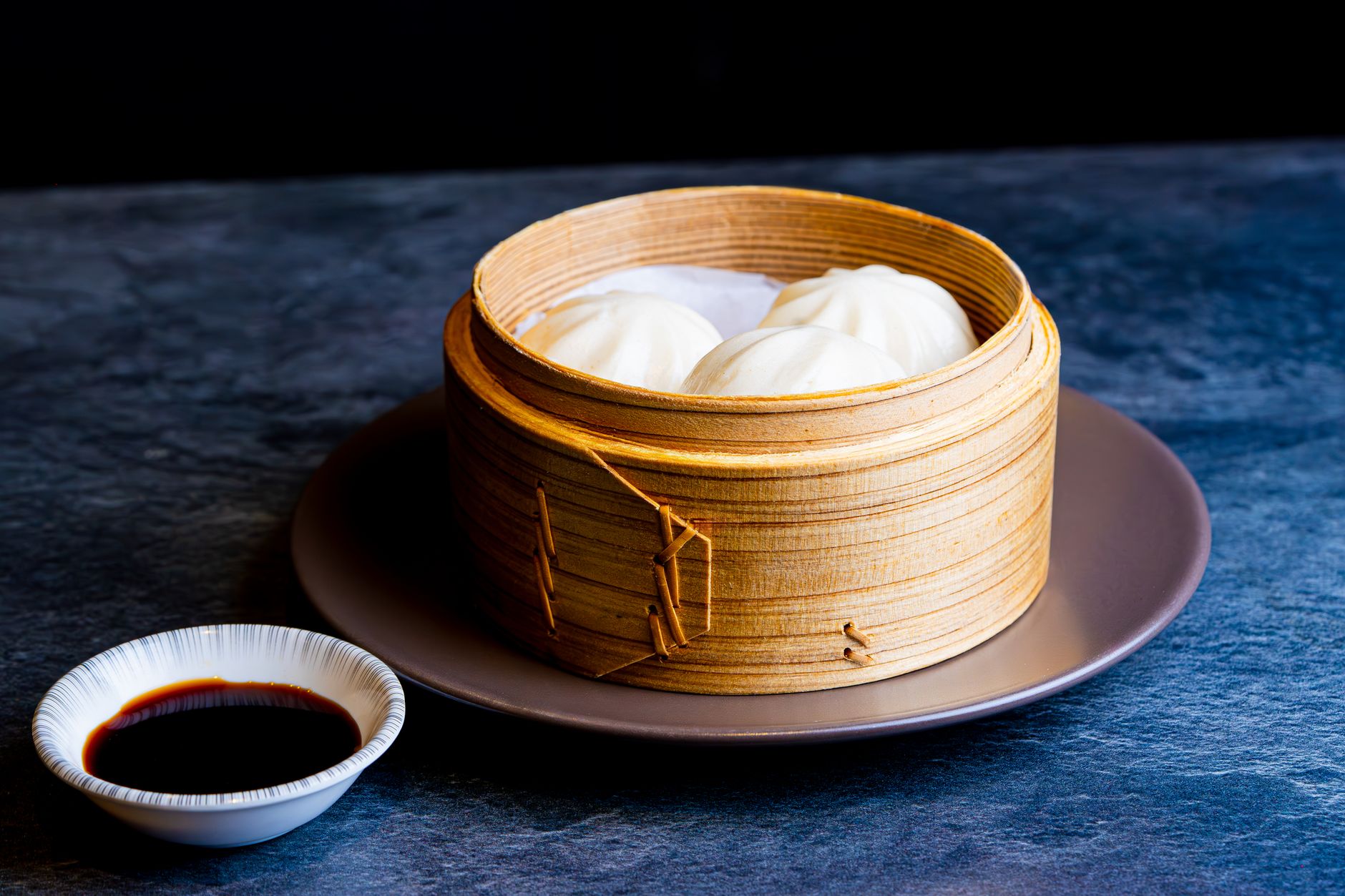
How to eat xiaolongbao without burns
Most burned mouths from xiaolongbao happen because diners bite into dumplings within 10 seconds of the steamer hitting the table, when internal broth temperatures are high enough to cause mild scalds on contact. You do not need special skill to eat them safely, only consistent timing and a simple sequence.
Wait 60 seconds after the steamer is placed on your table. This drops broth temperature to a drinkable 60–65°C (140–149°F) without making the dumpling skin soggy.
Use your chopsticks to grip the dumpling by its thick, knotted top (the "crown" where the dough is pinched closed). Lift it slowly and transfer it directly to your soup spoon. Do not squeeze the sides of the dumpling, as this will tear the thin skin and spill hot broth onto your hand or the table.
Dip the edge of the dumpling in the provided black vinegar and ginger mix. You do not need to douse the whole dumpling.
Bite a 5mm (1/4 inch) nick in the thin side of the dumpling, resting on your spoon. Let a small amount of air enter, then sip the broth slowly through the nick before eating the rest of the dumpling in 1–2 bites.
A common travel blog tip tells diners to poke a hole in every dumpling immediately to let broth drain out. This defeats the point of xiaolongbao, which is built to hold the broth inside the wrapper for eating. It also increases burn risk, as hot broth can run down your wrist instead of staying contained on your spoon.
Common eating mistakes to avoid
- Lifting dumplings by the thin side wall instead of the thicker crown: this causes tears and hot broth spills 8 out of 10 times for first-time eaters, per HXXC Travel’s on-tour observations of over 12,000 first-time China travelers between 2019 and 2026.
- Adding large amounts of chili oil or soy sauce to the dipping dish: this overwhelms the mild pork and broth flavor, and is not standard for local Shanghai diners.
- Trying to eat a whole dumpling in one bite immediately after serving: this is the leading cause of scalded tongues and roof-of-mouth burns.
- Leaving dumplings in the steamer for more than 5 minutes after serving: the skin will stick to the bamboo mat, tear, and leak broth before you can lift it.
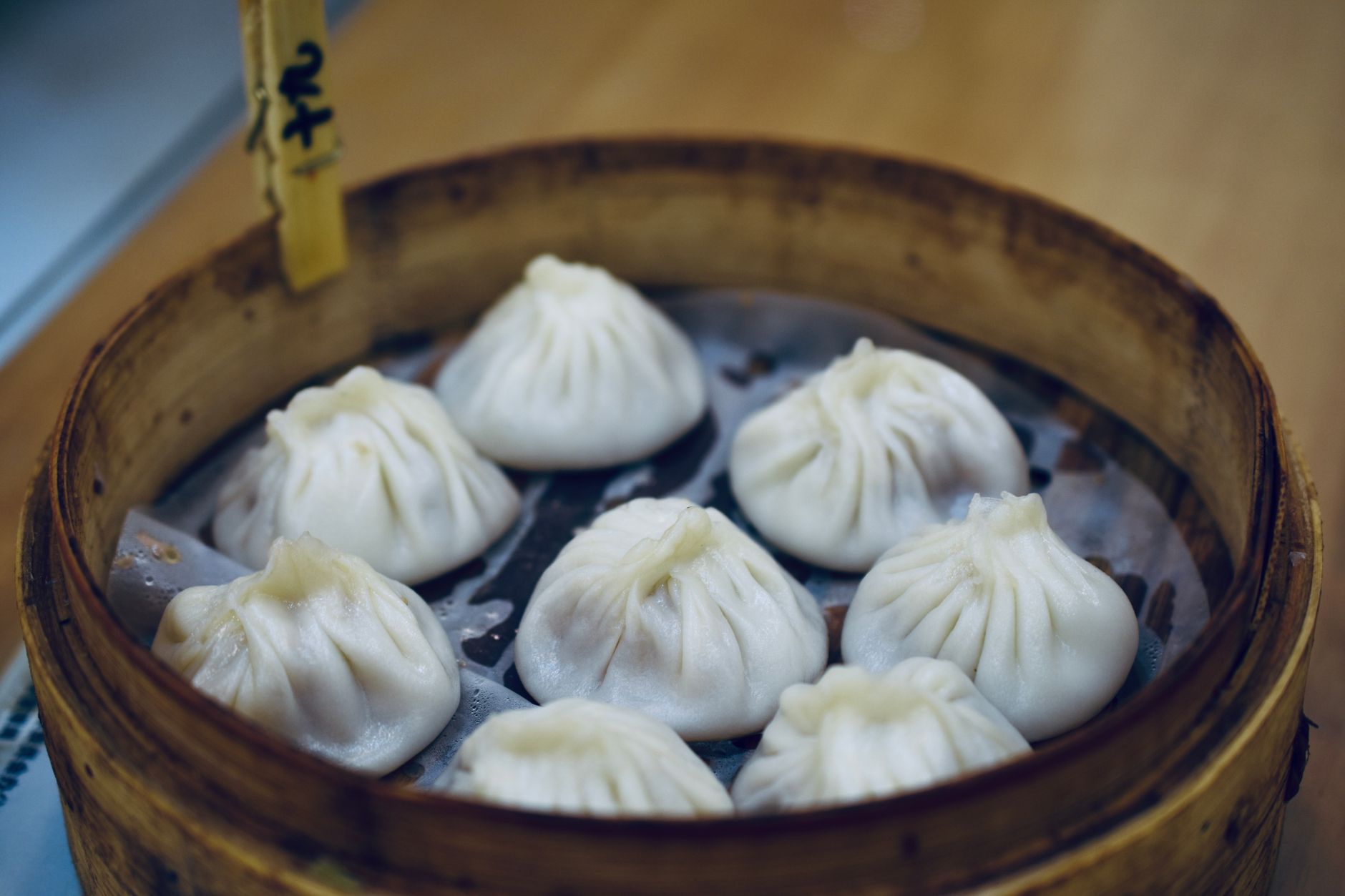
How to spot authentic vs tourist-trap xiaolongbao
Not all xiaolongbao sold in Shanghai is made to traditional standards, and stalls targeting day-trippers near major landmarks often cut corners that lead to both bad flavor and higher burn risk (thicker skins, uneven broth temperature, overstuffed dumplings that tear easily).
Use these checks to pick a reliable spot:
- Look for restaurant windows where you can see chefs folding dumplings by hand. Machine-folded xiaolongbao has uniform, perfectly spaced pleats; hand-folded dumplings from local shops have 12–18 uneven pleats per crown.
- Check the price on the wall menu (not just the tourist-facing English menu). As of November 2026, a regular 8-piece steamer of original pork xiaolongbao at a non-tourist local shop costs 25–45 RMB. If the listed price is over 60 RMB for a basic pork serving, you are likely at a tourist markup spot.
- Watch local clientele. If 70% or more of the customers in the dining room are speaking Shanghainese or Mandarin and not carrying large camera bags or group tour lanyards, the shop is reliably local.
- Avoid any stall that hands you xiaolongbao in a paper to-go cup within 2 minutes of ordering. Authentic xiaolongbao is steamed to order in batches, which takes 7–10 minutes per steamer.
Reliable, long-standing xiaolongbao spots in Shanghai (as of November 2026)
- Jia Jia Tang Bao (Huangpu District, near People’s Square): This cash-first, no-reservation shop has operated since 1996. A standard 8-piece pork xiaolongbao steamer costs 30 RMB; crab roe and pork mix is 55 RMB. Expect 15–30 minute lines during peak lunch (11:30am–1:00pm) and dinner (5:30pm–7:00pm) hours.
- Nanxiang Mantou Dian (original location, Nanxiang Old Town, Jiading District): The origin point of xiaolongbao, operating continuously since 1900. Avoid the Yu Garden branch of this brand, which caters almost exclusively to tourists with marked-up prices. The original Nanxiang location serves 8-piece steamers for 35 RMB, with shorter lines than the Yu Garden outpost.
- Din Tai Fung (multiple locations, including Xintiandi and Lujiazui): This global chain makes consistent, carefully temperature-controlled xiaolongbao that is a good low-risk option for first-time eaters who prefer English menus and clear seating. A standard 8-piece pork steamer costs 58 RMB as of November 2026. Local diners often consider Din Tai Fung’s xiaolongbao slightly sweeter than traditional Shanghai versions, but it is reliably low on burn risk due to strict serving temperature guidelines.
HXXC Travel’s Shanghai itineraries always include a stop at a local xiaolongbao shop with fixed, local pricing, with guides on hand to walk first-time eaters through the eating process to avoid burns.
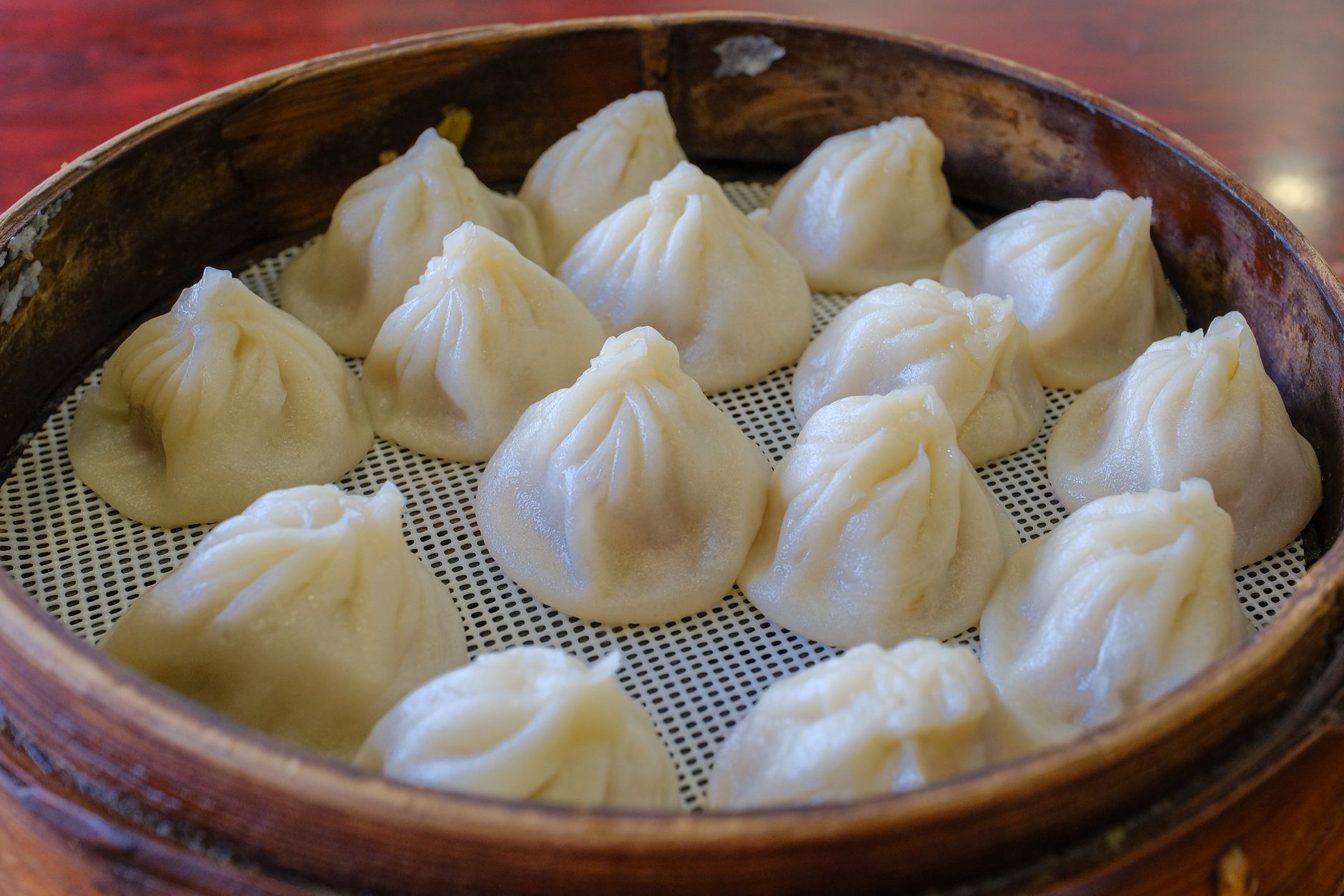
Common xiaolongbao menu terms for travelers
Most local xiaolongbao shops have short menus, with only a handful of filling variations. These are the terms you will see most often:
- Original pork (xian zhu rou): The standard, classic xiaolongbao, made with ground pork and pork skin gelatin broth. This is the best option for first-time eaters.
- Crab roe and pork (xie huang zhu rou): A seasonal autumn option, with added hairy crab roe mixed into the filling. This costs 20–30 RMB more per steamer than plain pork, and is typically available from mid-October to early December each year.
- Shrimp and pork (xia ren zhu rou): Whole small shrimp added to the pork filling, with a slightly lighter broth flavor.
- Crab meat and pork (xie rou zhu rou): Similar to crab roe, with mixed white crab meat instead of roe, usually served in the same autumn hairy crab season.
Vegetarian xiaolongbao is not a traditional Shanghai offering. Most shops that advertise vegetarian xiaolongbao are located in tourist areas, as the gelatin broth is traditionally made from pork skin.
Basic xiaolongbao etiquette for local restaurants
Local Shanghai xiaolongbao shops are casual, fast-paced dining spaces, and there are no strict formal rules to follow. These small norms will help you fit in with local diners and avoid awkward interactions:
- Do not leave leftover dumpling skins or ginger scraps on the table surface. Most shops provide small waste plates at each seat for scraps.
- It is acceptable to slurp the broth from the dumpling nick on your spoon; no one will consider this rude.
- You do not need to tip. All restaurants in China include service in the listed menu price, and tips are not expected at casual local food shops as of November 2026.
- If you are sharing a steamer with other people, use the shared serving chopsticks (provided at most tables) to move dumplings to your own spoon, rather than reaching in with your personal chopsticks.
- Do not take the last dumpling from a shared steamer without offering it to other people at your table first. This is a common shared-dining norm across most of China.
Frequently asked questions
How long should I wait to eat xiaolongbao to avoid burns?
Wait 60 seconds from when the steamer is placed on your table before picking up the first dumpling. This brings the internal broth temperature down from near-boiling to a safe, drinkable level without making the wrapper soggy. If you are especially sensitive to hot food, wait 90 seconds instead.
Are xiaolongbao the same as soup dumplings?
Xiaolongbao is the specific Shanghainese soup dumpling referenced in most English-language China travel content. Other regions of China have soup-filled dumpling varieties, including tangbao from Yangzhou and guan tang jiaozi from northern China, but these have thicker skins and different folding styles than Shanghai xiaolongbao. Most English speakers use "soup dumpling" interchangeably with "xiaolongbao" when referring to the Shanghai dish.
Is the Yu Garden xiaolongbao worth eating?
As of November 2026, the xiaolongbao sold at stalls immediately surrounding Yu Garden is priced 3–4 times higher than local shop rates, with thicker skins, less broth, and often pre-steamed dumplings reheated to order. It is not worth the cost or wait for most travelers. If you want to eat xiaolongbao near Yu Garden, walk 10–15 minutes outside the scenic area perimeter to a local neighborhood shop for better quality at local prices.
Can I get vegetarian xiaolongbao in Shanghai?
Traditional Shanghai xiaolongbao uses pork skin gelatin to make the soup filling, so it is not vegetarian. A small number of shops in Jing’an and Xuhui districts make vegetarian xiaolongbao with mushroom-based broth for international diners, but these are not traditional versions, and most local neighborhood shops do not carry them.
Related private tours
- Shanghai in Four Days — Old Town to Neon Skyline — 4 days
- Golden Triangle — Beijing, Xi'an & Shanghai — 10 days · From US$1,000
- Shanghai to the Mountains — Wangxian Valley & Furong Town — 18 days