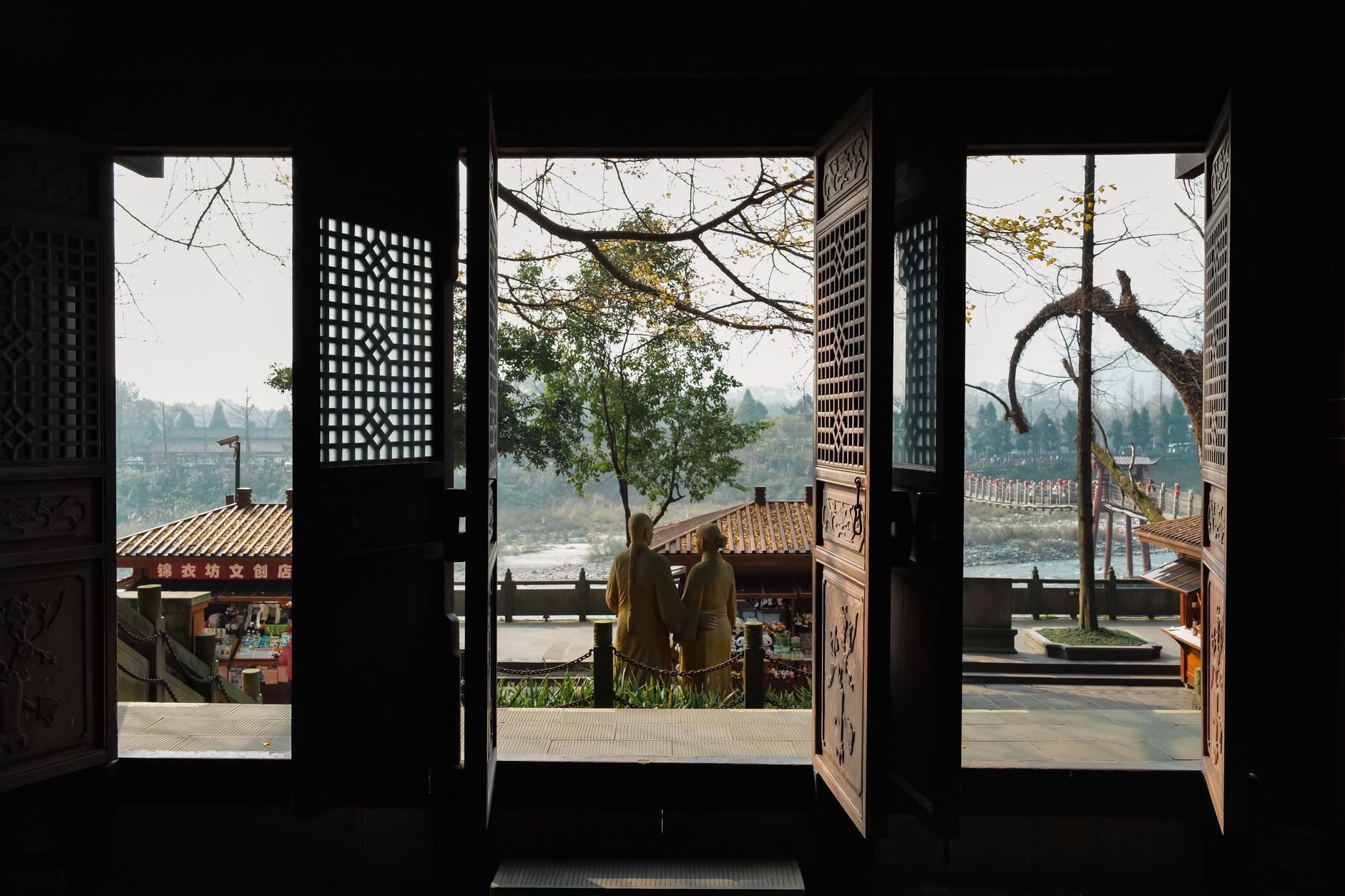
Shandong: Qingdao, Mount Tai and Qufu
Quick answer: A Shandong loop takes 7-9 days. Fly to Qingdao, rail to Tai'an for Mount Tai, then 30 min to Qufu. Budget 6,000-9,000 RMB per person excluding flights.
Shandong sits on China's east coast, facing Korea across the Yellow Sea. Most first-time visitors to China focus on Beijing, Xi'an and Shanghai. Shandong sits between Beijing and Shanghai, and it adds a different layer: coastal scenery, one of China's most sacred mountains, and the birthplace of Confucianism. The province sees fewer foreign tourists than the big-three cities, which makes it a good choice for travelers who want iconic sites with fewer crowds.
The three destinations in this guide form a natural westward route: Qingdao on the coast, Tai'an inland for Mount Tai, and Qufu just south of Tai'an for the Confucian sites. All three are connected by high-speed rail.
Qingdao: Coastal City with German Heritage
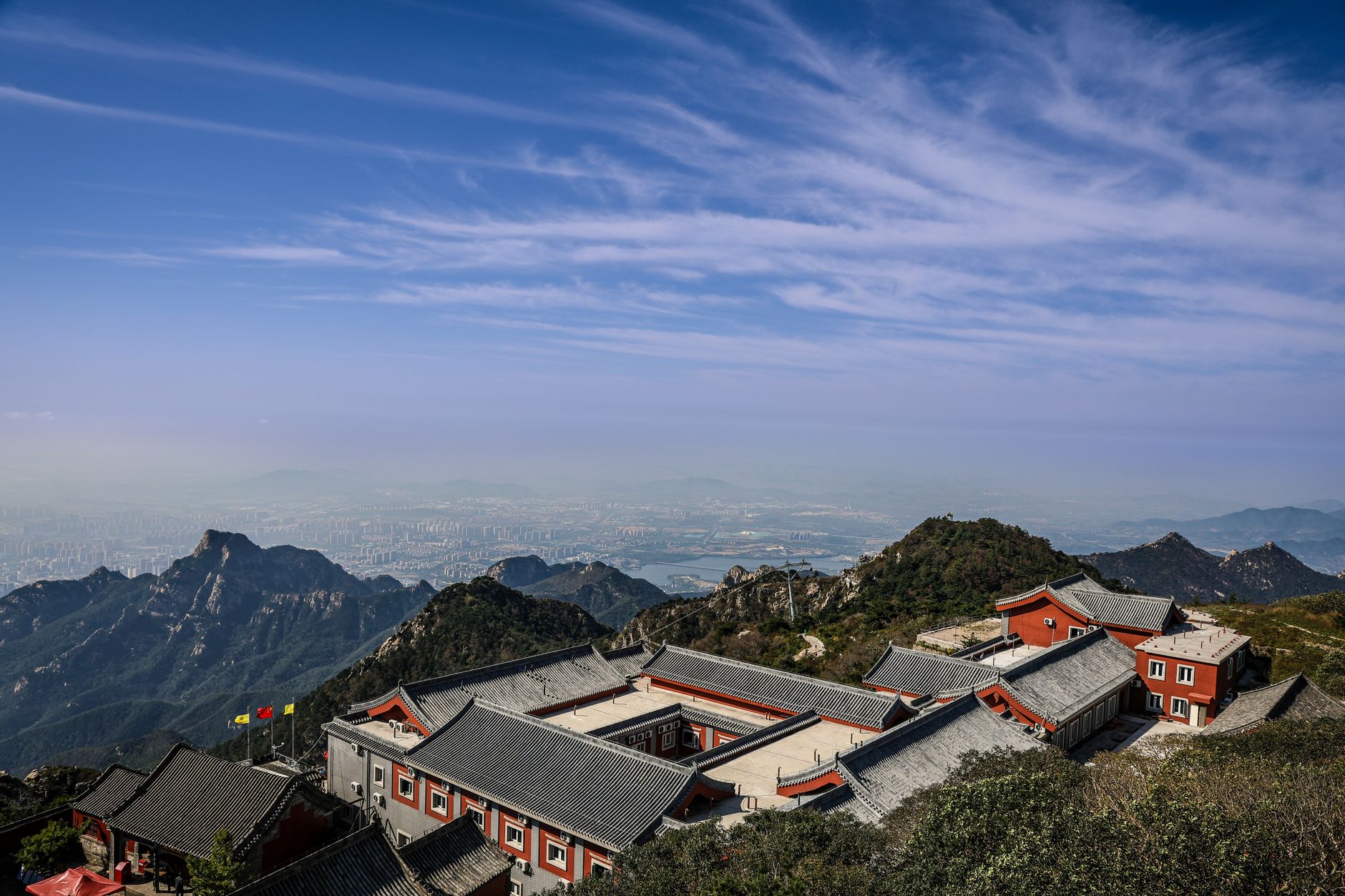
Plan 2 to 3 days in Qingdao. The city was a German concession from 1898 to 1914, and the old town still has red-roofed European buildings, tree-lined streets and a working brewery from that era. The combination of coastal scenery and European architecture makes Qingdao visually different from most other Chinese cities.
What to See in Qingdao
- Qingdao Beer Museum: Inside the original Tsingtao brewery on Dengzhou Road. The museum covers the brewery's 1903 founding and the beer-making process. Ticket includes a fresh beer sample. Open daily, typically 8:00 to 17:30. Entry around 50-60 RMB as of November 2026 — verify before visiting.
- Zhanqiao Pier: A 440-meter pier extending into Qingdao Bay, built in 1892. The Huilan Pavilion at the end is a Qingdao landmark. Free to walk on.
- Badaguan (Eight Great Passes): A district of tree-lined streets and European-style villas from the early 1900s. Each street is named after a Great Wall pass. Good for walking. No entry fee for the district.
- May Fourth Square and Olympic Sailing Center: A waterfront plaza named after the 1919 May Fourth Movement. The sailing center hosted the 2008 Olympics. Free to walk through, best at sunset.
- Signal Hill (Xinhaoshan): A small hill in the old town with a viewing platform over the red rooftops and harbor. Entry typically around 15 RMB.
- Laoshan (Mount Lao): A Taoist mountain about 40 kilometers east of the city center with coastal views. A full-day trip. Buses run from downtown. Entry varies by scenic area, typically 90-130 RMB.
Qingdao Food and Drink
Qingdao's food scene centers on seafood and beer. Try spicy clams (la chao ga la), grilled squid and sea cucumber. The local way to drink Tsingtao beer is from a plastic bag bought at a street vendor — this is genuinely how locals buy fresh draft beer. For a sit-down meal, the Pichai Courtyard area and Yunxiao Road food street have clusters of seafood restaurants. A seafood dinner for two typically runs 150 to 300 RMB depending on what you order.
Getting to Qingdao
Qingdao Jiaodong International Airport (TAO) replaced the old Liuting Airport in 2021. It handles direct flights from several international destinations and frequent domestic flights from Beijing, Shanghai and Guangzhou. From the airport, the city center is about 40 kilometers away. Metro Line 8 connects the airport to the city in roughly 50 minutes.
Mount Tai: China's Most Sacred Peak
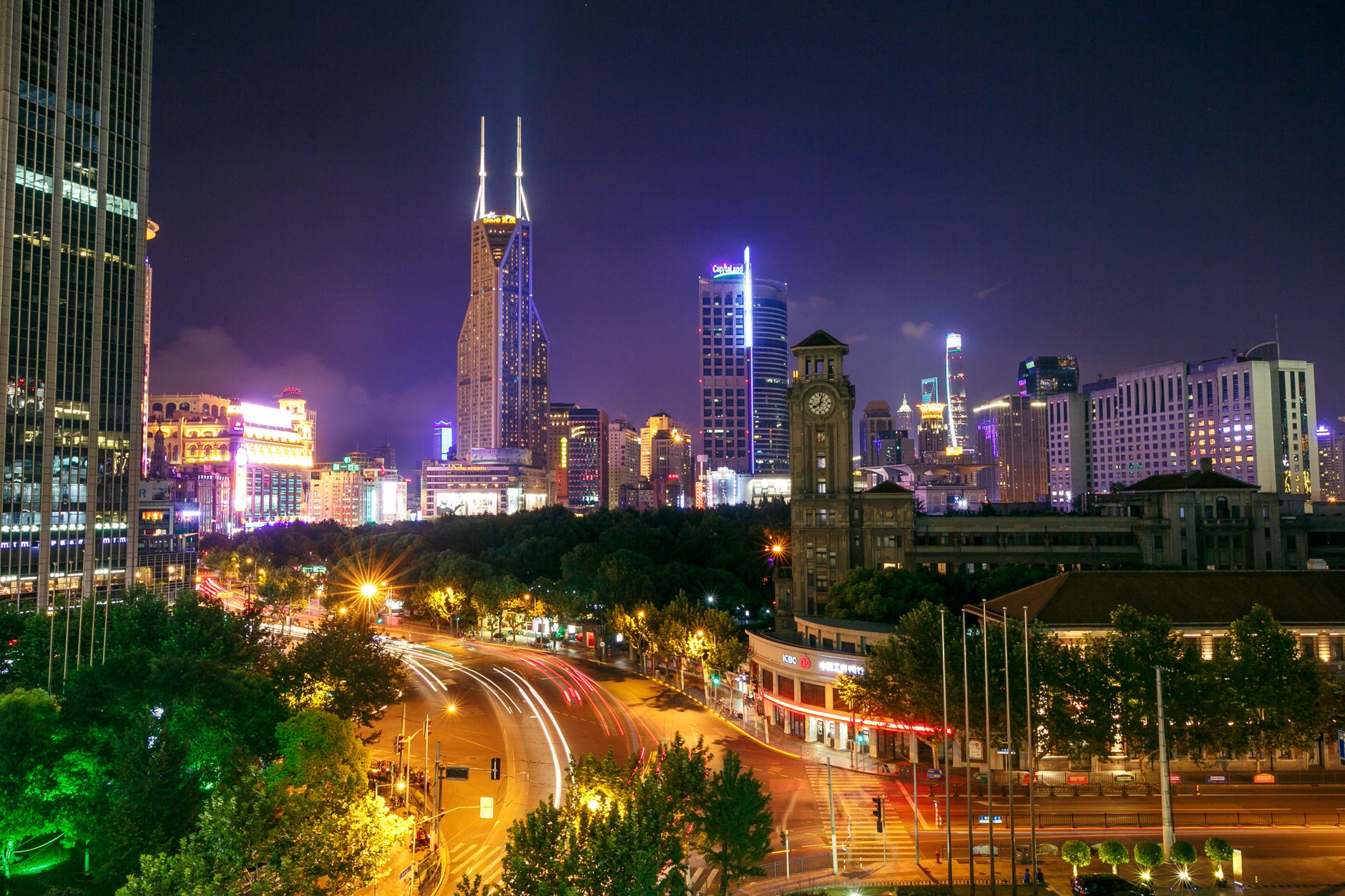
Mount Tai (Taishan) is one of the Five Great Mountains of China and has been a place of worship and imperial pilgrimage for over 3,000 years. Seventy-two emperors are said to have climbed it to perform sacrificial rituals. The mountain is in Tai'an city, about 70 kilometers south of Jinan.
Plan 1 to 2 days for Mount Tai. Most travelers spend one night on the summit to watch the sunrise.
Climbing Mount Tai: Route and Logistics
The classic imperial route starts at the Red Gate (Hongmen) at the base and follows a stone path of over 6,000 steps to the summit at South Heaven Gate (Nantianmen). Key waypoints:
- Hongmen (Red Gate): Starting point, elevation about 250 meters
- Zhongtianmen (Halfway Gate to Heaven): Midpoint at about 847 meters. A cable car runs from here to Nantianmen. Many people who do not want to climb the full route start here.
- Shibapan (Eighteen Bends): The steepest section, 1,633 steps in a near-vertical stretch below the summit. This is the hardest part.
- Nantianmen (South Heaven Gate): The summit area entrance at about 1,460 meters
- Jade Emperor Peak: The actual summit at 1,545 meters
The full climb from Hongmen to the summit takes 4 to 6 hours for most people. Descending takes 2 to 3 hours. If you want a less demanding option, take a bus from Tianwaicun to Zhongtianmen (about 30 minutes), then the cable car from Zhongtianmen to Nantianmen (about 8 minutes).
Watching the Sunrise on Mount Tai
Sunrise from the summit is the signature Mount Tai experience. To do this, stay overnight on the summit. There are several hotels near Nantianmen — prices are high because everything is carried up the mountain by porters. Expect to pay 600 to 1,500 RMB for a basic room. Book well in advance, especially during summer and Chinese holidays.
Alternatively, many young Chinese travelers climb at night, starting around 10:00 PM to midnight, and reach the summit in time for sunrise. The path is lit and lined with vendors selling food and water. This is popular in summer but the summit can be cold even in July — bring a jacket.
Mount Tai Tickets and Hours
Mount Tai scenic area entry is typically around 115 RMB as of November 2026. The Zhongtianmen cable car costs about 100 RMB one way. The Tianwaicun to Zhongtianmen bus costs about 30 RMB. The scenic area is open 24 hours. Ticket prices can change seasonally — verify before your trip.
Getting to Tai'an
Tai'an has two rail stations: Tai'an Station (high-speed rail) and Taishan Station (conventional rail). Tai'an Station is on the Beijing-Shanghai high-speed line. From Qingdao, high-speed rail to Tai'an takes about 2.5 to 3 hours. From Jinan, it is about 20 to 30 minutes.
Qufu: The Home of Confucius
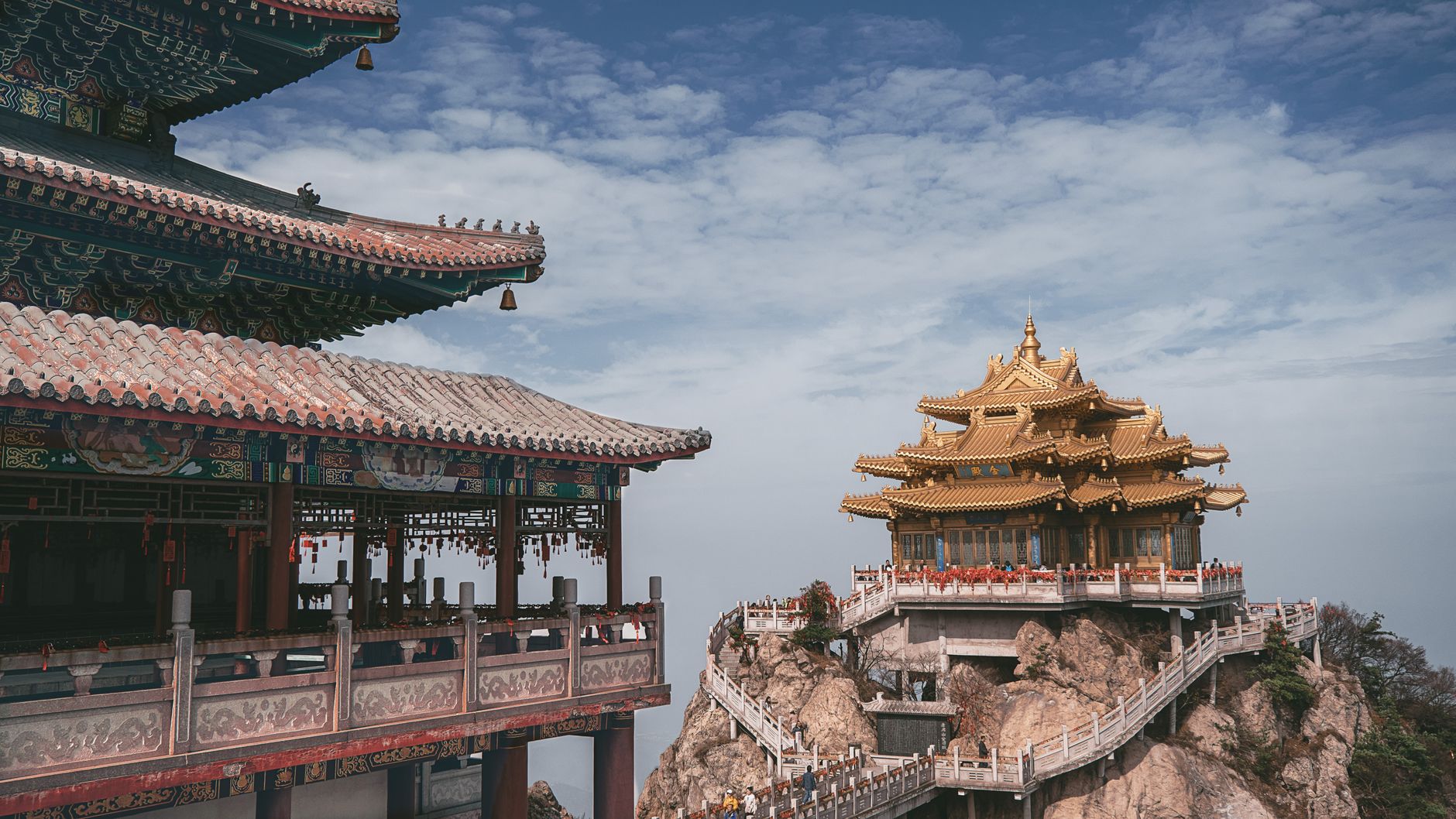
Qufu is a small city 30 kilometers south of Tai'an. It is the birthplace of Confucius (551-479 BC) and home to three sites collectively known as the San Kong — the Temple of Confucius, the Confucius Mansion, and the Cemetery of Confucius. These are UNESCO World Heritage sites, inscribed in 1994.
Plan 1 full day for Qufu.
The Three Kong Sites
- Temple of Confucius (Kong Miao): Originally built in 478 BC, one year after Confucius died. Expanded by emperors over centuries into a large temple complex with over 460 rooms. The Hall of Great Achievement (Dacheng Hall) is the main building, with 28 stone columns carved with dragons — Emperor Qianlong reportedly had them covered when he visited so they would not upstage the imperial palace.
- Confucius Mansion (Kong Fu): The residence of Confucius's direct descendants, who held hereditary titles for over 2,000 years. The mansion has over 400 rooms and contains archives, family records and artifacts. A short walk from the temple.
- Cemetery of Confucius (Kong Lin): The family cemetery where Confucius is buried, about 2 kilometers north of the city center. The tomb of Confucius is a simple mound. Over 100,000 of his descendants are buried here. The cemetery is large and wooded — allow 1 to 2 hours to walk through.
A combined ticket for all three sites typically costs around 140 RMB as of November 2026. Individual site tickets are also available. Opening hours are typically 8:00 to 17:00 in summer and 8:00 to 16:30 in winter. Check current prices and hours before visiting.
Qufu Food
Qufu has its own culinary tradition called Confucian banquet cuisine (Kongfucai), developed by the Kong family chefs over centuries. Dishes emphasize presentation and seasonal ingredients. Look for dishes like braised pork in the Kong family style and three-layered soup. Many restaurants near the temple offer smaller set meals rather than full banquets. A set meal for two at a mid-range restaurant typically runs 150 to 250 RMB.
Getting to Qufu
Qufu East Station (Qufudong) is on the Beijing-Shanghai high-speed rail line. From Tai'an, the train ride is about 15 to 20 minutes. From Qufu to Qingdao by high-speed rail takes about 2.5 to 3 hours, making it possible to return to Qingdao for your departure flight. Qufu East Station is about 8 kilometers from the old town — a taxi takes 15 to 20 minutes.
Suggested Itinerary: 8 Days
Day 1: Arrive in Qingdao. Walk the old town: Zhanqiao Pier, Signal Hill, Qingdao Beer Museum.
Day 2: Qingdao. Badaguan in the morning, May Fourth Square and Olympic Sailing Center in the afternoon. Seafood dinner.
Day 3: Day trip to Laoshan. Return to Qingdao for the night.
Day 4: Morning high-speed rail from Qingdao to Tai'an (about 2.5-3 hours). Afternoon: visit Dai Temple at the base of Mount Tai, where emperors stayed before climbing.
Day 5: Climb Mount Tai. Start at Hongmen in the morning, reach the summit by afternoon. Stay overnight on the summit. Or climb at night for sunrise.
Day 6: Watch sunrise on Mount Tai. Descend. Take high-speed rail from Tai'an to Qufu (about 20 minutes). Check in at Qufu.
Day 7: Full day in Qufu: Temple of Confucius, Confucius Mansion, Cemetery of Confucius.
Day 8: High-speed rail from Qufu to Qingdao (about 2.5-3 hours) for departure flight. Or take high-speed rail to Jinan (about 30 minutes) and fly out of Jinan Yaoqiang Airport.
This route can be shortened to 7 days by skipping Laoshan, or extended to 9 or 10 days by adding Jinan (Baotu Spring, Daming Lake) or Weifang.
Practical Information
When to Go
The best months for Shandong are April, May, September and October. Temperatures are mild and the sky tends to be clear. Summer (June to August) is hot and humid, and it is peak domestic travel season. Mount Tai can be very crowded during the July-August school holidays and National Day holiday (October 1-7). Winter is cold, especially on Mount Tai where the summit can be well below freezing. The Qingdao International Beer Festival typically runs in August — check official dates if you want to attend.
Budget
Per person, excluding international flights, a reasonable budget for this 8-day route:
- Budget traveler: 5,000-6,500 RMB. Three-star hotels or hostels, public transport, street food and local restaurants.
- Mid-range traveler: 6,500-9,000 RMB. Four-star hotels, taxis and ride-hailing, restaurant meals, one night on Mount Tai summit.
- Comfortable traveler: 10,000-15,000 RMB. Five-star hotels, private driver-guide, higher-end dining.
Mount Tai summit accommodation is a significant cost regardless of budget level. The one night on the mountain can easily be 800 to 1,500 RMB for a basic room.
Getting Around Shandong
High-speed rail is the backbone of travel in Shandong. Trains are fast, frequent and affordable. A second-class ticket from Qingdao to Tai'an is typically 150 to 200 RMB. Book through the 12306 app or at station ticket windows. You will need your passport to book and board.
Within cities, Didi (China's ride-hailing app) works well. Metro systems operate in Qingdao and Jinan but not in Tai'an or Qufu. For Mount Tai, taxis and buses connect your hotel to the trailheads.
Payment and Connectivity
As of November 2026, Alipay and WeChat Pay are the dominant payment methods in China. Both accept foreign credit cards for linking. Cash is accepted but less commonly used. Set up Alipay or WeChat Pay before you arrive. For internet access, a VPN is necessary to access Google, WhatsApp, Instagram and other services — install it before entering China.
Do You Need a Guide?
Qingdao, Mount Tai and Qufu can all be visited independently. However, the cultural and historical context at Qufu especially benefits from a knowledgeable guide. Temple inscriptions and the significance of the Kong family hierarchy are not self-evident from signage alone. HXXC Travel arranges guided trips to all three destinations with English-speaking guides based in Shandong. A private guide for a full day in Qufu typically costs 500 to 800 RMB.
Visa Requirements
Most foreign visitors need a Chinese tourist visa (L visa) to enter China. As of November 2026, China offers unilateral visa-free entry for stays up to 30 days for citizens of dozens of countries, and transit visa-free entry for travelers passing through to a third country. The list of qualifying nationalities and permitted durations changes periodically. Check with the Chinese embassy or consulate in your country before booking. Visa policies change — verify current requirements before travel.
Review date: October 2026. Prices, schedules and visa policies are subject to change. Re-check all time-sensitive information before booking.
FAQ
How many days do you need to visit Shandong?
A focused trip covering Qingdao, Mount Tai and Qufu needs 7 to 9 days. If you add Jinan or Weifang, plan 10 to 12 days.
Can you climb Mount Tai at night?
Yes. Night climbing is a popular tradition, especially in summer. Most people start between 10:00 PM and midnight to reach the summit for sunrise. The path is lit and has food vendors along the way. Bring warm clothing — the summit is cold even in summer.
What is the best time of year to visit Shandong?
April, May, September and October offer the most comfortable weather. Avoid the National Day holiday (October 1-7) and Chinese New Year if you dislike crowds. Summer is hot and humid but is when the Qingdao Beer Festival runs.
How do you get from Qingdao to Mount Tai?
Take high-speed rail from Qingdao to Tai'an Station. The journey takes about 2.5 to 3 hours. From Tai'an Station, a taxi to the Mount Tai Red Gate trailhead takes about 15 minutes.
Do you need a guide in Qufu?
You can visit the three Kong sites independently, but a guide adds significant value. The historical context, inscriptions and family lineage details are not well-explained in English signage. HXXC Travel can arrange an English-speaking guide for Qufu.
Is Shandong safe for foreign travelers?
Shandong is generally safe for foreign travelers. Violent crime is rare. Standard precautions apply: watch your belongings in crowded areas, use registered taxis or Didi, and keep copies of your passport and visa separately. English is not widely spoken outside major hotels and tourist sites, so having a translation app is useful.
Related private tours
- Best Of China — 20-Day Private Tour — 20 days
- Six Cities, One China — 15-Day Family Circuit — 15 days
- Imperial Beijing, Avatar Mountains & Shanghai — Family Adventure — 11 days · From US$1,250