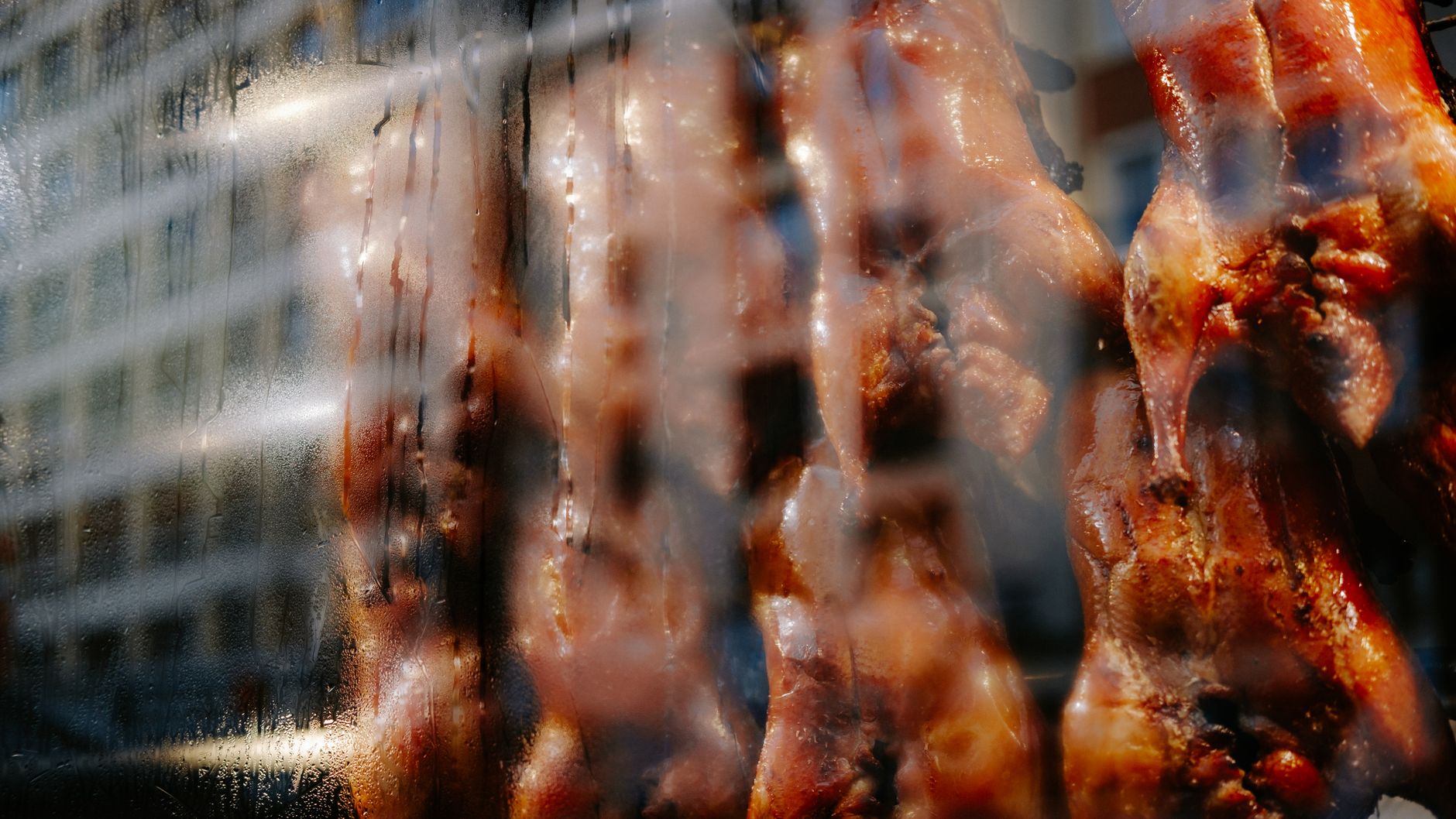
Peking duck is not a generic “Chinese roast duck” — it is a specific imperial-era dish with 600 years of documented history, tied directly to Beijing, served with a fixed set of accompaniments and a standard tableside carving ritual. Many first-time visitors order it expecting a simple roast poultry dish, and miss key parts of the experience because they do not know the standard ordering or serving process. This guide, compiled by HXXC Travel’s on-the-ground China-based advisors, covers the dish’s actual origins, how it is traditionally prepared and served, what to budget, and what to watch for when ordering.
Where Peking Duck Actually Comes From
The dish takes its name from “Peking”, the historic postal romanization of Beijing; its direct Mandarin name is Beijing kaoya, literally “Beijing roast duck”. While similar roast duck recipes existed across northern China as early as the Yuan dynasty, the specific preparation, duck breed, and serving style that define modern Peking duck developed in Beijing’s imperial kitchens after the Ming court moved its capital from Nanjing to Beijing in 1421.
The breed used is the Beijing white duck, a domesticated variety raised for centuries on grain feed in the wetland canals outside the city’s historic walls, selected for its thin skin and high fat content that creates the signature crisp texture when roasted. By the mid-Qing dynasty, in the 1800s, the first public restaurants serving the dish opened just outside the Forbidden City, moving the dish from exclusive imperial banquets to wider public consumption.
It is important to distinguish Peking duck from other Chinese roast duck dishes to avoid misaligned expectations. Cantonese roast duck, common in dim sum restaurants worldwide, is seasoned internally with five-spice, soy and sugar, roasted without extended air-drying, chopped bone-in, and served with plum sauce over rice or noodles. Nanjing salted duck is a cold, boiled, salt-cured duck served as a cold appetizer, with no crisp skin or pancake accompaniment. Neither is a variant of Peking duck.
How Traditional Peking Duck Is Prepared
Authentic Peking duck follows a strict, labor-intensive process that has changed little in 400 years:
- First, 40-45 day old Beijing white ducks, weighing 4-5 pounds, are slaughtered, plucked, and thoroughly cleaned.
- Air is pumped carefully between the skin and the layer of fat under it, separating the skin from the muscle so the fat can render fully during roasting, leaving skin crisp rather than chewy.
- The whole duck is scalded with boiling water to tighten the skin, then coated in a thin layer of maltose syrup, and hung to air-dry in a temperature-controlled, ventilated space for 12-24 hours. No moisture can remain on the skin, or it will not crisp properly.
- Traditional roasting takes place in a closed brick oven heated to 270-300C, fired with fruit wood — usually jujube or pear — which imparts a mild, sweet smokiness without overpowering the duck’s flavor. The duck hangs in the oven for 40-50 minutes, rotated regularly to cook evenly, until the skin is a deep, glossy amber.
Lower-cost restaurants often skip the extended air-drying step, use gas-fired ovens, or source non-specialty duck breeds, which results in chewy, greasy skin and less flavorful meat.
The Standard Serving Ritual
The serving process is as structured as the preparation, and follows a consistent sequence at all traditional restaurants.
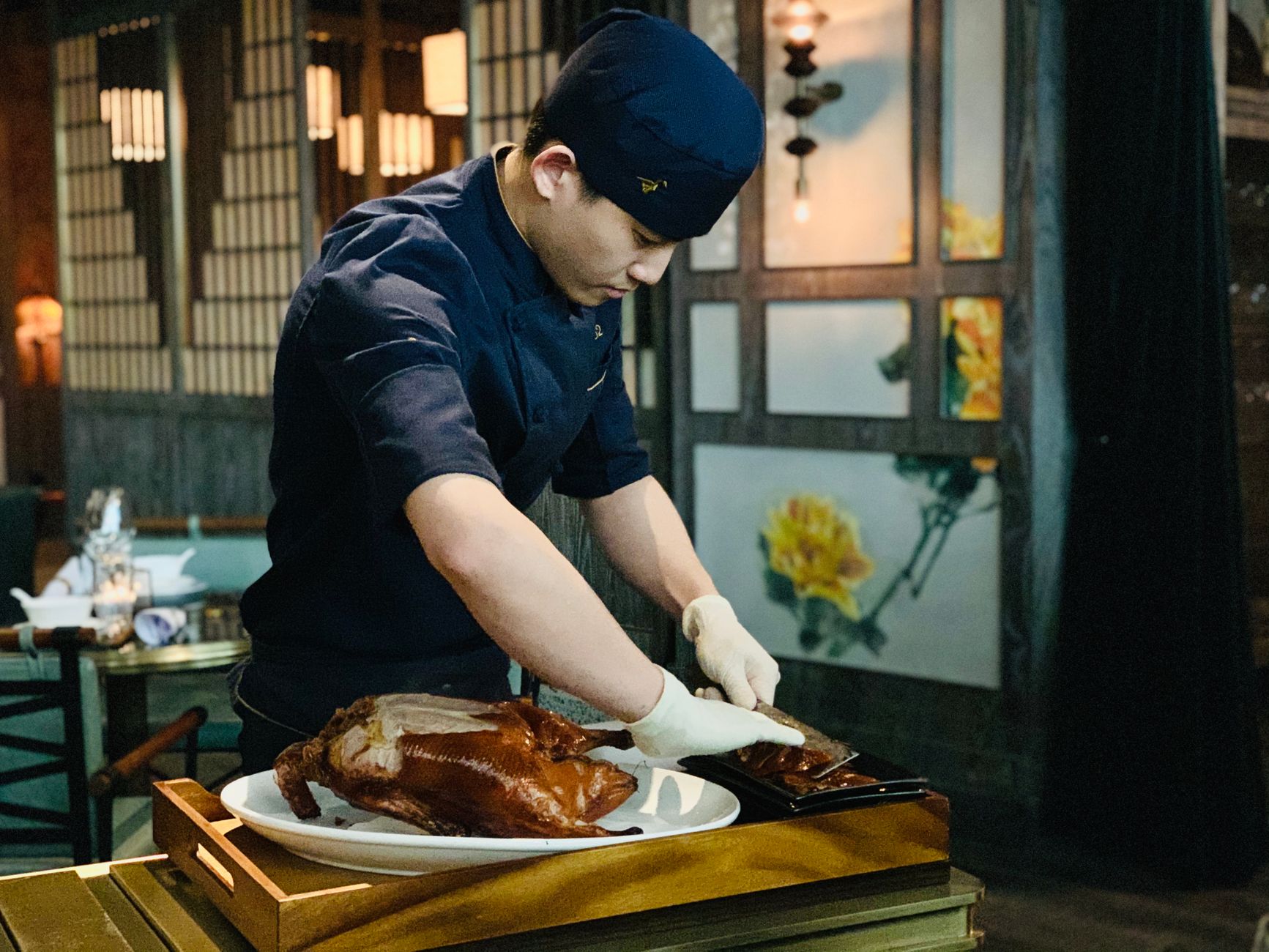
When your order is ready, a chef will wheel a carving cart to your table, carrying the whole roasted duck on a large platter to show guests the finished bird before carving. The chef will carve the duck tableside in 2-3 minutes, producing 80-120 thin slices, most with a small strip of meat attached to a piece of crisp skin. The first 10-15 slices are usually pure skin, considered the highest quality part of the dish, often served with a small dish of white sugar for dipping at higher-end venues.
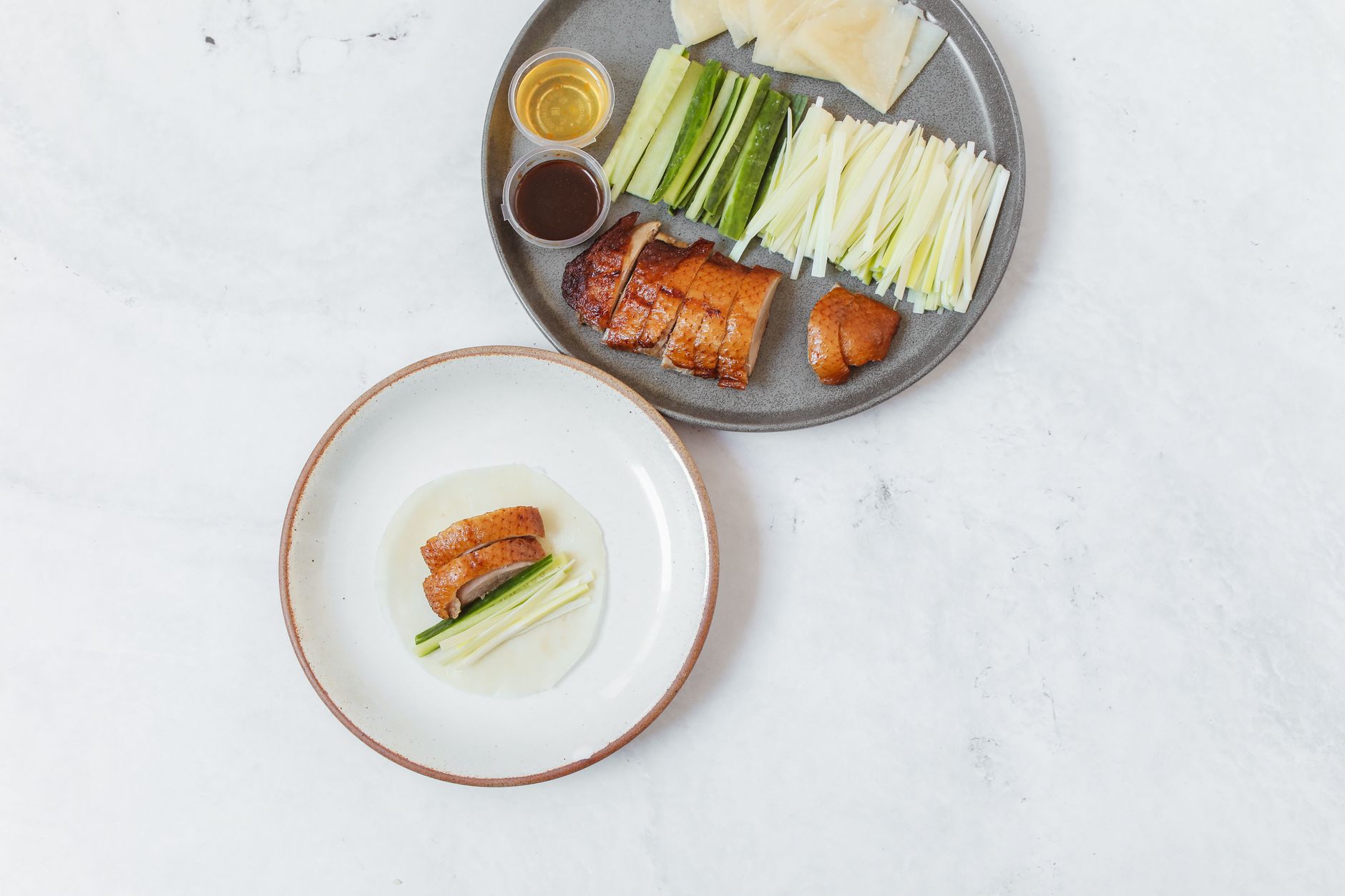
The carved slices are served alongside a fixed set of standard accompaniments:
- Thin, round wheat pancakes, roughly 6 inches in diameter, steamed soft and kept warm in a covered bamboo basket
- Sweet fermented wheat sauce (tianmianjiang), a thick, salty-sweet condiment, sometimes mixed with a small amount of sesame oil
- Slivered scallion whites, cut into 2-inch matchsticks
- Thin cucumber matchsticks, a 20th-century addition to cut through the richness of the duck
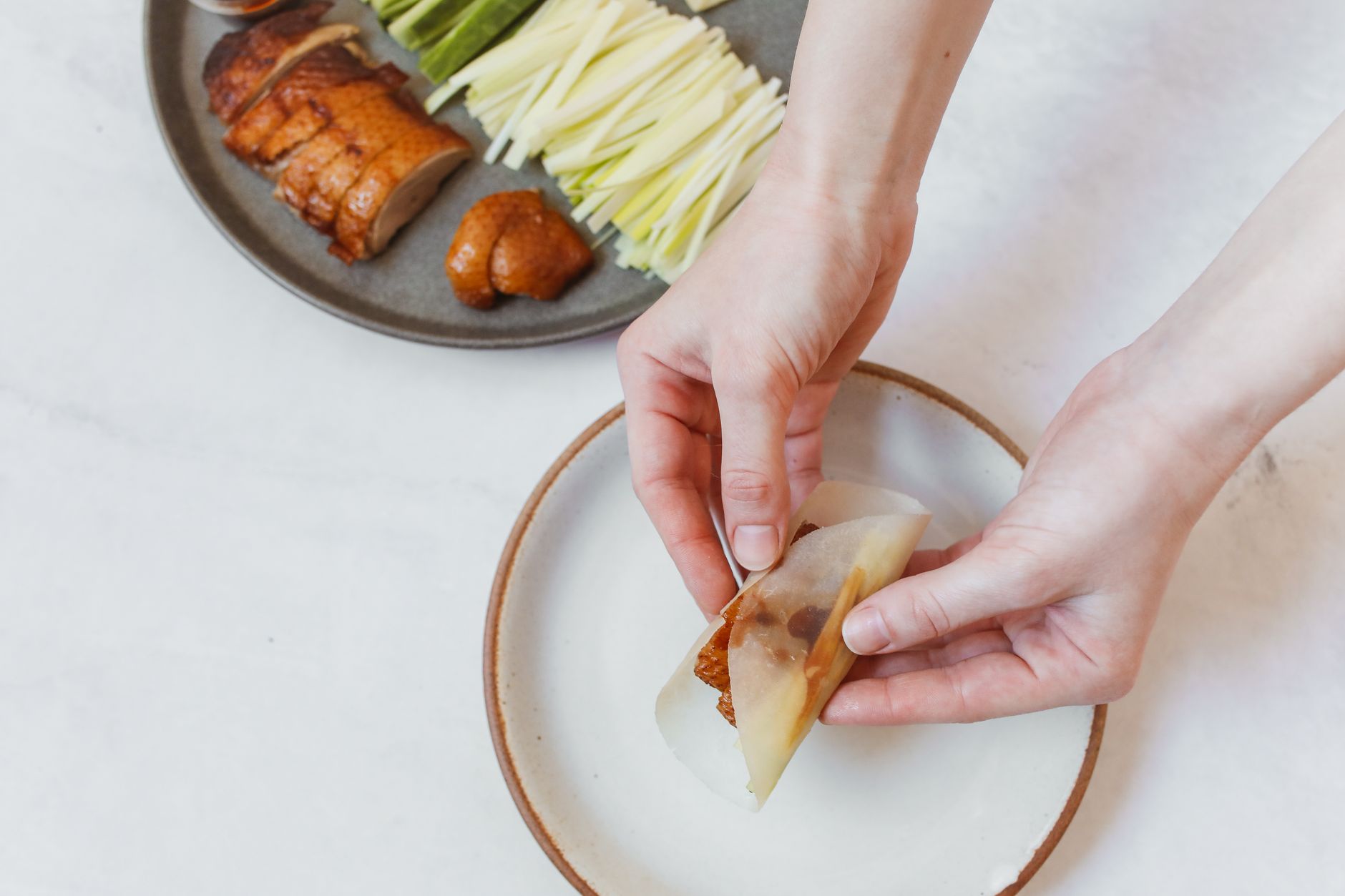
To eat, diners lay one pancake flat on their plate, spread a thin layer of sauce, add 2-3 slices of duck, one piece of scallion and one piece of cucumber, then roll the pancake tightly, folding the bottom edge to catch drips. A properly made roll is small enough to eat in 2-3 bites; overstuffing the pancake will cause the wrap to tear.
After serving the sliced duck, the remaining meat, bones and carcass are not discarded. Most restaurants will prepare a second dish from the remains at no extra cost, either a light, milky duck bone soup boiled with napa cabbage and soft tofu, or stir-fried shredded duck meat with bean sprouts. If a restaurant does not offer this second preparation, or charges an extra fee for it, it is likely catering primarily to tourists rather than local diners.
As of November 2026, a whole traditional Peking duck set for 2-3 people costs between 198 and 398 yuan (roughly $27-$55 USD) at reputable local restaurants. Prices above 500 yuan for a basic duck set almost always include a markup for a prime tourist location, staged performance elements, or third-party booking commissions.
Common Misconceptions and Ordering Tips for Travelers
Many first-time visitors make avoidable mistakes when ordering Peking duck, often due to misinformation from overseas restaurant versions or tourist marketing:
- You do not need to order a whole duck if traveling solo or as a pair. Almost all reputable restaurants serve half-duck sets for 1-2 people, priced between 108 and 198 yuan, with all the same accompaniments and a smaller portion of the secondary bone soup or stir-fry.
- Properly prepared Peking duck skin is not greasy. The extended air-drying and rendering process removes almost all subcutaneous fat, leaving the skin light and crisp. If your duck has chewy, oily skin, it was not prepared to traditional standards.
- Avoid “Peking duck banquets” advertised on street signs near major scenic spots, or sold by unlicensed tour guides. These packages often charge 800+ yuan per person, serve gas-roasted generic duck, and add hidden fees for tea, rice, side dishes and service that are not disclosed upfront.
- Eat the duck immediately after carving. The skin will lose its crispness 4-5 minutes after being sliced, so take only 1-2 quick photos before starting to eat.
For travelers with celiac disease, soy allergies, or other dietary restrictions, note that the standard pancakes and sweet bean sauce contain wheat and soy, and most restaurants do not stock gluten-free alternatives on site. HXXC Travel’s on-the-ground advisors can pre-arrange adapted meals at restaurants that can accommodate specific dietary needs, as ad-hoc requests for special preparations are rarely fulfilled at short notice.
Where to Try Reliable Peking Duck in China
You do not need to pay premium prices or wait for hours at the most famous historic restaurants to eat well-made Peking duck. As of November 2026, these are consistent, reputable options across China, with transparent pricing and no hidden fees:
- Siji Minfu: A local favorite chain with more than 30 locations across China, including multiple sites in central Beijing, Shanghai, Guangzhou and Shenzhen. Whole duck sets start at 238 yuan, roasted over fruit wood, with minimal tourist markup. Wait times are typically 30-60 minutes during peak meal times, and reservations are accepted 3 days in advance. Travelers starting or ending their trip in Guangdong, where HXXC Travel is based in Jiangmen, will find the same standard preparation at Siji Minfu’s Guangzhou and Shenzhen locations, as well as at well-regarded local restaurants in Jiangmen’s Pengjiang district serving Peking duck sets starting at 218 yuan per whole bird.
- Quanjude: The oldest continuously operating Peking duck restaurant, founded in 1864, with its original location on Beijing’s Qianmen Street. Whole duck sets start at 298 yuan. It is the most internationally famous venue, but wait times at the original location can exceed 2 hours during national holidays and peak summer travel season.
- Dadong: A higher-end chain founded by Beijing-based chef Dong Zhenxiang, known for leaner, less fatty duck slices and modern optional accompaniments like caviar or truffle sauce. Whole duck sets start at 368 yuan, popular for business meals and special occasions.
All of these chains use the same standardized preparation process and source ducks from the same dedicated Beijing breeding farms, so quality is consistent across locations. You do not need to travel specifically to Beijing to eat authentic Peking duck, though a meal at a central Beijing restaurant remains a popular stop on first-time Beijing itineraries.
Key Context for First-Time Visitors
Peking duck remains a special-occasion dish for most Beijing families, served at family gatherings for Lunar New Year, weddings, and graduation celebrations, rather than an everyday meal. It is never sold as a street food; any night market or street stall advertising Peking duck for under 50 yuan is selling generic roast duck, not the traditional dish.
Etiquette around Peking duck is relatively relaxed. Restaurant staff will often demonstrate the proper pancake rolling technique for first-time diners without being asked, and there is no social penalty for wrapping a roll incorrectly.
HXXC Travel’s advisors can pre-book reservations at all of the restaurants listed above with no added markup, and can request English-speaking service staff to walk guests through the serving process if needed. All prices and operating details listed in this guide are current as of November 2026. Restaurant opening status, menu prices and wait times can change without notice, so travelers should re-check details 1-2 weeks before their planned visit.
References & updates
This guide is reviewed monthly by HXXC Travel’s on-the-ground team in Jiangmen, Guangdong to reflect current restaurant pricing, opening status, and service changes. Last updated October 23, 2026.
Frequently Asked Questions
Is Peking duck actually from Beijing?
The specific preparation, duck breed and serving style that define modern Peking duck developed in Beijing’s imperial kitchens in the 1400s, after the Ming court moved the capital from Nanjing. While earlier roast duck recipes existed elsewhere in China, these are separate dishes, not early versions of Peking duck.
How much does Peking duck cost in China in 2026?
As of November 2026, a half-duck set for 1-2 people costs 108-198 yuan ($15-$27), and a whole duck set for 2-4 people costs 198-398 yuan ($27-$55) at reputable local restaurants. Prices above 500 yuan for a basic set almost always include a tourist markup. The set price includes pancakes, sauce, vegetable accompaniments, and a secondary dish made from the remaining duck meat and bones.
Do I have to go to Beijing to eat authentic Peking duck?
No. National Peking duck chains use the same Beijing-sourced duck breed, standardized roasting process, and trained chefs at all their locations across major Chinese cities. The quality at these outposts is consistent with Beijing locations, often with shorter wait times and less tourist crowding.
What part of the duck is served first?
The first slices carved from the duck are usually pieces of pure crisp skin, considered the most prized part of the dish. These are sometimes served with a small dish of white sugar for dipping, to highlight the light, crisp texture without the richness of the meat.
Related private tours
- Best Of China — 20-Day Private Tour — 20 days
- Six Cities, One China — 15-Day Family Circuit — 15 days
- Best of China — 19-Day Private Tour — 19 days · From US$2,450