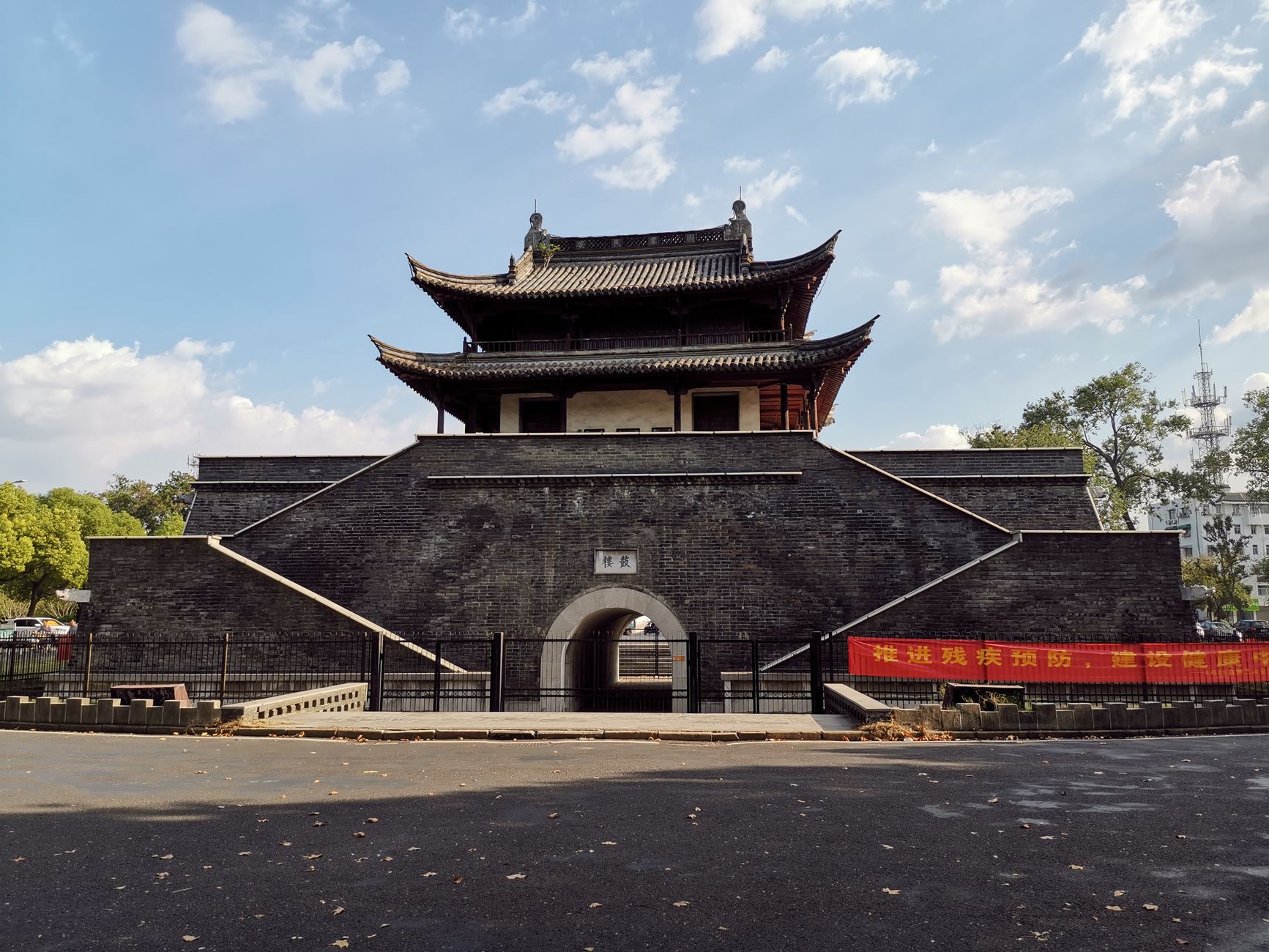
Nanjing and Yangzhou sit one hour apart by high-speed train and together make an ideal 4 to 6-day loop for travelers who want dynastic history, canal-town atmosphere and serious food without the crowds of Shanghai. This guide covers what to see, how to route your days, transport, and what things cost, as of November 2026.
Why Pair Nanjing and Yangzhou
Nanjing was capital of six dynasties and later the Republic of China, so it carries layers of imperial walls, republican-era government buildings and war memorials along the Qinhuai River. Yangzhou, 80 km northeast, grew rich on the Grand Canal under the salt merchants of the Qing dynasty and kept that slow, merchant-town rhythm: garden villas, morning tea houses and narrow lanes along canal branches.
Together they give you a compact slice of Yangtze Delta history. You can fly into Nanjing Lukou International Airport, spend 3 nights in Nanjing, take a 30-minute train to Yangzhou for 2 nights, then continue to Shanghai (1 hour 15 minutes by train) or fly home from Nanjing.
How Many Days to Allow
A minimum useful trip is 5 days: 3 in Nanjing and 2 in Yangzhou. With 6 or 7 days you add a half-day at Niushoushan Cultural Park outside Nanjing or a full day cycling the Grand Canal levees near Yangzhou. First-timers who also want Shanghai should budget 8 to 9 days total.

Getting There and Getting Around
Arriving in Nanjing
Nanjing Lukou International Airport (NKG) has direct flights from many Asian cities and domestic connections from Beijing, Guangzhou, Chengdu and elsewhere. From the airport, Metro Line S1 runs to Nanjing South Railway Station in about 35 minutes for around 6 RMB. Taxis cost roughly 120 to 150 RMB to the city center and take 40 to 60 minutes depending on traffic.
If you are already in China, high-speed trains connect Nanjing to Shanghai (1 hour to 1 hour 20 minutes, 140 to 180 RMB second class), Beijing (3 hours 15 minutes to 3 hours 45 minutes), and Hangzhou (1 hour 30 minutes to 2 hours).
Nanjing to Yangzhou
High-speed trains from Nanjing Railway Station or Nanjing South Railway Station reach Yangzhou Railway Station or Yangzhou East Station in 30 to 50 minutes. Tickets typically cost 50 to 80 RMB second class. Trains run frequently throughout the day. Book through the 12306 app or website; HXXC Travel can also arrange tickets and station transfers for our tour clients.
Local Transport
Nanjing has an extensive metro system covering most major sites, with single rides from 2 to 7 RMB. Yangzhou has no metro; use buses, taxis or ride-hailing via Didi. A taxi across central Yangzhou rarely exceeds 25 RMB.
Nanjing: The Former Capital
Spend at least 2 full days in Nanjing. The city divides naturally into three clusters: Purple Mountain (Zhongshan) to the east, the Ming-era city wall and old quarter in the center, and the riverside memorial area to the west.
Purple Mountain Cluster
Purple Mountain holds the Sun Yat-sen Mausoleum, Ming Xiaoling Mausoleum (the tomb of the Hongwu Emperor, founder of the Ming dynasty), and Linggu Temple. Entry to the Sun Yat-sen Mausoleum is free but you must reserve a time slot through the official WeChat mini-program or website. Ming Xiaoling costs around 70 RMB. Allow a full morning for these three sites; they are connected by electric shuttle buses within the scenic area.
Central City and the Ming Wall
The Ming City Wall, built in the 1360s and 1370s, is the longest remaining ancient city wall in the world. The most scenic section runs along Xuanwu Lake; you can walk the wall top for a few kilometers. Entry to the wall-top walk near Jiming Temple costs around 30 RMB.
Jiming Temple itself, founded in the 6th century and rebuilt in the Ming, is one of the oldest Buddhist temples in Nanjing. Entry is around 10 RMB. Nearby, Nanjing Museum is one of the largest museums in China, with a strong collection of Ming and Qing porcelain and a full-scale replica of a Republican-era Nanjing street. Entry is free but reservation required.
Qinhuai River and Fuzimiao
Fuzimiao, the Confucius Temple area along the Qinhuai River, is the old commercial and entertainment district. By day it is crowded with souvenir shops; by night the lantern-lit riverboat cruises run for around 80 to 100 RMB per person. The area is also the place to try Nanjing salted duck and duck blood vermicelli soup at restaurants like Qi Fen Pai or smaller stalls along the lanes.
Nanjing Massacre Memorial
The Memorial Hall of the Victims in Nanjing Massacre by Japanese Invaders sits west of the city center. It is a sobering, well-presented memorial to the 1937 massacre. Entry is free; reservation required. Allow 2 hours. Note that it is closed on Mondays.
Food in Nanjing
Nanjing cuisine leans toward salted duck, pressed duck, pan-fried beef dumplings and duck blood soup. A bowl of duck blood vermicelli soup at a street stall costs around 15 to 25 RMB. For salted duck, try Zhang Shengji or Liu's. A plate of salted duck runs 40 to 80 RMB depending on size.
Yangzhou: The Slow Canal City
Yangzhou is smaller and quieter than Nanjing. Its wealth came from salt trade and its position on the Grand Canal, which still carries cargo today. The pace is slower; people linger over morning tea (zaocha) for hours, and the main sights are garden villas and canal-side walks rather than grand palaces.
Slender West Lake (Shouxi Hu)
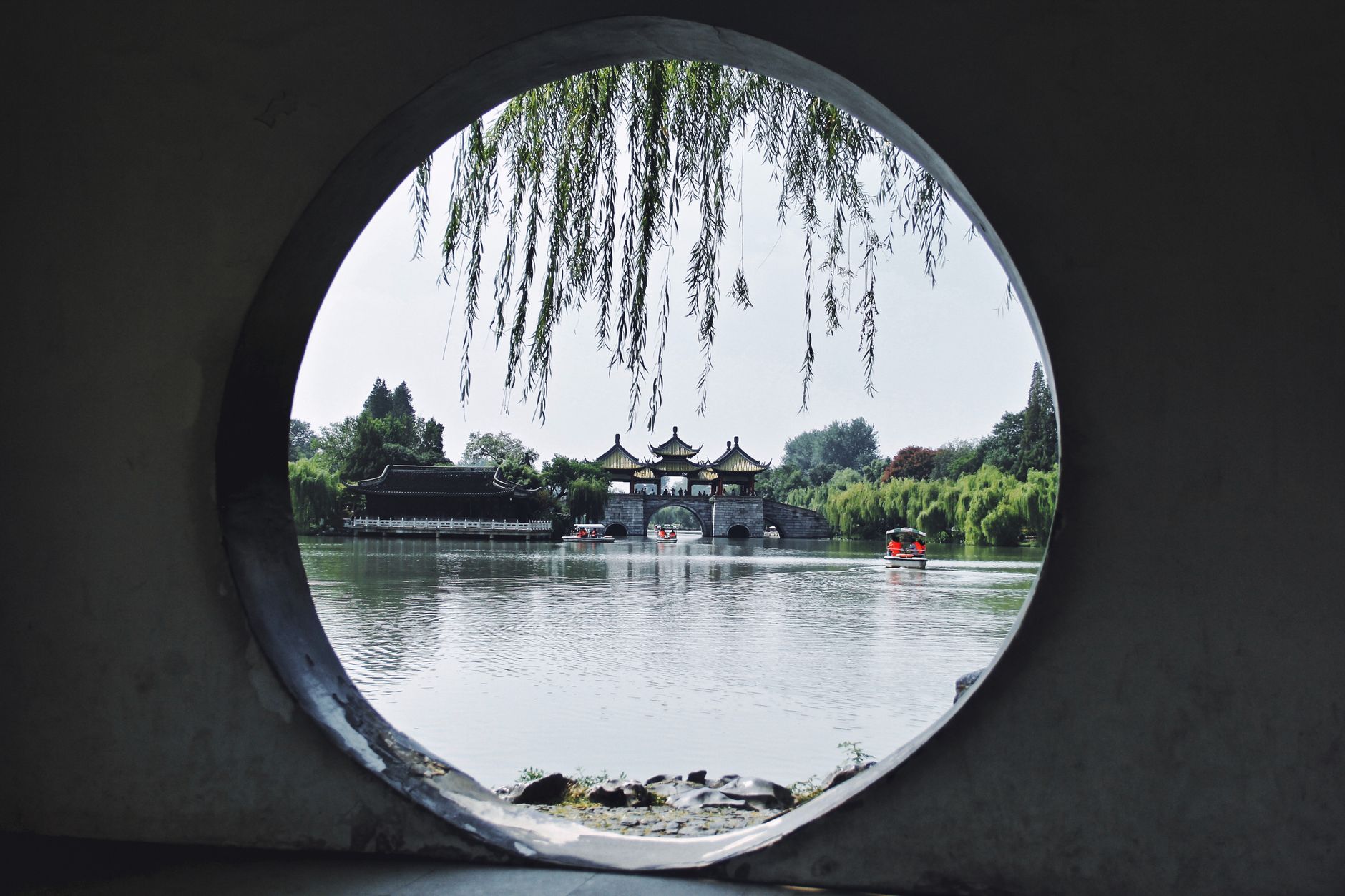
Slender West Lake is a long, narrow lake north of the old city, lined with willows, pavilions and stone bridges. The name comes from its shape, said to resemble West Lake in Hangzhou but narrower. Entry is around 100 to 120 RMB (higher in peak season). You can walk the lakeside path in 2 to 3 hours or take a sculled boat for around 60 RMB. The Five-Pavilion Bridge and the White Dagoba are the signature views.
Geyuan Garden
Geyuan, built in the early 19th century by a salt merchant, is known for its bamboo groves and rockeries representing the four seasons. Entry is around 45 RMB. It is compact; 1 hour is enough.
Heyuan Garden
Heyuan, also called the He Family Garden, is a late-Qing residence and garden with a two-storey corridor building, rare in Chinese garden architecture. Entry is around 45 RMB. Allow 1 to 1.5 hours.

Daming Temple and Jianzhen
Daming Temple, on a hill north of the old city, dates to the 5th century. Its most famous resident was the monk Jianzhen, who attempted six voyages to Japan in the 8th century to spread Buddhism, eventually succeeding despite going blind. The temple includes the Jianzhen Memorial Hall, designed by architect Liang Sicheng in 1963 in a Tang-dynasty style. Entry is around 30 RMB.
Dongguan Street
Dongguan Street is a restored Qing-era commercial street running along a branch of the Grand Canal. It has food stalls, lacquerware shops and old courtyard houses. Walk it in the late afternoon when the lanterns come on. Free to enter.
Yangzhou Morning Tea and Food
Morning tea in Yangzhou is a sit-down affair that can last 2 to 3 hours. The set typically includes crab-roe soup dumplings (tangbao), thousand-layer cake, emerald shaomai and tea. Fuchun Teahouse and Yechun Teahouse are the two historic houses, both along the canal near Dongguan Street. A full morning tea for one person costs 80 to 150 RMB. Yangzhou fried rice is the city's namesake dish and appears on nearly every menu; a good version costs 30 to 50 RMB.
Lion's head meatballs, large pork meatballs braised or steamed, are another local specialty. Try them at Yechun or at smaller restaurants along Guoqing Road.
Suggested 5-Day Route
Day 1: Arrive Nanjing. Settle in. Walk the Ming City Wall at Xuanwu Lake at sunset. Dinner at Fuzimiao.
Day 2: Purple Mountain cluster: Sun Yat-sen Mausoleum, Ming Xiaoling, Linggu Temple. Evening: Qinhuai River boat.
Day 3: Nanjing Museum, Jiming Temple, Presidential Palace (entry around 35 RMB). Evening: duck dinner.
Day 4: Morning train to Yangzhou. Afternoon: Slender West Lake. Evening: Dongguan Street.
Day 5: Morning tea at Fuchun or Yechun. Geyuan and Heyuan gardens. Afternoon: Daming Temple. Evening train onward or overnight in Yangzhou.
If you have a 6th day, add the Grand Canal Museum of Yangzhou (free entry, reservation required) or a half-day cycling trip along the canal levees north of the city.
Practical Matters
Visas
As of November 2026, China requires most foreign visitors to hold a valid visa or qualify for a visa-free policy. China has expanded visa-free entry for citizens of dozens of countries, including 30-day visa-free stays for many European nations and shorter transit exemptions. Policies change frequently; check with the Chinese embassy or consulate in your country before booking. HXXC Travel can provide invitation letters and route advice for clients booking our tours.
Best Time to Visit
Spring (March to May) and autumn (September to November) are the most comfortable seasons. October can be busy around the National Day holiday (October 1 to 7); avoid that week if possible. Summer is hot and humid, often 33 to 38 degrees Celsius in July and August. Winter is cold but uncrowded.
Money
WeChat Pay and Alipay are the dominant payment methods and both now accept foreign credit cards for linking. Carry some cash for small stalls. ATMs that accept foreign cards are available at banks and in shopping malls, but they are fewer than before.
Language
English signage is present at major sites in Nanjing but sparse in Yangzhou. Have your hotel write destination names in Chinese or use a translation app. HXXC Travel tours include English-speaking guides who handle logistics and interpretation.
Where to Stay
In Nanjing, stay near Xinjiekou (central, metro hub) or near Fuzimiao (riverside, atmospheric). Mid-range hotels cost 400 to 700 RMB per night. In Yangzhou, stay near Dongguan Street or Slender West Lake. Mid-range hotels cost 300 to 500 RMB per night.
Note: Ticket prices, opening hours, train schedules and visa policies listed above are current as of November 2026 but can change. Re-check all time-sensitive details before you travel.
FAQ
How many days do you need in Nanjing and Yangzhou?
A combined trip needs at least 5 days: 3 in Nanjing and 2 in Yangzhou. Add a day if you want the Grand Canal Museum in Yangzhou or Niushoushan Cultural Park near Nanjing.
Is Nanjing or Yangzhou better for first-time visitors to China?
Nanjing has more major historical sites and better international transport links, so it works well as the entry point. Yangzhou is quieter and gives a slower, more local pace. Pair them rather than choosing one.
How do you get from Nanjing to Yangzhou?
High-speed trains run from Nanjing Railway Station or Nanjing South to Yangzhou in 30 to 50 minutes. Tickets cost around 50 to 80 RMB second class. Trains run throughout the day. Book on 12306 or through a tour operator.
What is the best time of year to visit Nanjing and Yangzhou?
March to May and September to November. Avoid the October 1 to 7 National Day holiday week, when domestic travel peaks and sites are extremely crowded.
Do you need a visa for China to visit Nanjing and Yangzhou?
Most travelers need a Chinese visa, though visa-free entry is available for citizens of many countries as of November 2026. Check current policy with your nearest Chinese embassy before booking flights.
Can you use WeChat Pay and Alipay as a foreign visitor in Nanjing and Yangzhou?
Yes. Both platforms accept foreign Visa and Mastercard for linking. You can pay at restaurants, shops and transport in both cities. Carry some cash for small stalls that do not use digital payment.
Related private tours
- Best Of China — 20-Day Private Tour — 20 days
- Best Tour In China - 19 Days Trip — 19 days · From US$2,896
- Six Cities, One China — 15-Day Family Circuit — 15 days