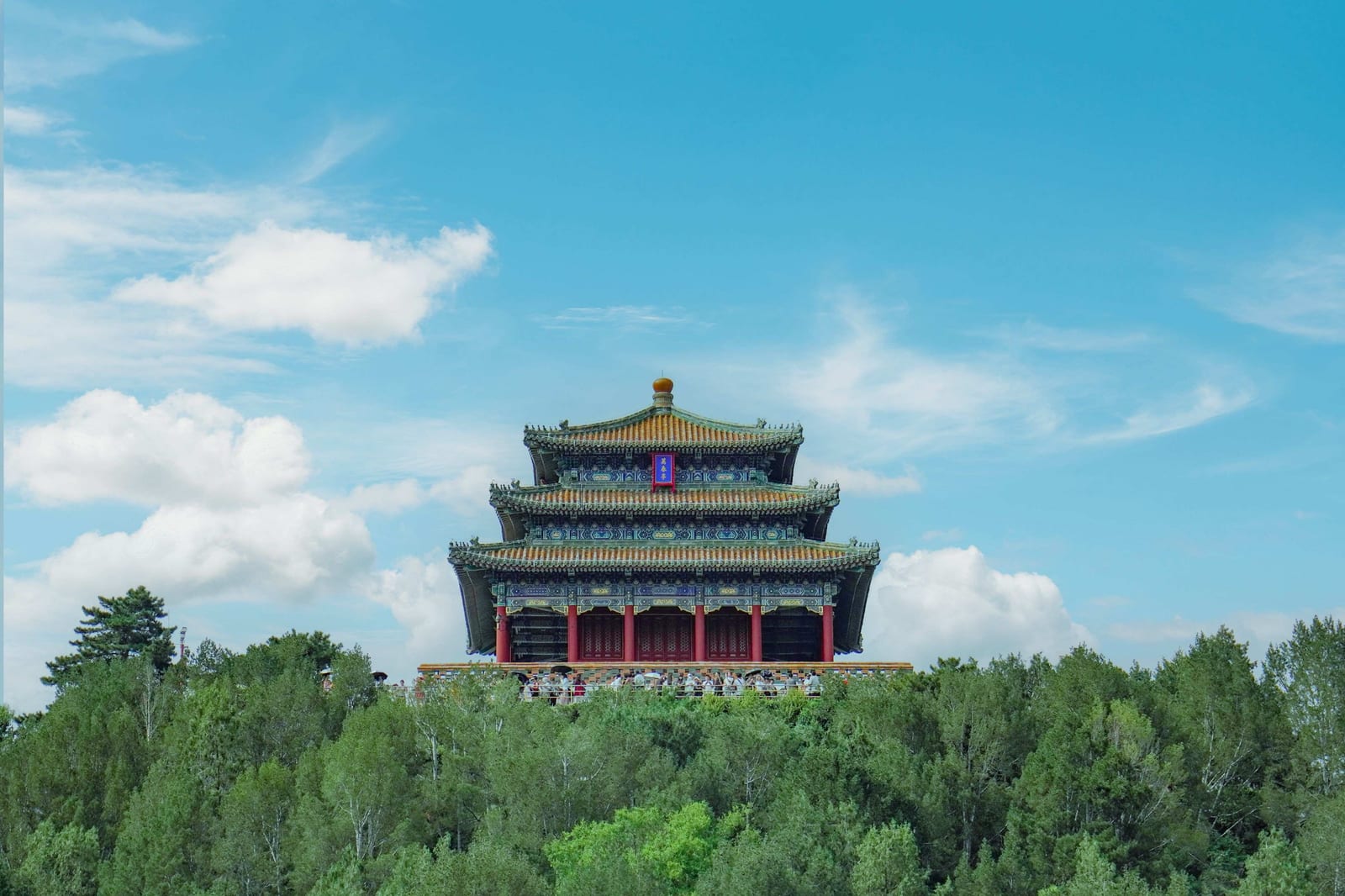
Chinese parks come alive at dawn with tai chi groups, mahjong tables, water calligraphy, and square dancing. For first-time visitors, spending a morning in a public park is the fastest way to understand how ordinary Chinese people socialize, exercise, and spend leisure time. This guide covers where to go, what you will see, and how to join in respectfully.
Why Chinese Park Life Matters to Travellers
Most China itineraries focus on temples, museums, and landmarks, but the country's public parks are where daily culture actually happens. Between 6am and 9am, parks fill with retirees practicing tai chi, groups doing line dances, men carrying birdcages, and friends settling into marathon mahjong sessions. You do not need a guide or a ticket to most city parks, and the people you encounter are usually happy to have observers.
Park life also gives you a free, low-pressure cultural experience on jet-lag mornings. If you arrive in China and wake at 4am because of the time difference, a sunrise walk through a local park turns a disadvantage into an opportunity.
Tai Chi in China's Parks
What Tai Chi Looks Like in Practice
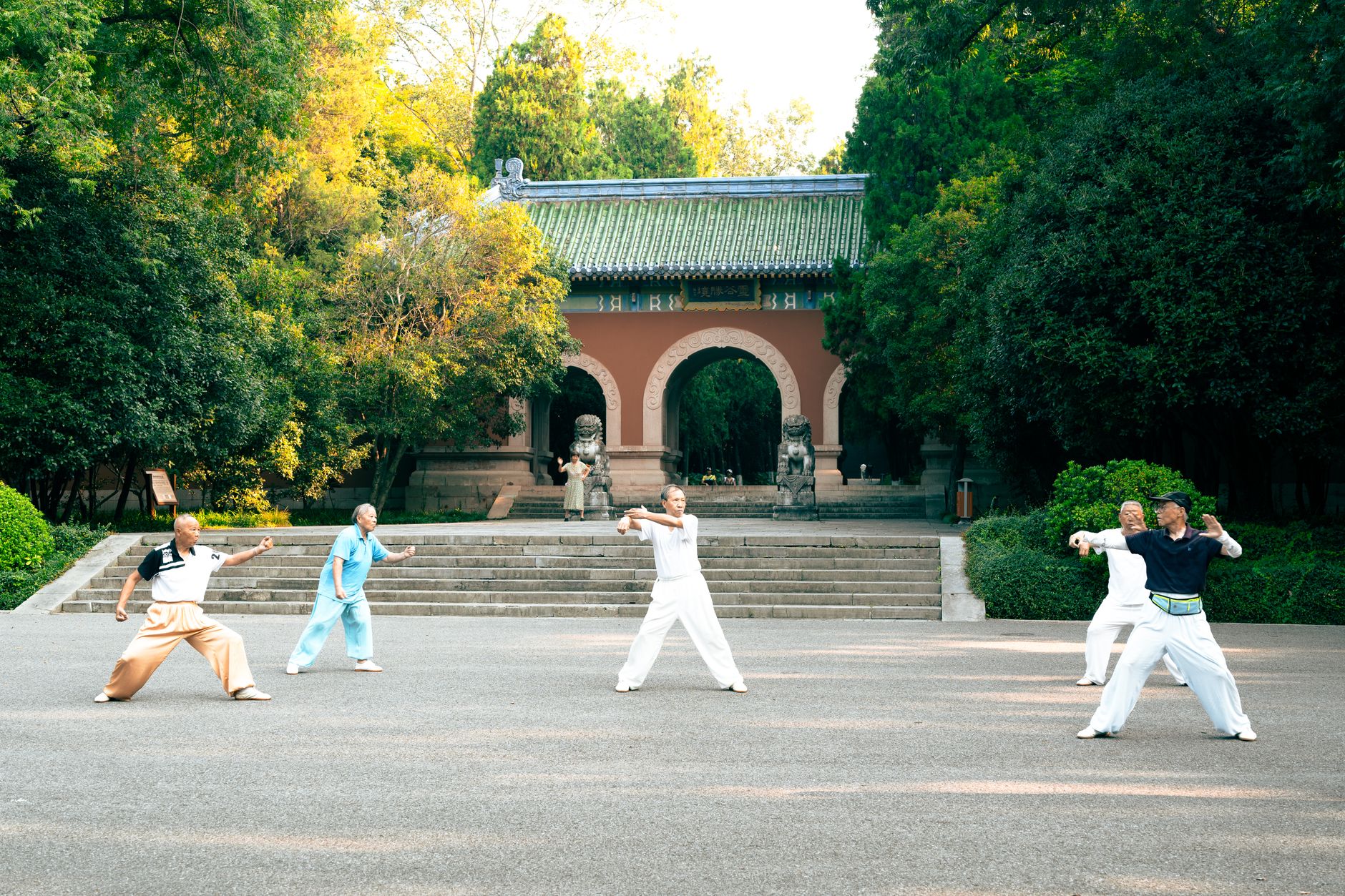
Tai chi (taijiquan) is a slow, flowing martial art practiced for health, balance, and meditation. In Chinese parks, you will typically see groups of 5 to 30 people moving in unison, led by an experienced practitioner in the front row. Sessions usually run from about 6:30am to 8:00am, though some groups gather as early as 6:00am in summer.
The most common style you will see is Yang-style tai chi, characterized by slow, large movements. Less commonly, you may see Chen-style, which includes explosive bursts of power, or practitioners with swords or fans performing tai chi weapon forms.
Where to Watch or Join Tai Chi Sessions
Major city parks with regular tai chi activity include:
- Temple of Heaven Park (Beijing) — one of the most famous spots, with multiple groups practicing near the circular altar areas from dawn onward
- Beihai Park (Beijing) — groups gather along the lakefront and in open plazas
- Fuxing Park (Shanghai) — a French Concession-era park with daily tai chi, often with older practitioners who have decades of experience
- People's Park (Chengdu) — tai chi groups share space with teahouse-goers and mahjong players
- Yuexiu Park (Guangzhou) — large hillside park with morning exercise groups near the Five Rams sculpture

How to Join a Tai Chi Session
Most groups are informal and welcome quiet observers. If you want to join in, stand at the back of the group and follow along. You do not need to ask permission first, but a polite nod or smile to the leader is appreciated. Wear comfortable clothes and flat-soled shoes. Do not interrupt the flow to ask questions mid-session; wait until the group finishes.
Some parks in Beijing and Shanghai have English-speaking tai chi instructors who run paid sessions for foreigners. Prices typically range from 100 to 300 RMB per session. HXXC Travel can arrange guided tai chi experiences with English instruction as part of a customized itinerary if you prefer a structured introduction.
Mahjong Culture in China
What Mahjong Is and Why It Matters
Mahjong is a tile-based game for four players, using 144 tiles marked with Chinese characters and symbols. Each player builds a wall of tiles, then draws and discards in turn, aiming to form a complete hand of four sets and one pair. A full game typically lasts 1 to 2 hours, but social mahjong sessions can run all afternoon.
Mahjong is not just a game in China; it is a primary social activity, especially among older adults. In Chengdu and other Sichuan cities, mahjong tables fill teahouses and riverside pavilions. In southern China, particularly Guangdong, mahjong is a fixture of family gatherings and festivals.
Where to See Mahjong Being Played
- People's Park Teahouse (Chengdu) — the most accessible spot for visitors, with dozens of tables under bamboo canopies; you can order tea and watch games unfold beside you
- Heming Teahouse (Chengdu, inside People's Park) — often described as Chengdu's most famous teahouse, with constant mahjong activity
- Shamian Island (Guangzhou) — benches and pavilions along the riverfront where locals play cards and mahjong
- Parks and residential courtyards across Jiangmen and other Pearl River Delta cities — HXXC Travel's home base, where mahjong is part of daily neighborhood life
Can You Learn to Play as a Visitor?
Learning mahjong well takes time, but you can grasp the basics in a single session. Some teahouses in Chengdu will explain the rules if you are buying tea and the table is not full. The challenge for non-Chinese speakers is reading the tile characters, though many tiles also have number markings.
If you want a structured introduction, HXXC Travel can arrange a mahjong lesson with an English-speaking host in Chengdu, Guangzhou, or Jiangmen. A typical session runs 90 to 120 minutes and covers tile recognition, basic strategy, and a full practice game.
The Broader Ecosystem of Chinese Park Life
Activities Beyond Tai Chi and Mahjong
Chinese parks host a wide range of morning and evening activities. When you visit, you are likely to encounter several of these simultaneously:
- Guangchang wu (square dancing) — choreographed group dancing, usually to amplified Chinese pop music, practiced mainly by middle-aged and older women; most active in evenings from 7pm to 9pm
- Water calligraphy — practitioners use large brushes and water on stone pavement to write poetry and characters that evaporate as they dry
- Xiangqi (Chinese chess) — fast-paced games played on large concrete boards, often with spectators kibitzing from all sides
- Bird walking — older men carry covered birdcages to parks, hang them in trees, and let the birds sing to each other; most common in Beijing and northern China
- Badminton and table tennis — informal games on shared courts
- Exercise equipment — brightly painted outdoor gym stations installed in most public parks, free to use
- Singing and instrumental music — solo singers, erhu players, and informal choirs, especially in larger parks
Morning vs Evening Park Life
The character of a Chinese park changes dramatically by time of day. Mornings from 6am to 9am are for tai chi, jogging, stretching, and bird walking. Evenings from 7pm to 9pm are for square dancing, family strolling, and socializing. Afternoons are quieter, except in teahouse-heavy parks like Chengdu's People's Park, where mahjong sessions peak between 2pm and 5pm.

Where to Experience Park Life in Each Major City
Beijing
Beijing's parks are among the best in China for cultural observation because they are large, historic, and heavily used by residents. Temple of Heaven Park, Beihai Park, and Ritan Park all have strong morning activity. Jingshan Park offers a hilltop view of the Forbidden City and morning exercise groups at its base. Entry fees are minimal, typically 2 to 15 RMB per person as of November 2026, though prices can change, so verify before visiting.
Shanghai
Shanghai's park scene is slightly more compact but equally active. Fuxing Park is the top choice for tai chi and morning exercise, with the added appeal of its French Concession setting. People's Park and Zhongshan Park also have regular activity. For evening square dancing, the Bund waterfront and Lujiazui riverside areas host informal groups.
Chengdu
Chengdu is the capital of Chinese leisure culture. People's Park is the centerpiece, combining tai chi, mahjong, teahouses, and match-making corners where parents post profiles of their unmarried children. The park is free to enter and busiest from 7am to 11am and again from 2pm to 5pm. HXXC Travel recommends Chengdu as the single best city for first-time visitors who want to experience the full range of park life in one location.
Guangzhou and Jiangmen
In Guangzhou, Yuexiu Park and Shamian Island offer morning tai chi and evening social activity. In Jiangmen, HXXC Travel's home city, parks like Donghu Park and Baisha Park host morning exercise groups, mahjong players, and evening dancers in a more local, less touristy setting. Jiangmen is also a center of Cantonese culture, and park life here reflects the slower pace of the Pearl River Delta.
Practical Tips for Joining In
Etiquette and Behavior
- Arrive quietly and watch for a few minutes before approaching any group
- Photography is generally fine, but ask before taking close-up photos of individuals
- Do not touch mahjong tiles or game boards unless invited
- A simple nihao (hello) and a smile go a long way
- If you join tai chi, mirror the group's movements from the back row
- Bring small cash (10 to 20 RMB) if you plan to buy tea at a teahouse
What to Bring
- Comfortable walking shoes with flat soles
- A reusable water bottle
- Small cash for park entry and teahouse visits
- A translation app on your phone, as most park-goers will not speak English
Timing Your Visit
For the best experience, arrive at a park between 6:30am and 8:00am. This is when activity peaks. If you cannot wake that early, the late afternoon from 4pm to 6pm is the second-best window. Avoid midday, when parks are mostly empty in summer heat.
FAQ
Can foreigners join tai chi in Chinese parks?
Yes. Most tai chi groups in public parks are informal and do not mind observers. Stand at the back and follow along. You do not need to register or pay. For a structured lesson with English instruction, arrange a guided session through a tour operator like HXXC Travel.
Is it rude to watch people play mahjong in China?
No. Mahjong is a public social activity in parks and teahouses, and spectators are normal. In Chengdu's People's Park, you can sit at an adjacent table with tea and watch freely. Do not touch tiles or offer advice unless invited.
What time do Chinese parks get busy?
Mornings from 6:00am to 9:00am and evenings from 7:00pm to 9:00pm are the busiest times. Park activity is weather-dependent; rainy and very cold days reduce turnout significantly.
Do I need to pay to enter public parks in China?
Many city parks are free, but some historic or scenic parks charge a small entry fee, typically 2 to 15 RMB as of November 2026. Check current prices before visiting, as fees can change seasonally and policies may vary by city.
Can I learn mahjong if I do not read Chinese characters?
Yes, but it takes extra effort. Many tiles include number markings alongside characters, and the suit patterns (dots, bamboo, characters) are visual. A short lesson with an English-speaking host is the most efficient way to learn. HXXC Travel offers this in Chengdu, Guangzhou, and Jiangmen.
Related private tours
- Best Of China — 20-Day Private Tour — 20 days
- Grand China Explorer — 15 Days — 15 days · From US$1,500
- Six Cities, One China — 15-Day Family Circuit — 15 days