
Hunan food is defined by bold, pure chili heat (called xiang la), while Sichuan food pairs chili with numbing Sichuan peppercorn for its signature ma la tingle. The two cuisines are among China’s eight great culinary traditions, and both are top draws for international travelers seeking spicy, flavorful meals on their first China trip.
This guide breaks down their key differences, signature dishes to order, and how to plan a food-focused itinerary covering both regions with HXXC Travel. As of November 2026, all major dining districts in Hunan and Sichuan are open to international visitors, but recheck small restaurant opening hours before travel, as some family-run spots close for holidays or private events.
Core Flavor Differences: Hunan vs Sichuan Spice
Hunan’s Xiang La: Pure, Drying Chili Heat
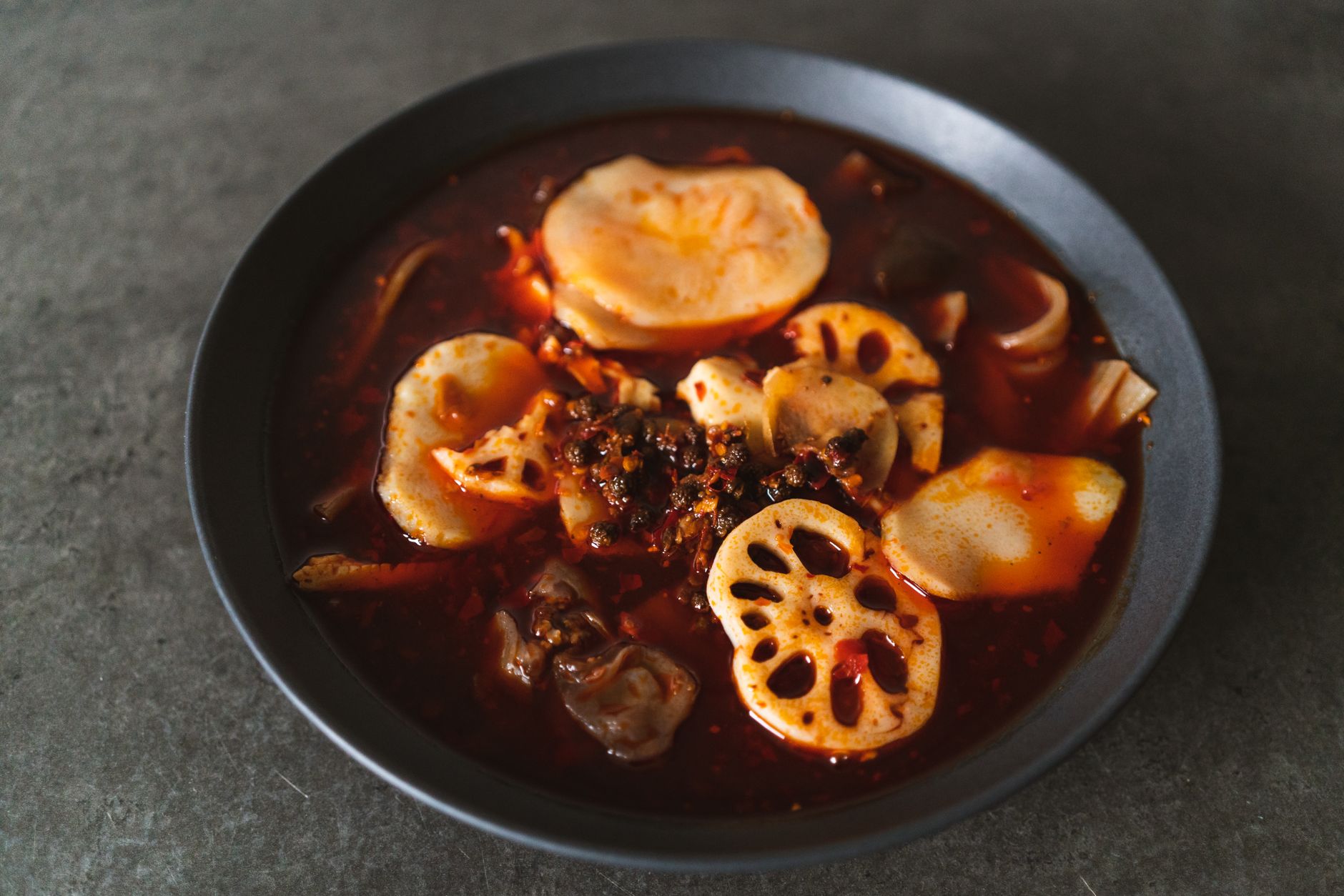
Hunan’s signature spice profile, xiang la (literally “Hunan-style spicy”), centers entirely on chili heat without numbing ingredients. The heat is upfront and lingers as a warm, drying sensation on the tongue, often paired with sour notes from pickled vegetables.
Hunan cooks use chili in every form: fresh red chilies, dried chili flakes, pickled chilies, and chili paste. For many Hunan locals, chili is a staple ingredient, not an optional condiment – even breakfast dishes like congee or rice noodles are often served with chili oil on the side.
Sichuan’s Ma La: Numbing Heat + Complex Layers
Sichuan’s most famous flavor is ma la, which combines chili heat with the tingly, numbing sensation of Sichuan peppercorn (huajiao), a citrusy spice native to the region. The numbing effect is not painful; it creates a buzzing feeling on the tongue that balances out the chili heat.
Beyond ma la, Sichuan cuisine is known for “multiple flavors in one bite” – dishes often balance spicy, sweet, sour, salty, and umami notes simultaneously. It is common for a single Sichuan dish to have 5 or more distinct flavor layers, whereas Hunan dishes typically focus on 2-3 core flavors (spicy, sour, savory).
Cooking Methods & Key Ingredients
Hunan Cuisine Staples
Hunan is called the “land of fish and rice” for its abundant rivers, lakes, and farmland, so its cuisine relies heavily on fresh, local ingredients. Key staples include:
- Fresh and pickled red chilies, the base of most spicy dishes
- Hunan smoked pork, cured with tea leaves and rice hulls for a deep, smoky flavor
- Fermented black beans (douchi), used to add umami to stir-fries
- Lotus root, river fish, and shrimp from Dongting Lake
- Pickled long beans and radishes, used for sour-spicy balance
Common cooking methods include stir-frying, steaming, smoking, and pickling. Most Hunan dishes are home-style, with simple preparation that highlights fresh ingredients.
Sichuan Cuisine Staples
Sichuan cuisine uses a wider range of fermented ingredients and cooking techniques than Hunan. Key staples include:
- Pixian broad bean paste (doubanjiang), a fermented chili-bean paste with protected geographical indication status, aged 3+ years in high-end restaurants
- Sichuan peppercorn, used whole, ground, or infused into oil
- Fermented black beans, Sichuan pickles (suan cai), and chili oil
- Bamboo shoots, mushrooms, and pork from the Sichuan basin
Cooking methods include dry-pot (gan guo), water-boiled (shui zhu), cold tossing (liang ban), and braising. Sichuan has a larger variety of cold appetizers and street foods than Hunan, many served at room temperature for quick, casual meals.

Signature Dishes to Order in Each Cuisine
Must-Try Hunan Dishes
- Steamed Fish Head with Chopped Chili (Duo Jiao Yu Tou): The iconic Hunan spicy dish, made with a fresh fish head covered in pickled red chilies and steamed for 20-30 minutes. The sour-spicy sauce is often spooned over rice.
- Chairman Mao’s Red Braised Pork (Mao Shi Hong Shao Rou): A non-spicy Hunan classic, made with pork belly braised in soy sauce, sugar, and rice wine. It has a sweet-savory flavor and melt-in-your-mouth texture.
- Farmhouse Stir-Fried Pork (Nong Jia Xiao Chao Rou): Thinly sliced pork belly stir-fried with fresh chilies, garlic, and fermented black beans. It is a common home-style dish served with white rice.
- Changsha Stinky Tofu (Changsha Chou Doufu): A famous street food, made with fermented tofu deep-fried until crispy, then tossed in a chili-garlic sauce. It has a strong smell but a mild, savory flavor.
- Spicy Crayfish (Xiao Long Xia): A summer staple in Changsha, cooked with beer, garlic, dried chilies, and a light sprinkle of Sichuan peppercorn (a modern addition, not traditional).
Must-Try Sichuan Dishes
- Mapo Tofu (Ma Po Dou Fu): Soft silken tofu cooked in a spicy, numbing sauce with minced pork, doubanjiang, and ground Sichuan peppercorn. It is the classic example of ma la flavor.
- Twice-Cooked Pork (Hui Guo Rou): Pork belly boiled first, then sliced and stir-fried with doubanjiang, garlic sprouts, and sweet bean paste. It is savory and slightly spicy, with no strong numbing flavor.
- Water-Boiled Fish (Shui Zhu Yu): Thin slices of white fish poached in a spicy chili oil broth, then topped with fresh dried chilies and Sichuan peppercorn that are sizzled with hot oil to release their aroma.
- Dan Dan Noodles (Dan Dan Mian): A street food classic, made with wheat noodles tossed in a sauce of chili oil, sesame paste, minced pork, and Sichuan peppercorn. It has a balanced spicy-savory-numbing flavor.
- Sichuan Hot Pot (Huo Guo): A communal meal where diners cook raw meat, vegetables, and tofu in a simmering pot of spicy broth. Many restaurants offer a mandarin duck (yuan yang) pot with half spicy, half mild broth.
Regional Food Culture & Eating Etiquette
Hunan Food Culture
Hunan’s food culture is casual and home-style, with a focus on shared family meals. Changsha, the provincial capital, has one of China’s most vibrant night food scenes, with streets like Taiping Old Street and Pozi Street open until 2 a.m. or later. Street food is a big part of the culture, and it is common to see locals eating crayfish or stinky tofu at plastic tables on the sidewalk.
Etiquette tips for Hunan:
- If you cannot handle spice, say “wo bu chi la” (I don’t eat spicy) clearly when ordering. Many dishes have hidden chili even if they do not look spicy.
- It is polite to try a small bite of every dish served.
- Tipping is not expected in most restaurants, though some high-end spots may add a 10-15% service charge.
Sichuan Food Culture
Sichuan’s food culture is more communal and social than Hunan’s, with hot pot being a popular meal for groups of friends or family. Chengdu, the capital, is a UNESCO City of Gastronomy, with thousands of restaurants ranging from street stalls to Michelin-starred spots. Locals often eat out for meals, and lunch and dinner times can be busy, with long waits at popular restaurants.
Etiquette tips for Sichuan:
- When eating hot pot, use separate chopsticks for raw and cooked food if provided. It is normal to spit out Sichuan peppercorns into a small plate or on the table edge.
- Many Sichuan dishes are served family-style, with shared plates in the middle of the table.
- As of November 2026, a casual hot pot meal for two costs 150-250 RMB (about 21-35 USD), while high-end versions with premium beef or seafood can cost 400+ RMB per person.
How to Fit Both Food Experiences Into Your China Itinerary
Hunan and Sichuan are adjacent provinces in central and southwest China, making them easy to combine in a 10-14 day food-focused trip. HXXC Travel designs custom food tours for first-time international visitors, with English-speaking guides who know local favorite spots and can help with restaurant reservations (many popular spots have 2+ hour wait times for walk-ins).
A sample 10-day food itinerary:
- Days 1-3: Changsha (Hunan)
- Day 1: Arrive in Changsha, walk Taiping Old Street for street food (stinky tofu, sugar oil cakes, spicy rice noodles).
- Day 2: Day trip to Shaoshan (Mao Zedong’s birthplace) to try authentic red braised pork and farmhouse stir-fried pork at a local family restaurant.
- Day 3: Day trip to Dongting Lake to try fresh steamed fish head with chopped chili and lotus root soup.
- Day 4: Take the high-speed train from Changsha to Chengdu. As of November 2026, the ride takes about 5.5 hours; recheck schedules before travel as timetables change seasonally.
- Days 5-8: Chengdu (Sichuan)
- Day 5: Chengdu street food tour: try dan dan noodles for breakfast, boboji (spicy skewers) for lunch, and hot pot for dinner. Visit Wenshu Fang for local snacks and tea houses.
- Day 6: Day trip to Leshan to see the Leshan Giant Buddha and try Leshan sweet skin duck (tian pi ya) and burning noodles (shao mian).
- Day 7: Sichuan cooking class to learn how to make mapo tofu and kung pao chicken, with a market visit to buy ingredients.
- Day 8: Free day to explore Jinli Ancient Street or Kuanzhai Alley, or visit the Chengdu Research Base of Giant Panda Breeding (with a stop for spicy cold noodles nearby).
- Days 9-10: Optional extension to Chongqing for hot pot and street food, or fly back to your departure city.
Practical tips for food travelers:
- Carry over-the-counter stomach medicine if you are not used to spicy or oily food.
- Most mid-range and high-end restaurants accept Alipay or WeChat Pay linked to foreign credit cards as of November 2026, but small street stalls may only take cash, so carry some RMB.
- If you have a low spice tolerance, ask for “wei la” (mild spicy) or “bu yao la jiao” (no chili). For Sichuan food, ask for “bu yao hua jiao” (no Sichuan peppercorn) if you do not like the numbing sensation.
FAQ
Is Hunan food spicier than Sichuan food?
It depends on how you measure heat. Hunan food often has a more intense, pure chili heat that lingers as a drying sensation on the tongue. Sichuan food has less upfront chili heat in many dishes, but adds numbing Sichuan peppercorn that creates a more complex, tingly feeling. For people who define “spicy” only as burning heat, Hunan may feel spicier. For those sensitive to numbing, Sichuan may feel more intense.
What is the difference between Hunan ma la and Sichuan ma la?
Ma la (numbing-spicy) is a signature flavor of Sichuan cuisine, not traditional Hunan cuisine. Hunan’s signature spice profile is xiang la, which is pure chili heat without Sichuan peppercorn. Some modern Hunan restaurants may offer ma la dishes, but they are not part of the classic Hunan culinary tradition.
Can I order non-spicy dishes in Hunan and Sichuan restaurants?
Yes, both cuisines have a wide range of non-spicy options. In Hunan, try red braised pork, steamed egg custard, lotus root soup, or stir-fried green vegetables. In Sichuan, order sweet skin duck, braised pork with brown sauce, vegetarian cold dishes, or a mild hot pot broth. Always tell your server “wo bu chi la” (I don’t eat spicy) when ordering, as many dishes have hidden chili by default.
Which city is better for first-time food travelers: Changsha or Chengdu?
Chengdu is often more accessible for first-time international visitors, with more English menus, international hotel options, and a wider variety of dish styles including milder choices. Changsha has a more casual, street-food focused culture, with bolder chili heat that is better for travelers who already enjoy spicy food. Combining both is ideal, as they are connected by a 5.5-hour high-speed train ride as of November 2026.
Do I need a visa to visit Hunan and Sichuan for a food trip?
Most international travelers need a Chinese tourist L visa to visit Hunan and Sichuan. As of November 2026, citizens of 50 countries (including Singapore, Japan, and Brunei) can enter China visa-free for up to 30 days. Always check the latest visa policy with your local Chinese embassy or ask HXXC Travel for guidance before booking your trip.
What is the best time of year to go on a Hunan and Sichuan food tour?
The most comfortable weather is in spring (March to May) and autumn (September to November), when temperatures are mild and walking between street food stalls is pleasant. Summer (June to August) is hot and humid, but it is peak crayfish season in Hunan and cold noodle season in Sichuan, which many food travelers prefer. Winter (December to February) is cool, but it is the most popular time for Sichuan hot pot.
Related private tours
- Chengdu Pandas & Ancient Waterworks — 4 Days — 4 days
- Best Tour In China 10 Days Trip — 10 days · From US$2,780
- Best Tour In China - 19 Days Trip — 19 days · From US$2,896