Quick answer: Most first-time visitors get the best Huangshan experience on a 2-day itinerary: ride Yungu Cable Car up, hike the core peak loop, stay one night on-mountain, watch sunrise at Bright Top, then take Jade Screen Cable Car down. As of November 2026, peak-season entry tickets cost 190 yuan per adult, all visitors must book timed entry in advance, and cable cars may close temporarily during bad weather. Recheck ticket prices, cable car operating hours, and trail closures on the official Huangshan Tourism platform 1–2 weeks before your trip, as rules can shift with little notice.
Core Huangshan Facts and 2026 Visitor Basics
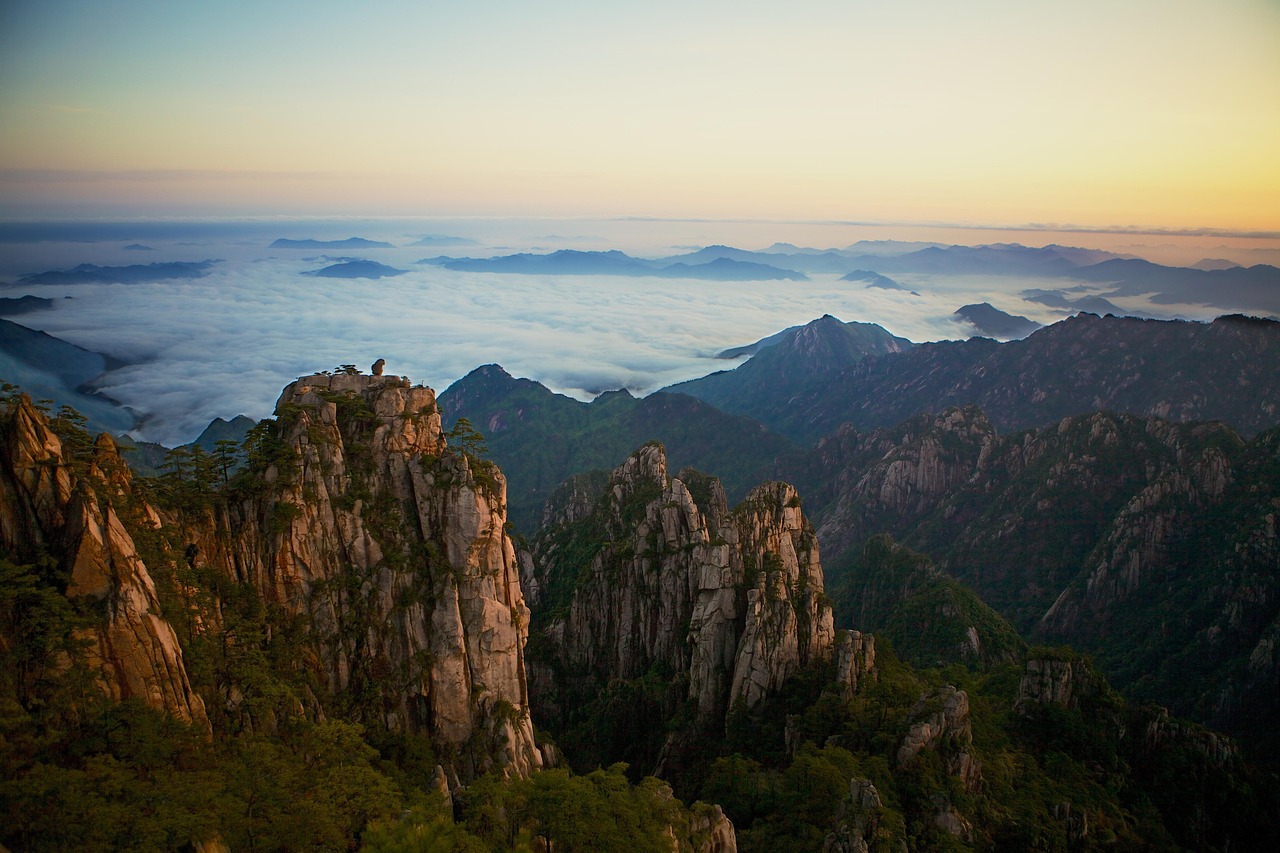
Huangshan, or Yellow Mountain, is a granite peak range in southern Anhui province, protected as a UNESCO World Heritage Site for its distinctive shaped pines, jagged rock formations, sea of clouds, and long history of influence on Chinese landscape art. The park’s developed trail network sits between 1600m and 1864m at its highest point, with no private vehicle access to upper trailheads.
As of November 2026, adult entry tickets cost 190 yuan in peak season (March 1 to November 30) and 150 yuan in off-peak (December 1 to February 28/29). Timed entry slots must be booked at least one day in advance, and tickets are valid for a single entry over three consecutive days, allowing visitors to stay multiple nights on the mountain without repaying entry.
Three cable cars serve the upper trails: Yungu on the eastern approach, Jade Screen on the southern approach, and Taiping on the northern approach. One-way cable car fares range 80–90 yuan per adult, with reduced rates for children under 1.2m and adults over 65. Cable cars typically run 7:00–17:00, with extended early morning hours during peak holiday periods, but may pause operations for 1–2 hours or full days during high winds, thunderstorms, or heavy winter snow.
All visitors must ride official park shuttle buses between gateway town parking lots and cable car stations, as private cars are not allowed on park roads. Shuttle fares range 19–38 yuan per route depending on distance. HXXC Travel, based in Jiangmen, Guangdong, can arrange private direct transfers to Huangshan from Guangdong province cities or nearby hubs like Hangzhou and Shanghai, with English-speaking guides to navigate shuttle and cable car queues.
Huangshan Route Options by Fitness Level
All upper mountain trails are paved with cut stone steps, with clear Mandarin and English signage at every major junction. There are no unpaved backcountry trails open to independent visitors, and mobile signal is reliable except in the deepest sections of the West Sea Grand Canyon.
1-Day Route (Low Effort, Core Sights)
This route works for travelers with limited time who can skip sunrise. Arrive at the Yungu Cable Car station by 7:30 to beat mid-morning crowds, ride up to White Goose Ridge, and hike the gently sloped 4km trail past Begin-to-Believe Peak, Black Tiger Pine, and North Sea Scenic Area. Continue 2km to Bright Top, then descend 2.5km to the Jade Screen Scenic Area to see the iconic Greeting Pine, then ride the Jade Screen Cable Car down before 16:30. Total hiking distance is roughly 8.5km, or 4–5 hours of slow walking with regular breaks. Expect the thickest crowds on this route between 10:00 and 14:00.
2-Day Classic Route (Most Recommended for First-Timers)
This itinerary balances hiking time, crowd avoidance, and a sunrise viewing without requiring advanced fitness. On day one, arrive at the Tangkou southern gateway before 12:00, take the shuttle to Yungu Cable Car, ride up, and hike 3km to your pre-booked on-mountain hotel in the North Sea or White Cloud Scenic Area. Spend the afternoon hiking the first and second ring trails of the West Sea Grand Canyon, a 4km loop with elevated views of the valley below, then return to your hotel for an early dinner. On day two, wake 45 minutes before published sunrise time to hike to your chosen viewing spot, return for breakfast, then hike past Flying-Over Rock, the accessible section of the currently open high peak (either Lotus Peak or Celestial Capital Peak, which rotate openings on a 3–5 year cycle to reduce trail erosion), and down to the Greeting Pine before taking the Jade Screen Cable Car down by midday. Total hiking distance is 13–15km over two days.
3-Day Full Loop Route (For Regular Hikers)
This itinerary adds a full traverse of the West Sea Grand Canyon via the canyon sightseeing monorail (100 yuan one-way as of November 2026), a side trip to the quieter northern trails around Lion Peak, and extra time for sunset viewings. It requires two nights on the mountain, with 7–8 hours of total hiking spread across three days, and works best for travelers who are comfortable walking 5–6km on steep stone steps per day.

Reliable Sunrise Viewing Spots
Sunrise is the most popular activity on Huangshan, and viewing platforms fill up 30–45 minutes before published sunrise times in peak season. As of November 2026, the official Huangshan Tourism platform posts daily predicted sunrise and sunset times, adjusted for elevation and seasonal light levels. Across all seasons, there is roughly a 40% chance of low fog obscuring the sunrise view, even on days with clear forecasts the night before.
The most reliable spots, ranked by view consistency and crowd levels:
- Bright Top (Guangming Ding): The highest flat viewing platform on the eastern ridge, at 1860m elevation. It offers the widest unobstructed view of the eastern sky, works for sunrise in all seasons, and is a 5–15 minute walk from most major on-mountain hotels in the North Sea and White Cloud areas. It is the least likely to be blocked by low cloud cover.
- Lion Peak (Shizi Feng): A smaller viewing area in the North Sea Scenic Area, with views of sunrise over the famous “Monkey Watching the Sea” rock formation. It is typically less crowded than Bright Top, but the narrow platform may be closed temporarily during icy winter conditions.
- Dawn Pavilion (Shuguang Ting): A small platform near White Goose Ridge, convenient for guests staying at hotels near the Yungu Cable Car upper station. It sits at a lower elevation than Bright Top, so it offers close views of cloud layers rolling up the valleys, but has a higher chance of fog obstruction.
All sunrise trails are unlit after dark, so bring a headlamp if you plan to hike to a viewpoint before dawn. There is no extra fee to access any viewing platform, but rangers may ask to see your valid park entry ticket on early-morning trails.
When to Visit Huangshan
The best time to visit depends on your priority: clear views, low crowds, lower prices, or winter rime ice scenery.
High Visibility Season: March–May, September–November
These months have the highest chance of clear long views, with roughly 60% of days offering unobscured sunrise sightings. Spring brings blooming rhododendrons on mid-elevation trails, with daytime peak temperatures between 8–18°C. Fall offers the most stable air quality, with deep blue skies and golden foliage on lower slopes, and daytime temperatures between 6–20°C. Note that national holiday periods (the first week of May, first week of October) have extreme crowds, with cable car wait times exceeding 2 hours and on-mountain hotel prices doubling or tripling. Book tickets and accommodation at least 2 months in advance if traveling during these windows.
Summer: June–August
This is the wettest season on Huangshan, with 60% of annual rainfall falling across these months and a 70% chance of fog obscuring sunrise views. Daytime peak temperatures range 15–25°C, making it a cool escape from lowland heat, but afternoon thunderstorms are common, and exposed ridge trails may close temporarily for lightning safety. Mid-week crowds are lower than peak season, and hotel prices are discounted outside of the mid-July to late August school holiday period.
Winter: December–February
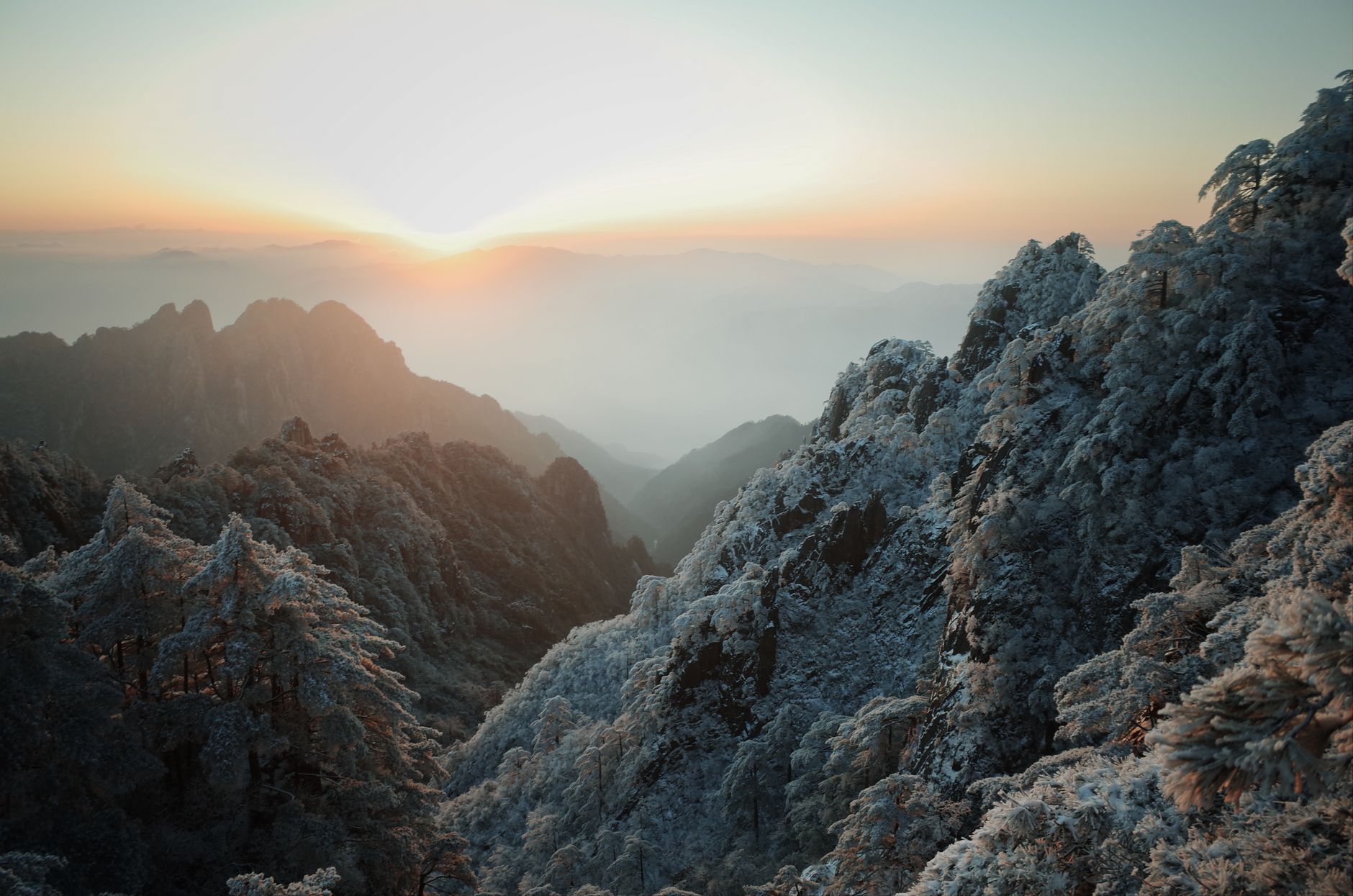
Off-peak season, with entry tickets discounted to 150 yuan and hotel prices 40–60% lower than fall peak rates. Clear days after snowfall offer views of rime ice coating pine branches and rock faces, but trail surfaces are icy, and rangers require all visitors to rent crampons (10–20 yuan per pair) at cable car stations before accessing upper trails. Sunrise times fall between 7:00–7:30 in winter, so visitors do not need to wake as early as in summer, but wind chill can bring exposed ridge temperatures down to -10°C. Cable cars may close for 1–3 days during heavy snow events, so build one flexible buffer day into your itinerary if traveling in winter.
Across all seasons, mid-week visits (Tuesday–Thursday) have 2–3 times fewer visitors than weekends, even outside holiday periods.
Practical Transport to Huangshan
As of November 2026, the closest high-speed rail station is Huangshan North, located 50 minutes by shuttle or private car from the Tangkou southern gateway. Direct high-speed trains connect Huangshan North to:
- Shanghai: 2.5–3 hours, 300–400 yuan one-way second class
- Hangzhou: 1–1.5 hours, 110–150 yuan one-way second class
- Hefei: 1.5–2 hours, 140–180 yuan one-way second class
- Guangzhou South: 6–7 hours, 550–650 yuan one-way second class
For guests starting from Jiangmen or other Pearl River Delta cities, HXXC Travel can arrange connected high-speed itineraries or private car transfers with English-speaking guides, removing the need to navigate intercity train connections and station transfers independently.
Huangshan Tunxi International Airport has domestic flights from Shanghai, Hangzhou, Guangzhou, and Beijing, but no scheduled direct international flights as of November 2026. From the airport or Huangshan North Station, official public shuttles run to Tangkou every 30–60 minutes between 8:00 and 18:00, costing 20–30 yuan per person. Avoid unsolicited taxi offers from drivers approaching passengers at station or airport exits, as these often charge 3–4 times the standard metered rate.
On-Mountain Stay and Food Basics
All on-mountain accommodation is operated by licensed park concession holders, with no independent homestays or unpermitted camping allowed above cable car lines as of November 2026. Room types range from basic 4-bed shared dorms (150–250 yuan per bed per night in peak season) to 4-star standard rooms (1000–1800 yuan per night in peak season). All hotels provide heated blankets, and most offer hot showers between 19:00–22:00, as there is no permanent high-elevation piped hot water network.
Food prices on the mountain are higher than lowland areas, as all supplies are carried up by trail porters. A simple bowl of noodles costs 40–60 yuan, a buffet meal at a hotel restaurant costs 80–120 yuan per person, and bottled water costs 10–15 yuan. Local Huizhou cuisine specialties available at hotel restaurants include stinky mandarin fish, fresh bamboo shoot stir-fry, and stone ear soup, though these carry a premium price compared to restaurants in Tangkou. Visitors can bring their own snacks and water to reduce costs, but avoid overpacking heavy items, as you will carry your own luggage between the cable car station and your hotel.
Camping is only allowed at one designated site near Baiyun Hotel, and requires an advance permit. Unauthorized camping carries a fine of 500–1000 yuan as of November 2026.
Frequently Asked Questions
How many days do I need for Huangshan?
A first visit that includes a sunrise viewing requires two full days on the mountain, plus one travel day to reach the Tangkou gateway, to see all core sights without rushing. If you only have one total day, you can see the main viewpoints via cable car, but you will not have time for sunrise or the West Sea Grand Canyon loop.
Do I need a guide to hike Huangshan?
Independent travel is straightforward for most English-speaking visitors, as trails are well-marked with English signage. A local guide helps cut down on queue times, share the cultural history of the peaks, and arrange seamless transport, but is not required for safety on maintained trails.
Can I hike up Huangshan without taking a cable car?
Stone step trails run from all three lowland gateways all the way to the peak, but a full ascent takes 3–4 hours of steep, continuous climbing with 1500–1800m of elevation gain. Most first-time visitors save energy for the upper trail loops by taking a cable car up, even if they are regular hikers.
What should I pack for Huangshan?
Pack a waterproof windbreaker (fog and light rain can arrive within 10 minutes, even on sunny forecasts), sturdy non-slip hiking shoes, a headlamp for sunrise hikes, warm layers for early mornings, and a reusable water bottle. Leave large suitcases at storage facilities in Tangkou, and only bring a small daypack up the mountain.