
Harbin Winter Ice Festival: Fast Facts
The Harbin International Ice and Snow Sculpture Festival runs officially from January 5 to late February each year, with winter temperatures averaging -15°C to -25°C. Windproof, layered clothing is essential for outdoor visits.
As of November 2026, the 43rd edition is scheduled to open officially on January 5, 2027, with pre-opening access starting around December 20, 2026. Dates shift slightly yearly based on how quickly the Songhua River freezes thick enough for ice harvesting, so confirm 1-2 months before travel.
Main festival venues include:
- Harbin Ice-Snow World: the largest and most famous venue, on Sun Island
- Zhaolin Park: the original ice lantern festival site, in the city center
- Central Street (Zhongyang Dajie): a pedestrian street with free small ice sculptures
- Songhua River Ice and Snow Carnival: interactive ice and snow activities on the frozen river
As of November 2026, peak-season adult ticket prices are:
- Harbin Ice-Snow World: 298–338 RMB (approx. 41–47 USD)
- Zhaolin Park Ice Lantern Fair: 140–160 RMB (approx. 19–22 USD)
- Songhua River Ice and Snow Carnival: 100–180 RMB (approx. 14–25 USD), depending on activity packages
Children under 1.2 meters and seniors over 65 qualify for free or discounted entry at all venues. Ice-Snow World is open 11:00–22:00 daily, with the most vivid lighting after 17:00. Most visitors spend 3–4 hours there.
Main Festival Venues & What to Expect
Harbin Ice-Snow World
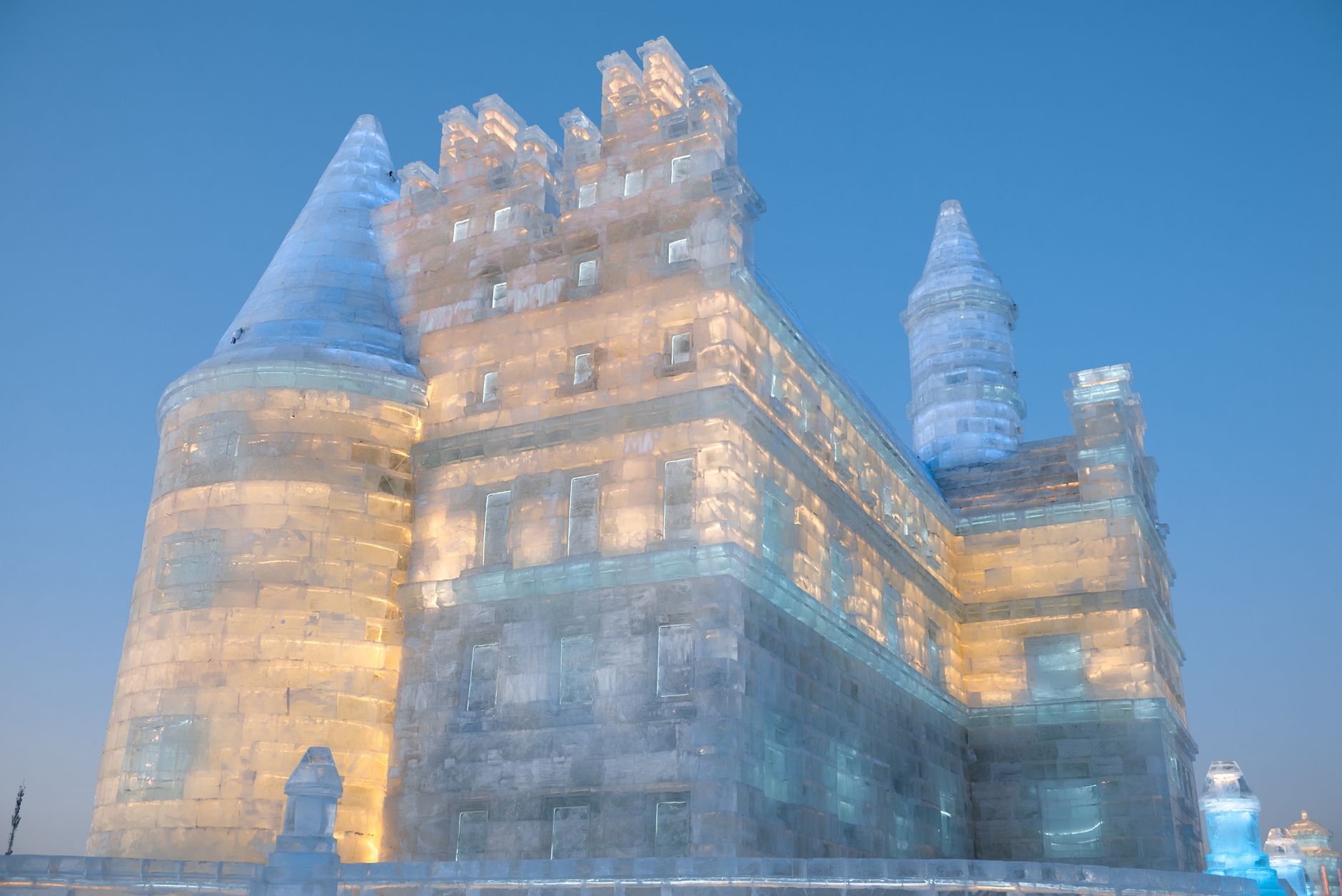
Spanning over 600,000 square meters on the north bank of the Songhua River, Ice-Snow World is built from more than 100,000 cubic meters of ice blocks cut directly from the river. The venue features full-size ice castles, towers, bridges, and slides, all embedded with LED lights that change color after dark. The longest ice slide measures over 300 meters, and there are dedicated areas for children with smaller slides and snow play.
Zhaolin Park
The original home of the Harbin Ice Lantern Festival, dating back to 1963, Zhaolin Park is smaller and more traditional than Ice-Snow World. It focuses on intricate ice lantern carvings, ice pagodas, and folk performances such as dragon dances and ice acrobatics. It is less crowded than Ice-Snow World and a good option for travelers who prefer a slower pace.
Central Street
A 1.4-kilometer pedestrian street lined with European-style architecture from the early 20th century, Central Street has free small ice sculptures and snow installations along its length. It is a popular spot to walk between venues, try local snacks, and shop for souvenirs. The street is plowed regularly, but side paths can be icy.
Songhua River Ice and Snow Carnival
Held directly on the frozen surface of the Songhua River, this venue focuses on interactive activities rather than sculpture viewing. Options include ice skating, ice biking, dog sledding, ice bumper cars, and snow tubing. Most activities are included in the base ticket, though premium activities like dog sledding may cost extra.

What to Wear for Harbin Winter: Step-by-Step Layering Guide
Harbin’s winter cold is dry and windy, and wind chill can make temperatures feel 5–10°C colder than the actual reading. The key to staying comfortable is layering, which lets you adjust as you move between heated indoor spaces and cold outdoor areas. Below is a practical breakdown for visits between December and February.
Base Layer
Start with a moisture-wicking base layer, top and bottom. Merino wool or synthetic thermal fabrics work best. Avoid cotton, which stays wet if you sweat and will draw heat away from your body. Bring two sets: a lighter set for days with lots of indoor time, and a heavier set for long visits to Ice-Snow World or outdoor activities.
Mid Layer
Add an insulating mid layer to trap body heat. A fleece jacket, wool sweater, or down vest works well. For extra cold days (below -20°C), you can layer a thin fleece under a thicker one. Make sure your mid layers are not too bulky, as you will need to move freely for climbing ice slides and taking photos.
Outer Layer
Your outer layer must be windproof and waterproof. A down-filled parka with a windproof shell is ideal, as it provides both insulation and wind protection. Look for a jacket with a hood that fits over a hat. For pants, ski pants or snow pants with a waterproof coating are best, especially if you plan to go on ice slides or sit on snow. Regular jeans do not block wind and will get wet quickly if you come into contact with ice or snow.
Head, Hands, and Feet
These areas lose heat fastest and are most at risk for frostbite:
- Hat: A thick wool or fleece hat that fully covers your ears. This is the single most important item for staying warm.
- Neck gaiter or scarf: A fleece neck gaiter that you can pull up over your nose and mouth on windy days. This prevents cold air from entering your jacket and protects your face from frostbite.
- Gloves: Two pairs are recommended. A thin, touchscreen-compatible liner glove for using your phone or adjusting zippers, and a thick, windproof outer glove for longer outdoor stays.
- Socks: Thick wool or thermal socks, not cotton. Bring an extra pair to change into if your feet get sweaty or wet.
- Footwear: Waterproof, insulated winter boots rated to at least -30°C, with a thick rubber sole for traction on ice. Make sure boots are slightly loose, so you have room for thick socks and blood circulation. Tight shoes will make your feet cold much faster.
Indoor Adjustment Tips
Most indoor spaces (hotels, restaurants, shops, subway cars) are heated to 20–24°C, so you will be taking off layers frequently. Wear layers that are easy to remove, and carry a small backpack to store extra layers and accessories. Avoid wearing too many heavy layers if you will be moving between indoor and outdoor spaces often, as sweating will make you cold when you go back outside.
HXXC Travel’s local advisors in Harbin note that many first-time travelers overpack thick sweaters and underinvest in windproof gear. Wind is the biggest factor in Harbin’s winter cold, so a high-quality windproof jacket and pants will keep you warmer than three thick wool sweaters.
Practical Tips for Your Visit
Best Time to Go
The official festival period (January 5 to late February) has the most complete sculptures and the widest range of events. The first two weeks of January are less crowded than the period around Chinese New Year, which falls on February 6 in 2027. The week before and after Chinese New Year is the busiest time, with higher ticket prices and longer lines.
Pre-opening access (late December) offers discounted tickets and smaller crowds, but some sculptures may not be fully finished. Late February has milder temperatures (around -5°C to -10°C during the day), but some ice sculptures may start to melt on sunny afternoons.
Local Food & Drinks
Harbin’s cuisine is influenced by Northeastern Chinese and Russian traditions, and many dishes are hearty and warming for winter:
- Guo Bao Rou: Crispy pork tenderloin coated in a sweet and sour sauce, a signature Northeastern dish.
- Di San Xian: Stir-fried potato, eggplant, and green pepper, a common home-style dish.
- Harbin red sausage (Hongchang): A smoked, garlicky sausage inspired by Russian kielbasa, often eaten as a snack.
- Lieba: A large, dense Russian-style bread, often served with butter or jam.
- Suan cai hot pot: Hot pot with pickled cabbage, lamb, and mushrooms, a popular winter meal.
Most restaurants serve warm barley tea with meals. Avoid drinking large amounts of alcohol before long outdoor stays, as alcohol dilates blood vessels in the skin and increases heat loss, raising the risk of frostbite.
Safety Tips
- Frostbite can develop on exposed skin in 10–15 minutes at -20°C with wind. Cover all exposed skin, and check your fingers, toes, nose, and ears regularly for numbness or white patches. If you notice signs of frostbite, move to a warm area immediately and seek medical help if symptoms do not improve.
- Cold temperatures drain phone batteries very quickly. Keep your phone in an inner pocket close to your body, and carry a portable power bank that you also keep warm.
- Ice surfaces can be slippery. Walk slowly, and use handrails where available. Most major venues have non-slip mats on main paths, but side areas may be icy.

Getting to & Around Harbin
Harbin Taiping International Airport (HRB) has direct international flights from Seoul, Tokyo, and Vladivostok, plus frequent domestic connections from Beijing (2-hour flight), Shanghai (3-hour flight), and Guangzhou (3.5-hour flight).
For travelers arriving by train, Harbin West Station is the main high-speed rail hub, with direct services to Beijing (4.5–5 hours), Changchun (1 hour), and Shenyang (2.5 hours). Overnight regular trains from Beijing take around 10 hours and can be a budget-friendly option.
Local transport options include Didi ride-hailing, city buses, and the metro. For winter travel, HXXC Travel can arrange private transfers with English-speaking drivers, which eliminates the need to wait for taxis in cold weather and avoids language barriers with local drivers.
References & Updates
This guide is reviewed and updated monthly by HXXC Travel’s on-the-ground team in China. The most recent update was published on October 23, 2026. Time-sensitive details — including festival dates, ticket prices, opening hours, and transport schedules — may change without notice. Always confirm critical information directly with official providers or via your HXXC Travel advisor before your trip.
FAQ
Is the Harbin Ice Festival worth going to?
Yes, if you enjoy large-scale art installations and winter activities. The festival is one of the largest ice and snow events in the world, drawing over 10 million visitors annually. Travelers who strongly dislike cold weather may prefer a summer visit to Harbin, but the ice festival is the city’s signature annual event.
How many days do you need for the Harbin Ice Festival?
Most visitors spend 2–3 full days in Harbin to see the main festival venues. One day for Ice-Snow World and Zhaolin Park, one day for Songhua River activities and Central Street, and an optional third day for day trips to Yabuli Ski Resort or China Snow Town, both 2–3 hours outside the city.
Can you buy Harbin Ice Festival tickets at the gate?
Yes, tickets are available for purchase at the entrance of all major venues. During peak periods (Chinese New Year, weekends), lines can be 30–60 minutes long. As of November 2026, most venues also sell tickets via official WeChat accounts, but these require a Chinese phone number and local payment method for most bookings. HXXC Travel can pre-purchase tickets for international travelers to avoid queueing in the cold.
What is the coldest month in Harbin?
January is the coldest month, with average daily highs of -13°C and average nightly lows of -24°C. December and February are slightly warmer, with average daytime highs rising to around -8°C by late February.
Do they speak English at the Harbin Ice Festival?
English is not widely spoken by most venue staff, but major attractions have some English signage. Staff at large international hotels usually speak basic English. For first-time visitors, booking an English-speaking guide through a local operator like HXXC Travel can make navigating the festival much easier.
Related private tours
- Best Of China — 20-Day Private Tour — 20 days
- Six Cities, One China — 15-Day Family Circuit — 15 days
- Golden Triangle — Beijing, Xi'an & Shanghai — 10 days · From US$1,000