The best 2–3 day Hangzhou itinerary prioritizes unrushed walks around West Lake, a half-day trip to Longjing tea hills, and local Hangzhou cuisine, with minimal backtracking. As of November 2026, Hangzhou is eligible for China’s 240-hour visa-free transit policy for most eligible passport holders, making it an easy add-on to Shanghai or Suzhou trips. This guide is compiled by HXXC Travel’s on-the-ground destination team, last reviewed October 23, 2026, with verified practical details for first-time international visitors.
Key facts at a glance
- As of November 2026, Hangzhou Xiaoshan International Airport and all railway ports support 240-hour visa-free transit for eligible travelers from 57 countries transiting to a third country/region.
- The core West Lake Scenic Area is open 24/7 with no general entry fee; individual paid sites (Leifeng Pagoda, Three Pools Mirroring the Moon ferry access) charge 20–55 CNY per person as of November 2026.
- Direct high-speed trains connect Hangzhou East Station to Shanghai Hongqiao in 45–60 minutes, with one-way second-class tickets costing 73–117 CNY.
- Longjing Village, the core West Lake Longjing tea production area, sits 4km southwest of West Lake, reachable by local bus, taxi, or 30-minute bike ride.
- The most comfortable visiting windows are late March to early May (spring tea harvest, lake blossoms) and mid-September to mid-November (cool air, osmanthus blooms), with average highs of 17–25°C.
- Signature local dishes include West Lake vinegar fish, Dongpo pork, Longjing shrimp, and beggar’s chicken; a standard neighborhood restaurant meal costs 60–100 CNY per person.
- All time-sensitive policy, price and schedule details are subject to change; always recheck official sources before travel.
How many days to spend in Hangzhou
Most first-time visitors find 2 full days enough to cover West Lake and Longjing tea hills without rushing. Travelers adding Lingyin Temple, Xixi National Wetland Park, or Grand Canal heritage sites should plan for 3 full days. There is no need to allocate more than 3 days unless you plan day trips to nearby water towns like Wuzhen or Xitang.
Getting to and around Hangzhou
Most international travelers reach Hangzhou via direct flight to Hangzhou Xiaoshan International Airport, or via high-speed train from other eastern China cities. Trains from Shanghai Hongqiao to Hangzhou East run every 10–15 minutes between 6 a.m. and 11 p.m., taking 45–60 minutes, with second-class tickets costing 73–117 CNY as of November 2026. From the airport, Metro Line 19 runs express to downtown and Hangzhou East in 35–40 minutes, with a flat 7 CNY fare.
The core West Lake zone is best explored on foot, by public bicycle, or electric shuttle. Hangzhou’s public bicycle network has docking stations every 200–300 meters around the lake, with rates starting at 1 CNY per 30 minutes for users who activate access via a local transit app or tourist card. Taxis and ride-hailing are widely available, but lakeside roads are often congested on weekends and holidays, making bike travel faster for short trips between sites.
West Lake sightseeing, done slowly
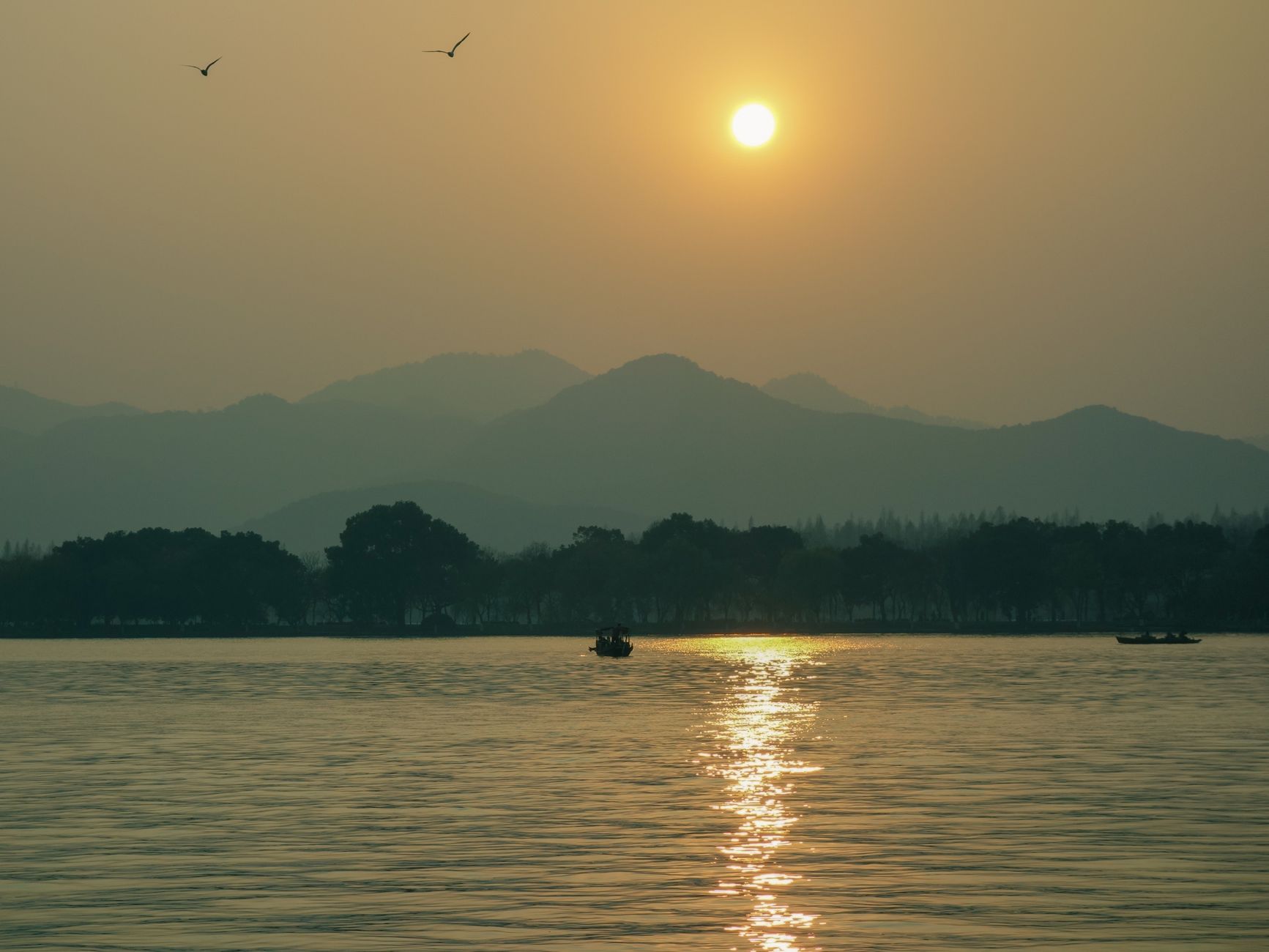
West Lake is a 6.5 square kilometer UNESCO World Heritage Site at Hangzhou’s historic core. The entire public shoreline is open 24/7 with no general entry fee; only enclosed attractions and boat rides charge separate tickets.
The most relaxed route avoids the crowded eastern shore adjacent to downtown, following the tree-lined Su Causeway across the lake’s western edge. The 2.8km causeway is closed to private cars, with stone bridges, willow trees, and unobstructed views of the lake and surrounding hills. From the causeway’s southern end, visitors can walk 1km to Leifeng Pagoda, a reconstructed 10th-century structure with elevated lake views; entry costs 40 CNY per person as of November 2026.
Public ferries run every 15–20 minutes from causeway docks to Three Pools Mirroring the Moon, the small island with stone pagodas featured on the reverse of the 1 CNY banknote. Round-trip ferry tickets including island access cost 55 CNY per person as of November 2026; private rowboat rentals for up to 6 people cost 150 CNY per hour, with no hidden fees for standard routes.
Longjing tea hills: What to expect
Longjing Village, the historic production area for West Lake Longjing (Dragon Well) green tea, sits 4km southwest of West Lake in the low hills forming the lake’s southern watershed. Paved walking and cycling paths connect the village to the lake shore, with no entry fee to visit the village or walk through tea terraces.
A standard half-day visit includes a walk through tiered tea terraces, a stop at a family tea house to taste freshly picked Longjing, and a short walk to the Old Dragon Well spring that gives the tea its name. As of November 2026, a pot of locally grown Longjing at a village tea house costs 30–80 CNY per person, depending on harvest grade. Premium pre-Qingming Longjing (picked late March to early April) typically sells for 1,000–3,000 CNY per 500g directly from farmers; lower-priced tea sold by street vendors near the village entrance is rarely grown in the core Longjing production area.
HXXC Travel’s guided Hangzhou itineraries include a Longjing Village visit led by a local guide who can help visitors distinguish core production area tea from mislabeled product, to avoid overpaying.
Local food to try in Hangzhou
Hangzhou’s cuisine falls under the Zhejiang culinary tradition, focused on fresh, lightly seasoned ingredients aligned with the city’s slower pace. Dishes to seek out at neighborhood restaurants include:
- Longjing shrimp: Fresh river shrimp stir-fried with steeped Longjing tea leaves, with a light, savory flavor.
- Dongpo pork: Slow-braised pork belly named for Song dynasty official Su Dongpo, cooked with soy sauce, rice wine, and rock sugar until tender.
- West Lake vinegar fish: Fresh grass carp steamed and coated in a sweet-and-sour vinegar glaze, a classic lakeside dish.
- Beggar’s chicken: Whole chicken wrapped in lotus leaves and clay, slow-baked until tender.
- Osmanthus glutinous rice cake: Sweet, chewy rice cake flavored with osmanthus flowers, a popular autumn seasonal snack.
A full meal with two to three dishes at a non-tourist restaurant typically costs 60–100 CNY per person as of November 2026. Restaurants immediately adjacent to West Lake’s eastern shore often charge 2–3 times that price for comparable food, so walking 2–3 blocks from the lakefront delivers better value and more authentic flavor.
Best time to visit Hangzhou
The best time to visit Hangzhou is late March to early May, and mid-September to mid-November.
Late March to early May brings average high temperatures of 17–25°C, with peach and cherry blossoms along the lake causeways and the annual spring Longjing harvest. Mid-September to mid-November offers similar mild temperatures, clear skies, and osmanthus blooms across the city. Summer (June to August) is hot and humid, with frequent heavy rain and highs above 32°C; winter (December to February) is cold and damp, with occasional light snow and smaller crowds.
Common mistakes to avoid
First, skip overpriced group tours that only stop at crowded eastern shore viewing platforms; the quieter western and southern shorelines offer better views with fewer people. Second, avoid buying expensive Longjing tea from street vendors or unmarked shops near scenic entrances, as most of this tea is grown outside the core production area and sold at inflated prices. Third, do not take taxis around the lake on weekends and national holidays, as traffic can turn 1km trips into 30-minute delays; a bicycle or walking is almost always faster. Fourth, do not overschedule: Hangzhou’s main appeal is its slower pace, so packing more than 3–4 activities per day leaves no time to sit by the lake, stop for tea, or wander without a fixed plan.
Frequently asked questions
How long can I stay in China visa-free if I visit Hangzhou?
As of November 2026, eligible passport holders from 57 countries can stay for up to 240 hours (10 days) in the Zhejiang provincial visa-free transit zone, which includes Hangzhou, without a pre-arranged tourist visa if transiting to a third country or region with a confirmed onward ticket. Travelers staying longer than 240 hours, or not transiting to a third destination, must apply for an appropriate Chinese visa before arrival. All entry policies are subject to change, so recheck official requirements before booking.
Is there an entry fee for West Lake?
The public shoreline, causeways, and open areas of West Lake are open 24/7 with no general entry fee. Separate ticket fees apply only for enclosed attractions within the scenic zone, including Leifeng Pagoda and ferry access to Three Pools Mirroring the Moon, with individual ticket prices ranging from 20–55 CNY per person as of November 2026.
How do I get from Shanghai to Hangzhou?
The fastest and most reliable route is by high-speed train from Shanghai Hongqiao Station to Hangzhou East Station, with a travel time of 45–60 minutes. Trains run every 10–15 minutes throughout the day, with one-way second-class tickets costing 73–117 CNY as of November 2026. Intercity buses are available but take 2.5–3 hours due to highway traffic, and are not recommended for most travelers.
Can I visit Longjing tea hills without a tour?
Yes, Longjing Village and surrounding tea terraces are fully open to independent visitors with no entry fee. The village is reachable by local bus (Routes 27 or 87 from the West Lake area), taxi (15–20 CNY from the southern end of Su Causeway), or bicycle via paved lakeside paths. Independent visitors can stop at any family-run tea house for tastings, though a local guide can help navigate tea purchasing to avoid mislabeled or overpriced product.