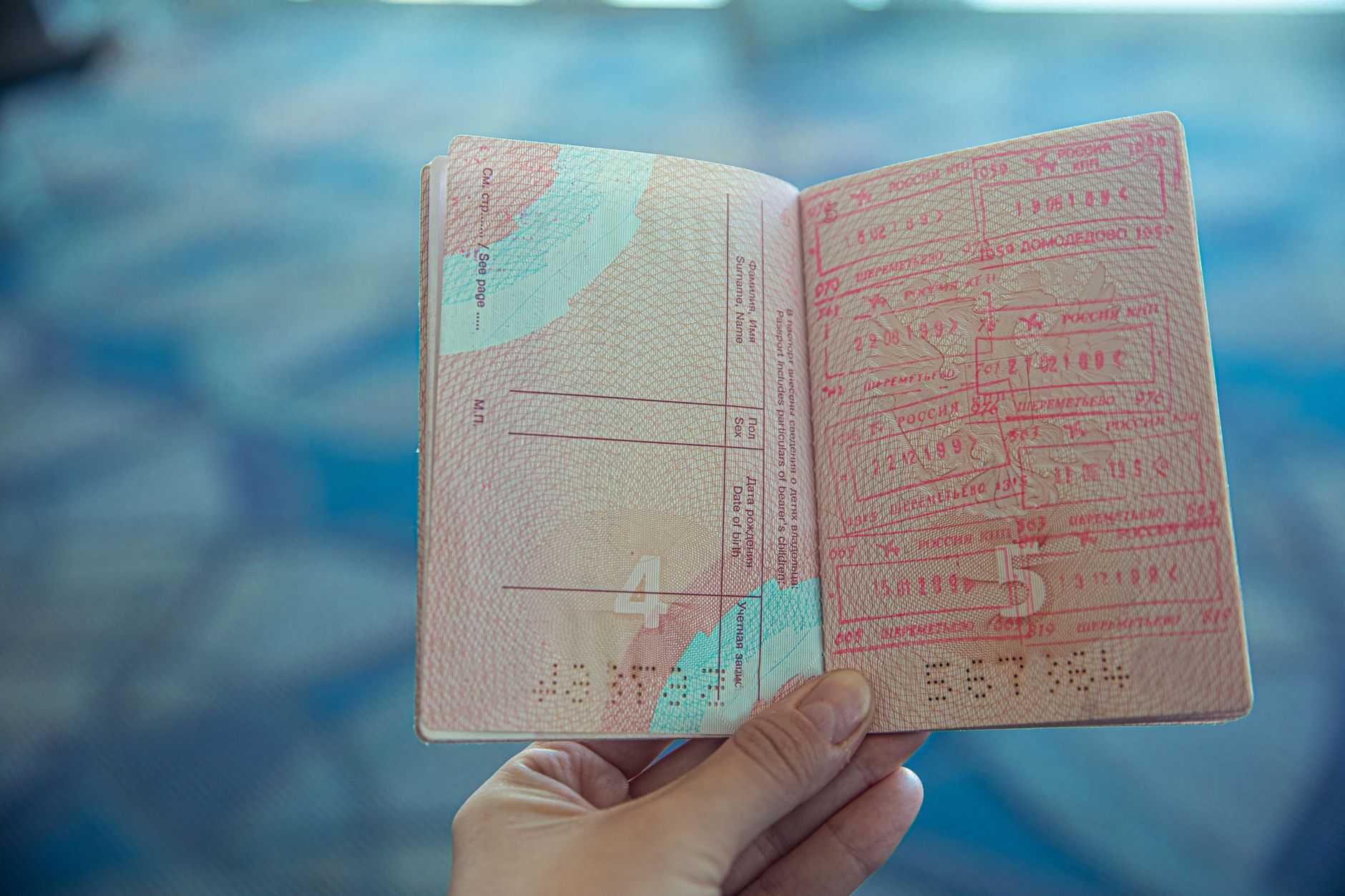
Yes — most short-term China visas, including tourist (L) and business (M) visas, can be extended after you arrive. You apply in person at the Exit-Entry Administration of the local Public Security Bureau (PSB) in the city where you are staying, ideally at least 7 days before your permitted stay runs out.
This guide explains who qualifies, where to go, what to bring, what it costs, and what happens if you miss the deadline. It reflects the rules our team at HXXC Travel works with on the ground as of November 2026.
What an extension does — and what it does not do
A China visa carries two separate clocks. The validity is the window during which you may enter the country, often 3 months but sometimes 10 years. The duration of stay is the number of days you may remain after each entry, printed on your entry stamp.
An extension changes only the second number. It pushes back the day you must leave, but it does not add entries or extend the visa's validity window. If you hold a 10-year visa that allows 60 days per entry, an extension adds days to that particular stay; the visa itself stays exactly as it was.
Understand also that extensions are granted at the discretion of the PSB. Meeting the requirements makes approval routine in most cases, but there is no entitlement, and officers can grant fewer days than you request.
Which visa types can be extended
As of November 2026, these short-term visa types can generally be extended inside China:
- L (tourist): the most common case; extensions of about 30 days are typical.
- M (business) and F (exchange and study visits): usually extendable with a letter from your Chinese host company or institution.
- X2 (short-term study): extendable with a letter from your school.
- Q2 and S2 (family visits): extendable with an invitation letter from your Chinese relative.
Types and situations that generally cannot be extended:
- G (transit) and C (crew) visas.
- Stays under the 240-hour visa-free transit policy, which requires you to depart on schedule as of November 2026.
- Travellers who entered under a unilateral 30-day visa-free policy, open to passport holders of 50 countries as of November 2026, should not assume an extension is possible. Some local offices have approved extensions in genuine cases, but each application is judged on its own merits. Confirm with the Exit-Entry office in your city before building plans around it.
Long-stay residence permits (Z for work, X1 for study, Q1 and S1 for family) follow a different track. They are renewed rather than extended, and your employer or school normally handles the paperwork.
Where to apply: the Exit-Entry Administration
Extensions are handled by the Exit-Entry Administration of the municipal Public Security Bureau — never by an embassy or consulate, which only issue visas abroad. You must apply in the city where you are currently staying, at the hall that serves your district. Large cities run several branches: Beijing and Shanghai each operate a main Exit-Entry hall plus district offices, and in Guangdong you can apply in Guangzhou, Shenzhen, or your local city. Travellers staying in Jiangmen and the western Pearl River Delta use the Jiangmen PSB Exit-Entry hall.
Many big-city offices offer online or WeChat appointment booking, which shortens the wait. If you are unsure which hall covers your address, the national immigration hotline 12367 handles English calls and can direct you. HXXC Travel's advisors, based in Jiangmen, regularly point clients to the correct hall and pre-check their document sets before they queue.

Documents you need
Requirements vary slightly by city and visa type, but the core set is consistent:
- Your passport, with the current visa and your latest entry stamp.
- A completed application form for a visa or stay permit. Forms are available at the hall and on local PSB websites; complete it in black ink and sign it.
- One recent colour photo, 33 x 48 mm, white background. Many halls have photo booths on site for a small fee.
- Proof of temporary residence registration: the slip your hotel issues at check-in, or a police-station registration slip if you are staying in a private home. Guests in private homes must register at the local police station within 24 hours of arrival in most areas.
- Supporting documents for your visa category: a letter from the inviting company for M or F visas, a school letter for X2, an invitation from your relative for Q2 or S2.
- Occasionally requested: evidence of funds, such as a bank card or statement, and a confirmed or reserved onward ticket out of China.
Bring photocopies of the passport photo page, visa page, entry stamp, and residence registration. Halls copy documents on site for a small fee, but having your own copies saves time.
How the process works, step by step
- Register your accommodation first. Hotels do this automatically at check-in; private stays require a police-station visit.
- Confirm the correct hall, its opening hours, and whether an appointment is required.
- Submit your application in person. Officers may take your fingerprints and photo, and they will confirm the fee on the spot.
- Hand over your passport. During processing it stays with the PSB, and you receive an official pickup receipt. The receipt proves your legal status and works for domestic flights, trains, and hotel check-ins, but it does not let you exit China.
- Return on the appointed day — typically about 7 working days, though some halls finish sooner — to collect your passport with the new stay period endorsed inside.
Do not book an international flight out of China inside the processing window. Leave a margin of at least a week beyond the stated pickup date.
Cost, timing, and how many days you get
- Fee: typically around 160 RMB for most nationalities, paid at the hall as of November 2026. Some countries pay higher reciprocity-based fees; the counter will confirm your exact amount.
- Length: tourist (L) extensions are commonly granted for 30 days, occasionally fewer. Business and family-visit extensions vary with the supporting documents.
- Frequency: there is no published limit on extensions, but in practice tourists usually receive one. A second application draws closer scrutiny, and a clear written reason helps.
- Timing: submit at least 7 days before your current stay expires. If you are already close to the deadline, go immediately — offices deal with this daily, and applying before expiry is what matters.
Overstaying: what happens if you miss the deadline
Overstaying is an immigration violation under China's Exit-Entry Administration Law. Penalties scale with the length of the overstay: a warning for trivial cases, fines that commonly run around 500 RMB per day up to a 10,000 RMB ceiling in serious cases, and for long overstays, detention, deportation, and re-entry bans. Even a short overstay stays on record and can complicate future Chinese visa applications.
If you realize your stay is about to lapse, go to the Exit-Entry office before it expires rather than after. Explaining a genuine reason — illness, a cancelled flight — before the deadline almost always goes better than turning up late.
Practical tips from travellers who have done it
- Go early. Queues are shortest in the first hour after opening.
- Bring a translation app or a Chinese-speaking friend. Big-city halls usually have English signage and forms; smaller city offices may not.
- Keep every hotel registration slip from your trip in case you need to show where you have been.
- Mobile payment is accepted at many halls, but carry a fallback.
- Plan buffer time. HXXC Travel builds a spare day before international departures into the itineraries we plan, precisely so a visa errand never threatens a flight.
Considering a visa run through Hong Kong or Macau
If your visa still has unused entries, exiting to Hong Kong or Macau and re-entering the mainland starts a fresh stay period without any paperwork. Border officers have discretion, though, and repeated quick hops raise questions at the border. Travellers who entered visa-free should check the current re-entry rules before relying on this, as the visa-free schemes are revised frequently.
FAQ
Can I extend my China visa more than once?
There is no fixed legal limit, but tourists typically receive one extension of about 30 days. A second application is possible with a strong reason and complete documents, and the decision rests with the local office.
How long does a China visa extension take?
Typically about 7 working days from submission, though some offices finish sooner. Your passport stays with the PSB during that window, so plan no international travel until you collect it.
Can I travel inside China while my extension is processing?
Yes. The pickup receipt the PSB issues proves your legal status and works for domestic flights, trains, and hotel check-ins. It does not allow you to leave the country.
How much does it cost to extend a China visa?
Most nationalities pay roughly 160 RMB at the counter as of November 2026, though reciprocity rules raise the fee for some passport holders. The counter confirms the exact amount when you submit.
What happens if I overstay my China visa by a few days?
Expect a fine — commonly around 500 RMB per day — plus a record on your file. Longer overstays can bring detention, deportation, and re-entry bans. Go to the PSB as soon as you realize the mistake.
References & updates
This guide is reviewed monthly by the HXXC Travel team in Jiangmen, Guangdong, and the page carries its visible update date. It was last checked in October 2026. Policy details — the visa-free country list, transit hours, fees, and office hours — change regularly. Before you apply, reconfirm the requirements with the Exit-Entry Administration in your city or by calling the national immigration hotline 12367, which offers English service.
Related private tours
- Best Of China — 20-Day Private Tour — 20 days
- Six Cities, One China — 15-Day Family Circuit — 15 days
- Best of China — 19-Day Private Tour — 19 days · From US$2,450