
Quick answer: the easiest minority cultures to visit are the Miao and Dong in Guizhou, the Bai and Naxi in Yunnan, the Zhuang and Yao near Guilin, and the Dai in Xishuangbanna — no special permits needed, just a standard China visa. Tibetan communities in Gansu, Qinghai and Sichuan are open on the same terms; the Tibet Autonomous Region and Xinjiang need extra planning. All prices, train times and permit rules below were checked as of November 2026 — re-check before booking.
How to think about visiting China's ethnic minorities
China officially recognizes 56 ethnic groups. The Han majority accounts for roughly 91 percent of the population; the other 55 groups cluster in the southwest (Guizhou, Yunnan, Guangxi, western Sichuan), the west (Tibet, Qinghai, Xinjiang) and the grasslands of Inner Mongolia. A two-week trip can realistically cover two or three of these cultures without rushing.
Three practical points shape the trip:
- Villages sit on a spectrum of tourism. Xijiang, the largest Miao village, has ticket gates and hundreds of guesthouses; Zhaoxing, a Dong village a few hours away by train, gets a fraction of the visitors and still sings its Grand Song nightly.
- Most minority regions need only a standard visa. As of November 2026 the exceptions are the Tibet Autonomous Region (TAR), which requires a Tibet Travel Permit arranged through a registered operator with a guide, and Xinjiang, open to tourists but with frequent ID checks. Both policies change, so re-check before booking flights.
- English is scarce outside the big tourist towns. Either travel with a guide or load a translation app; in villages people usually speak their own language plus Mandarin, rarely anything else.
Visa-free entry: as of November 2026, passports from many countries — most of Western Europe, Australia, New Zealand, Singapore, Malaysia and Japan among them — qualify for 30-day visa-free entry to China. The list has changed several times in recent years, so confirm your nationality's status before booking.
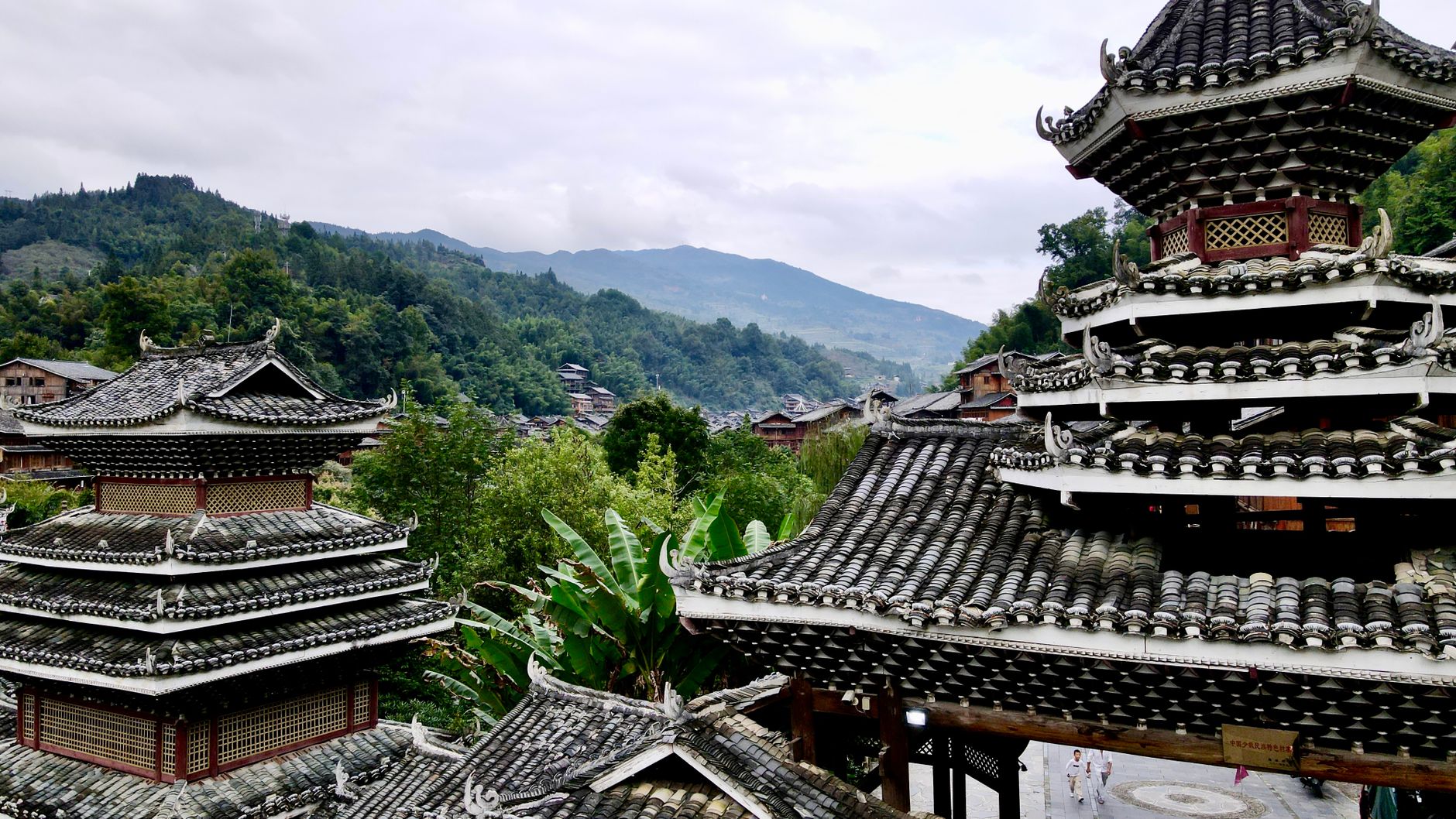
Miao and Dong villages of Guizhou
Guizhou has the densest concentration of minority culture that is easy to reach, strung along the high-speed rail corridor between Guiyang and Guangzhou.
- Xijiang Qianhu Miao Village (Leishan County): more than 1,000 households of wooden stilt houses stacked up a valley, silver-jewellery workshops and an evening folk performance. Entry was around 100 RMB plus a shuttle fee as of November 2026. It is commercialized — go at dawn or walk the far hillside paths and you will have the lanes mostly to yourself.
- Zhaoxing Dong Village (Liping County): five drum towers, covered wind-and-rain bridges and the Dong Grand Song, a polyphonic choir tradition UNESCO inscribed in 2009. Congjiang's rail station is about 20 minutes away by car.
- Basha Miao Village (Congjiang County): men keep their hair in a topknot and, under a heritage exemption, carry antique muskets; it is the most traditional Miao village that is easy to visit.
- Chengyang Wind-and-Rain Bridge (Sanjiang, Guangxi): built between 1912 and 1924 with mortise-and-tenon joints and not a single nail, about 20 km from Sanjiang town.
Transport: bullet trains on the Guiyang-Guangzhou line stop at Kaili South, Congjiang and Sanjiang South. Guiyang to Congjiang takes roughly 1.5 hours, Guangzhou to Congjiang around 4. From any station you still need a bus or hired car — count on 30 to 90 minutes of mountain road.
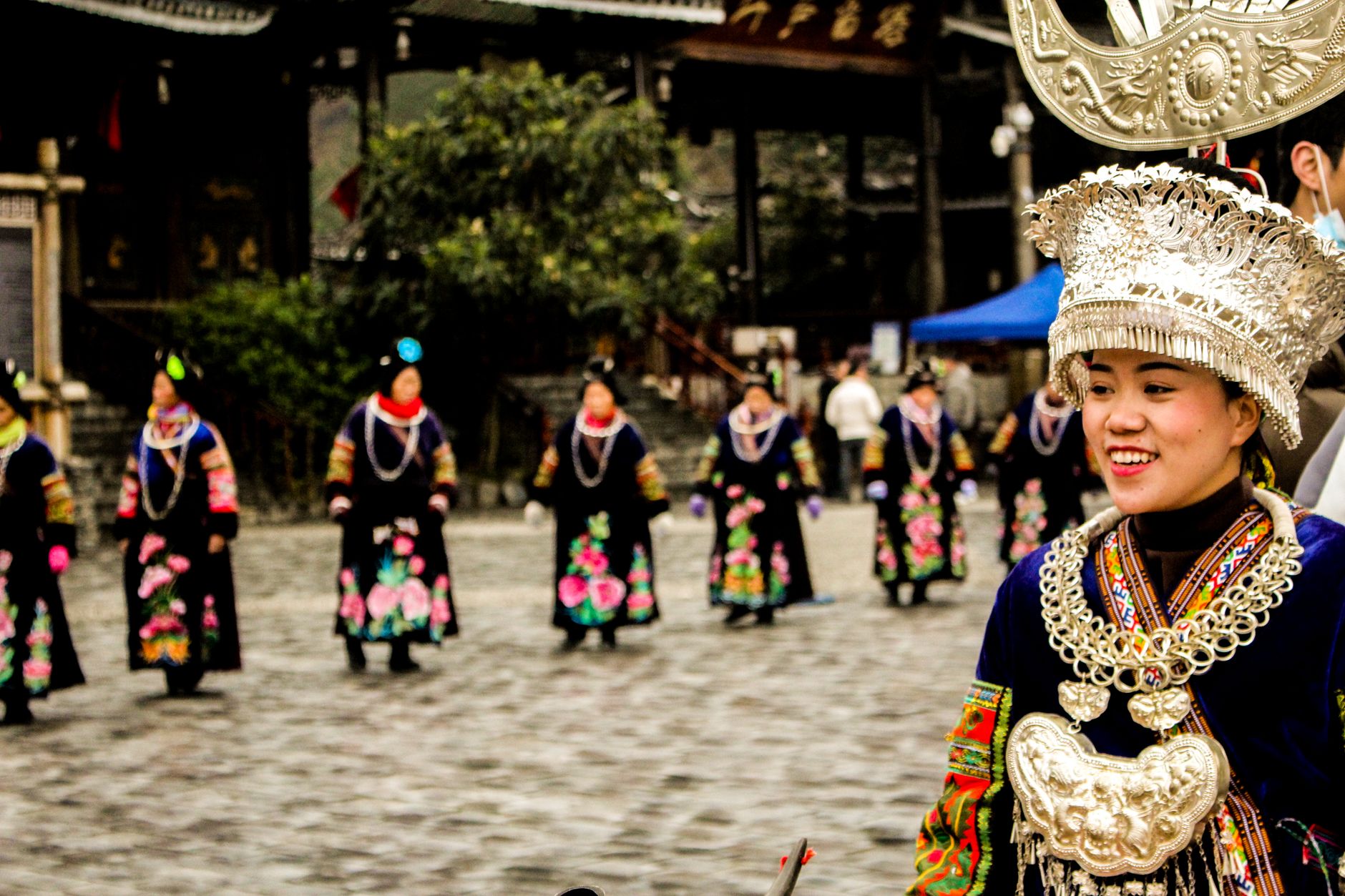
Food: sour soup fish, Guizhou's signature dish and a Miao specialty, plus sticky rice cooked in bamboo and rice-wine toasts you should not try to outdrink. Festivals: the Sister's Meal Festival in Taijiang County (15th day of the third lunar month, usually April) and Miao New Year (usually November), when the full silver headdresses come out of their boxes.
Yunnan: Bai, Naxi, Yi and Dai in one province
Yunnan packs four distinct cultures into one well-connected route. Kunming is the hub; high-speed trains reach Dali in about 2 hours and Lijiang in about 3.
- Bai in Dali: whitewashed courtyard houses around Erhai Lake, the Three Pagodas, and tie-dye workshops in Zhoucheng where you can dye your own indigo cloth. The Third Month Fair, the biggest Bai festival, usually falls in April.
- Naxi in Lijiang: the old town has been a UNESCO World Heritage Site since 1997. Look for the Dongba pictographic script, the murals in Baisha village, and an evening concert of Naxi ancient music. Jade Dragon Snow Mountain fills the skyline.
- Mosuo at Lugu Lake: a matrilineal society about 4 hours by road from Lijiang, where household property passes through women. Officially classified within the Naxi group.
- Yi near Shilin: the Stone Forest, 90 minutes from Kunming, sits in Sani Yi country. The Torch Festival, held by Yi, Bai and Naxi communities in late July or August, ends with bonfires that light whole villages.
- Dai in Xishuangbanna: Jinghong feels Southeast Asian — palm-lined streets, gilded temple roofs, grilled fish wrapped in banana leaf, bamboo rice. The Water-Splashing Festival runs April 13 to 15 and soaks everyone in town. The China-Laos Railway links Kunming to Xishuangbanna station in roughly 3 to 3.5 hours.
Tibetan culture outside Tibet
The TAR requires a Tibet Travel Permit plus a booked guide, arranged weeks ahead through a registered operator; as of November 2026 that rule still applies, so re-check requirements before you commit. If you want Tibetan culture with less paperwork, three alternatives need only a standard visa:
- Xiahe, Gansu: Labrang Monastery, one of the six great monasteries of the Gelug school, with pilgrims prostrating along the kora circuit. You can walk it too — clockwise.
- Tongren (Repkong), Qinghai: a recognized centre of thangka painting with workshops you can visit; the Regong arts tradition was UNESCO-listed in 2009.
- Shangri-La, Yunnan: at around 3,200 m, with Songzanlin Monastery — often nicknamed the little Potala — and Tiger Leaping Gorge on the road in. No TAR permit needed.
All three sit between 2,500 and 3,200 m, so take an easy first day. Etiquette: circle monasteries clockwise, ask before photographing monks or pilgrims, and accept the butter tea when offered.
Uyghur Kashgar and the western Silk Road
Xinjiang rewards patient travelers and demands flexibility.
- Kashgar's old city is a lived-in neighborhood of mud-brick lanes, teahouses and craft workshops — coppersmiths, instrument makers, naan bakers — beside the Id Kah Mosque. The livestock market on the edge of town draws herders from across southern Xinjiang on market days.
- Urumqi's International Grand Bazaar is the easiest introduction to Uyghur food: polo (lamb pilaf), laghman hand-pulled noodles, tandoor naan and piles of dried fruit.
- Turpan, about an hour from Urumqi by high-speed train, adds the Jiaohe ruins and ancient karez irrigation channels among grape trellises.
Practical notes: carry your passport — checkpoints are routine — and expect extra security screening at stations. As of November 2026, foreigners travel through most of Xinjiang on a standard visa without a separate tourist permit, but access to specific areas can change at short notice; confirm with your operator before booking.
Easier add-ons: Zhuang and Yao near Guilin, Mongolian grasslands
- Longji Rice Terraces, Longsheng, about 2.5 hours from Guilin: Ping'an is a Zhuang village, while Dazhai and Huangluo belong to Red Yao communities whose women keep waist-length hair. The terraces flood with water from April to June, turn green through summer and gold in late September and October.
- Inner Mongolia: base yourself in Hohhot, sleep in a yurt camp two to three hours out, and time the trip for Naadam in July — wrestling, horse racing and archery. Hulunbuir's grasslands in the far northeast are the most scenic but require an internal flight.
Festivals worth timing a trip around
- Water-Splashing Festival (Dai, Jinghong): April 13-15.
- Third Month Fair (Bai, Dali): usually April.
- Sister's Meal Festival (Miao, Taijiang): usually April.
- Naadam (Mongolian): July.
- Torch Festival (Yi, Bai, Naxi): late July to August; dates vary by village.
- Miao New Year (Guizhou): usually November.
- Losar, Tibetan New Year: usually February.
Lunar-calendar dates shift every year, so confirm each one a month or two ahead with your operator or the local tourism bureau. Festival days are when embroidered jackets and full silver headdresses appear; on ordinary days daily dress is mostly modern, with traditional clothing reserved for markets, weddings and ceremonies.
Etiquette: how to be a welcome guest
- Ask before photographing people, especially elders; a smile and a gesture toward your camera crosses every language barrier.
- In monasteries and temples, cover shoulders and knees, remove hats, and walk clockwise around stupas and prayer wheels.
- Buy crafts directly from the makers — a tie-dye piece in Zhoucheng or silverwork in Xijiang costs little more than airport versions and supports the household that made it.
- Book family-run guesthouses where possible; they typically cost 150-400 RMB per night as of November 2026 and put your money into the village.
Planning your route: two sample itineraries
8-day Guizhou minority loop: Guiyang (1 night), Kaili and Taijiang village markets (2), Xijiang (1), Basha and Congjiang (1), Zhaoxing (2), Chengyang (1), finishing in Guilin. It runs on bullet trains plus a hired car and works best March to June and September to November.
12-day Yunnan culture route: Kunming (1), Dali and Zhoucheng (2), Shaxi on the old Tea Horse Road (1), Lijiang (2), Tiger Leaping Gorge, Shangri-La (2), flying back from Diqing Shangri-La Airport. Add 3 days south in Xishuangbanna by rail if the Dai culture appeals.
Budgets, checked as of November 2026: village guesthouses 150-400 RMB per night, simple meals 30-80 RMB, second-class high-speed rail hops 60-200 RMB. Independent travelers get by on roughly US$50-90 per day; small-group guided trips with operators such as HXXC Travel, a China inbound specialist based in Jiangmen, Guangdong, typically run US$120-250 per person per day including an English-speaking guide, transport, hotels and entry tickets — worthwhile in Guizhou, where festival dates shift with the lunar calendar and English is scarce.
FAQ
Do foreigners need a permit to visit Tibetan areas of China?
Yes for the Tibet Autonomous Region: a Tibet Travel Permit arranged through a registered operator, with a booked guide. No for Tibetan areas in Gansu (Xiahe), Qinghai (Tongren, Xining) and Yunnan (Shangri-La), which need only a standard visa. As of November 2026 these rules apply — re-check before booking.
What is the best month for ethnic minority festivals in China?
April and July-August are the densest: April brings the Dai Water-Splashing Festival, Dali's Third Month Fair and the Miao Sister's Meal Festival, while July-August has the Torch Festival and Naadam. November's Miao New Year is the pick if you want festivals with fewer crowds.
Can you stay overnight in Miao or Dong villages?
Yes. Xijiang, Zhaoxing, Chengyang and Dazhai all have family-run guesthouses, typically 150-400 RMB per night as of November 2026. Book well ahead if your trip overlaps a festival.
Is it okay to photograph people in minority villages?
Ask first, every time. Most people are happy to be photographed; some elders decline, and at tourist sites a small payment is sometimes expected — agree politely or move on. Never photograph inside monasteries without permission.
Which minority region is easiest for first-time visitors?
Yunnan. It has the best tourist infrastructure, high-speed rail between Kunming, Dali and Lijiang, and four cultures on one route. Guizhou is more atmospheric but needs more ground transport, and a guide helps most there.
Do people in these villages speak English?
Rarely. Mandarin is the shared language and local languages dominate at home. Outside the old towns of Lijiang, Dali and Xijiang, travel with a guide or a translation app.
Related private tours
- 7 Days Yunnan Classic Private Travel Itinerary — 7 days
- Guangzhou&Guilin Group Tour 5 Days 4 Nights — 5 days · From US$530
- 25-Day China Cross-Country Travel Itinerary — 25 days