
China's Eight Great Cuisines are Cantonese, Sichuan, Shandong, Jiangsu, Zhejiang, Fujian, Hunan, and Anhui. Each developed in a specific province with its own climate, ingredients, and cooking philosophy, and the differences between them are far larger than the generic label of "Chinese food" suggests. If you are planning a first trip to China, knowing which regions you will visit tells you which cuisines you will encounter — and what to order when you get there.
What Are the Eight Great Cuisines
The concept of the Eight Great Cuisines (八大菜系) emerged during the Qing Dynasty as a way to categorize China's major regional cooking traditions. The eight are sometimes debated and reorganized, but the standard list used in China today is:
- Cantonese (粤菜) — Guangdong province
- Sichuan (川菜) — Sichuan province and Chongqing
- Shandong (鲁菜) — Shandong province
- Jiangsu (苏菜) — Jiangsu province, especially the Huaiyang tradition
- Zhejiang (浙菜) — Zhejiang province
- Fujian (闽菜) — Fujian province
- Hunan (湘菜) — Hunan province
- Anhui (徽菜) — Anhui province
Each cuisine has a recognizable flavor signature. Cantonese food emphasizes the natural taste of fresh ingredients with minimal heavy seasoning. Sichuan food is defined by the numbing-spicy combination of Sichuan peppercorn and chili. Shandong food favors savory, salty, and umami-rich preparations, especially of seafood. Jiangsu food is known for precise knife work and balanced, slightly sweet flavors. Zhejiang food is lighter and more delicate, with an emphasis on seasonal river fish. Fujian food uses seafood and soup bases enriched with rice wine and red yeast lees. Hunan food is hot and sour, relying on fresh and fermented chilies rather than the numbing peppercorn of Sichuan. Anhui food centers on wild mountain ingredients, braising, and heavy soy-sauce reductions.
At HXXC Travel, our advisors in Guangdong plan food-focused itineraries for international travelers across all of these regions, and we regularly update this guide based on what our team finds on the ground.
Cantonese Cuisine (粤菜)
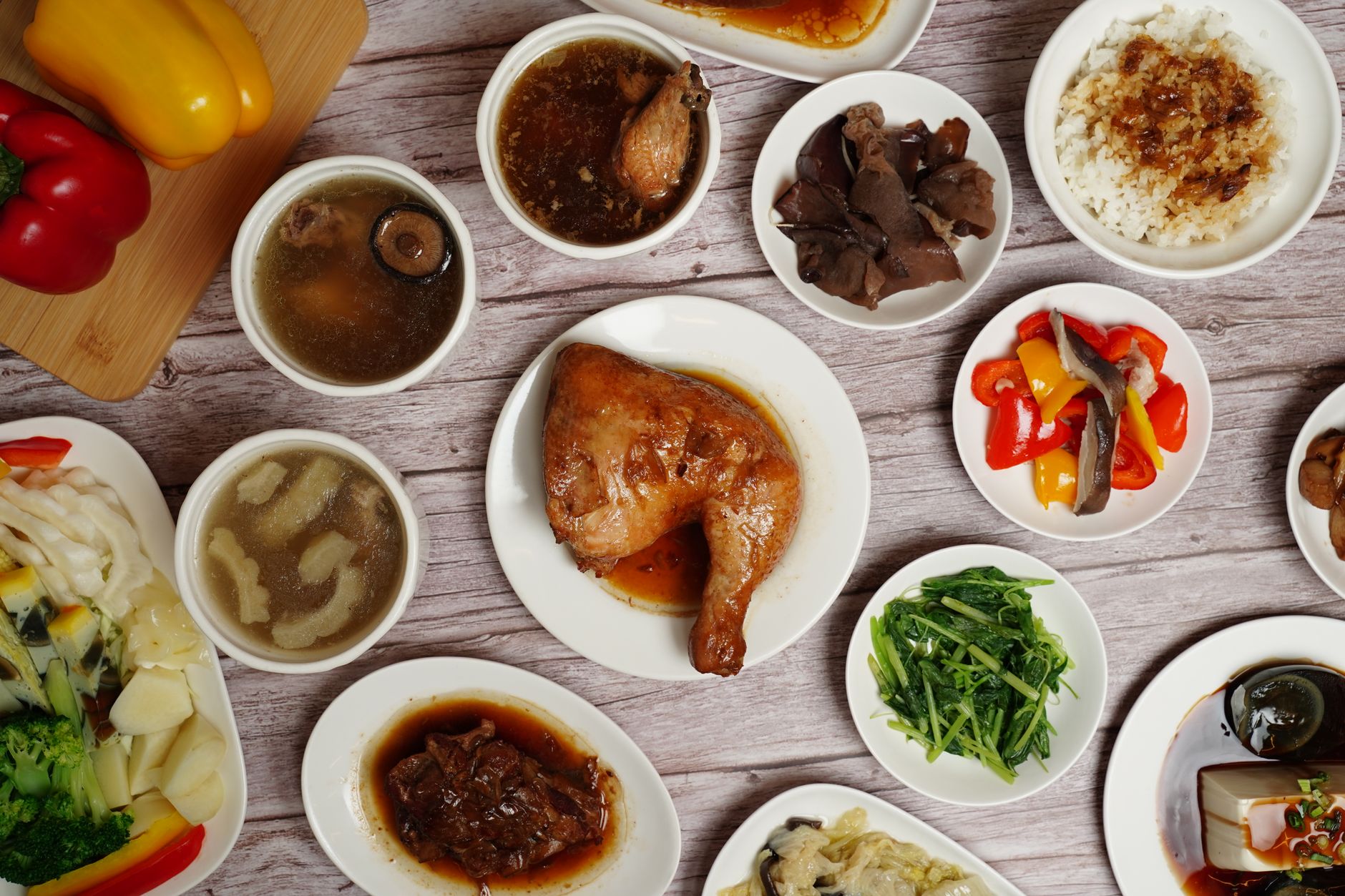
Cantonese cuisine is what most international travelers encounter first, because Guangdong (Canton) and Hong Kong are the origin point for the Chinese food that spread overseas through the 19th and 20th centuries. The core principle is freshness: a good Cantonese kitchen lets the ingredient speak, using light steaming, gentle stir-frying, and minimal spice.
Key dishes to order:
- White-cut chicken (白切鸡) — poached chicken served at room temperature with ginger-scallion oil, the benchmark dish for judging a Cantonese kitchen
- Roast goose (烧鹅) — crackling-skin goose roasted over charcoal, a specialty of Shenzhen and Guangzhou
- Char siu (叉烧) — sweet, lacquered barbecued pork
- Steamed fish (清蒸鱼) — whole fish steamed with soy, scallion, and hot oil, the ultimate test of ingredient quality
- Dim sum (点心) — the Cantonese brunch tradition of small plates: har gow shrimp dumplings, siu mai pork dumplings, cheung fun rice noodle rolls, and dozens more
Where to try it: Guangzhou, Shenzhen, Foshan, and Jiangmen in Guangdong province. A dim sum meal for two at a mid-range restaurant in Guangzhou typically costs 80 to 150 RMB as of November 2026. High-end Cantonese restaurants in major hotels can run 300 to 600 RMB per person.
Sichuan Cuisine (川菜)
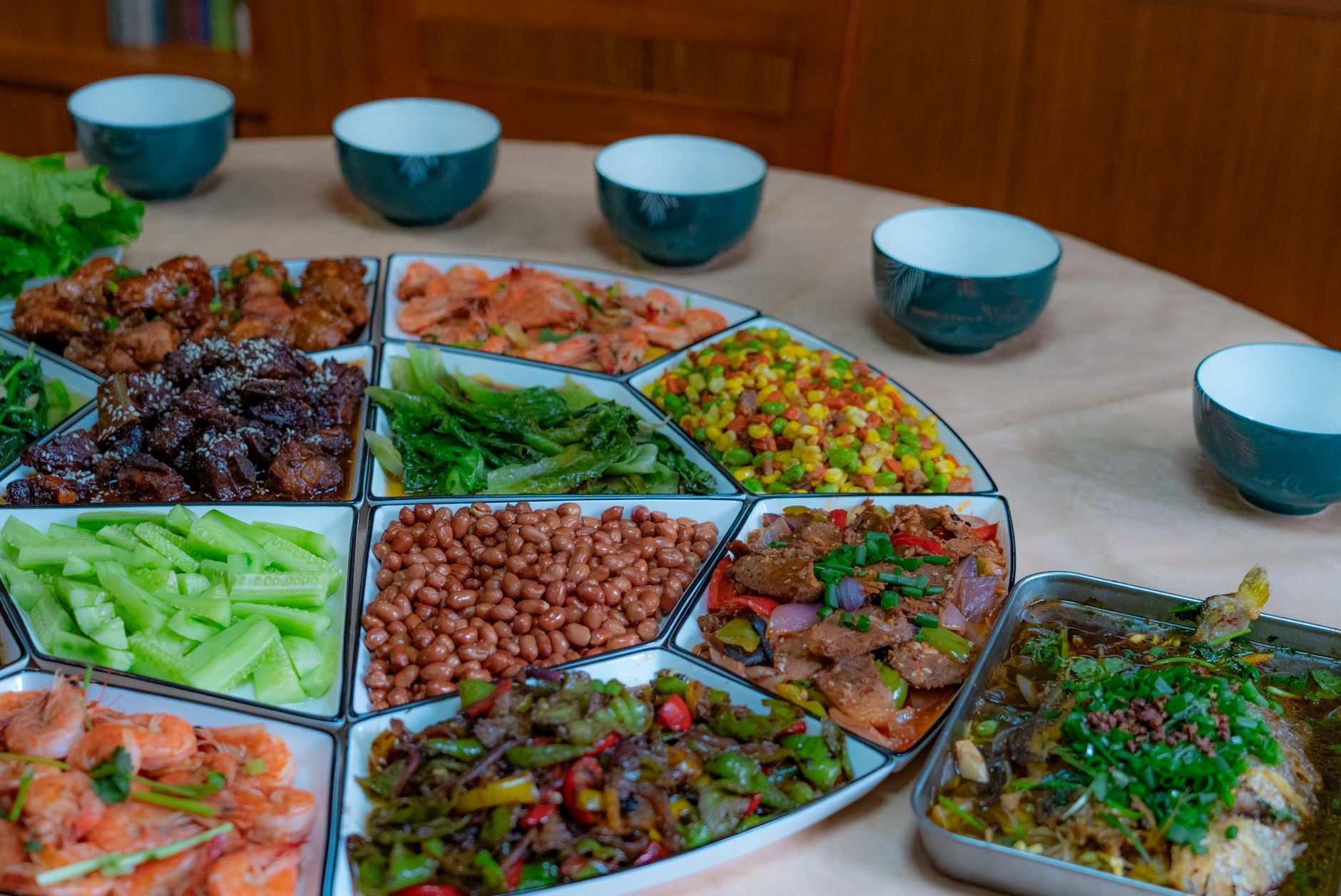
Sichuan cuisine is the most internationally famous of the spicy regional traditions, and it is built on a specific combination: Sichuan peppercorn (花椒), which produces a tingling numbness called ma (麻), and chili peppers, which produce the heat called la (辣). Together they form mala (麻辣), the numbing-spicy flavor that defines the cuisine. This is not simply heat — the peppercorn changes the physical sensation on your tongue before the chili heat arrives.
Key dishes to order:
- Mapo tofu (麻婆豆腐) — soft tofu in a sauce of chili bean paste, ground pork, and Sichuan peppercorn
- Kung Pao chicken (宫保鸡丁) — diced chicken with peanuts, dried chilies, and a sweet-sour-savory sauce
- Twice-cooked pork (回锅肉) — pork belly boiled then stir-fried with leeks and bean paste
- Dan dan noodles (担担面) — noodles in a sesame-chili sauce with minced pork, originally a street vendor dish
- Sichuan hotpot (四川火锅) — a bubbling pot of chili-and-peppercorn broth where you cook your own meat and vegetables
Where to try it: Chengdu and Chongqing are the two centers. Chongqing hotpot tends to be oilier and more aggressively spicy; Chengdu hotpot is slightly more balanced. A hotpot meal for two in Chengdu typically costs 120 to 250 RMB as of November 2026. Dan dan noodles from a street stall cost around 12 to 20 RMB per bowl.
Shandong Cuisine (鲁菜)
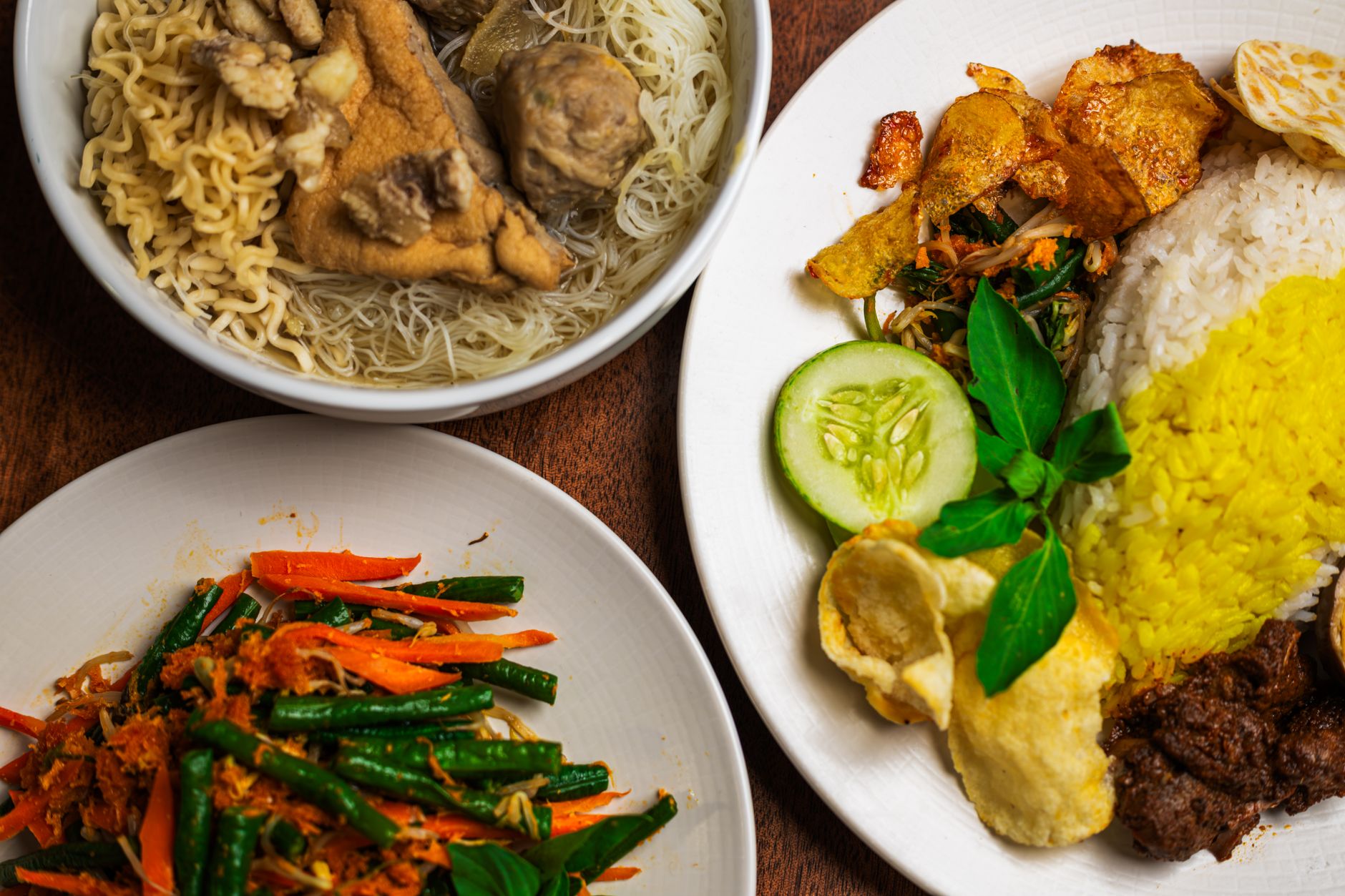
Shandong cuisine is the oldest of the eight traditions and the foundation of much of northern Chinese cooking, including Beijing cuisine. It developed along the coast of the Bohai Sea and the Yellow River, giving it access to both fine seafood and strong wheat agriculture. The flavor profile is salty, savory, and umami-forward, built on stocks made from chicken, pork bones, and sea cucumber.
Key dishes to order:
- Sweet and sour carp (糖醋鲤鱼) — whole carp from the Yellow River, scored, fried, and glazed in a sweet-sour sauce
- Dezhou braised chicken (德州扒鸡) — a whole chicken slow-braised in a master stock of soy, ginger, and spices until the meat falls from the bone
- Braised sea cucumber with scallion (葱烧海参) — sea cucumber cooked in a rich scallion-infused sauce, a banquet-level dish
- Nine-turn large intestine (九转大肠) — pork intestine braised in a complex sweet-sour-savory sauce, a classic test of a Shandong chef
Where to try it: Jinan, the capital of Shandong, and Qingdao, the coastal city known for its seafood and beer. Jinan restaurants tend toward traditional braised dishes; Qingdao adds a layer of fresh seafood. A meal at a mid-range Shandong restaurant typically costs 80 to 180 RMB per person as of November 2026.
Jiangsu Cuisine (苏菜)
Jiangsu cuisine, particularly the Huaiyang tradition centered on Yangzhou and Huai'an, is often considered the most refined of the eight. It is the cuisine most associated with formal banquets. The hallmarks are precise knife work, slow simmering, and a flavor profile that balances sweetness with subtlety. Huaiyang chefs pride themselves on cutting ingredients so precisely that texture becomes part of the flavor.
Key dishes to order:
- Lion's head meatballs (狮子头) — large, loose-textured pork meatballs simmered in broth, a Huaiyang signature
- Squirrel mandarin fish (松鼠桂鱼) — a whole mandarin fish scored into a pattern, fried until it resembles a squirrel's tail, and glazed with sweet-sour sauce
- Nanjing salted duck (南京盐水鸭) — duck cured in salt and spices, a specialty of Nanjing
- Yangzhou fried rice (扬州炒饭) — the original fried rice, made with egg, shrimp, ham, and peas, and far more restrained than the versions served overseas
Where to try it: Nanjing, Yangzhou, and Suzhou. A traditional Huaiyang banquet in Yangzhou can cost 200 to 500 RMB per person; a casual meal of lion's head meatballs and rice in a local restaurant costs around 40 to 70 RMB as of November 2026.
Zhejiang Cuisine (浙菜)
Zhejiang cuisine shares some DNA with Jiangsu cuisine — both are eastern coastal traditions with an emphasis on freshness — but Zhejiang leans lighter and more delicate, with a particular focus on freshwater fish from the region's lakes and rivers. The cuisine is closely tied to the landscape around Hangzhou's West Lake and the coastal city of Ningbo.
Key dishes to order:
- West Lake fish in vinegar (西湖醋鱼) — grass carp from West Lake, briefly cooked and served in a sweet-vinegar sauce
- Dongpo pork (东坡肉) — squares of pork belly braised in soy sauce, wine, and sugar until meltingly tender, named after the Song Dynasty poet Su Dongpo
- Beggar's chicken (叫花鸡) — a whole chicken wrapped in lotus leaves and clay, then baked, traditionally cracked open at the table
- Longjing shrimp (龙井虾仁) — river shrimp stir-fried with Longjing (Dragon Well) tea leaves from Hangzhou
Where to try it: Hangzhou, Ningbo, and Shaoxing. Hangzhou is the center for West Lake dishes; Ningbo is known for salted seafood and rice cakes. A meal at a mid-range Hangzhou restaurant near West Lake typically costs 100 to 200 RMB per person as of November 2026.
Fujian Cuisine (闽菜)
Fujian cuisine developed in a province with a long coastline, dense mountains, and a warm, humid climate. The result is a cooking tradition built on seafood, soup, and fermentation — particularly red yeast rice wine lees (红糟), which gives many Fujian dishes their distinctive reddish color and slightly sweet, earthy flavor. Soup is central: a Fujian banquet often includes multiple soup courses.
Key dishes to order:
- Buddha jumps over the wall (佛跳墙) — the most famous Fujian dish, a complex soup-stew containing sea cucumber, abalone, fish maw, scallops, quail eggs, and more, simmered for hours in a sealed jar
- Red lees chicken (红糟鸡) — chicken marinated and cooked in red yeast rice wine lees
- Fuzhou fish balls (福州鱼丸) — fish paste balls with a pork filling inside, a street and home-cooking staple
- Oyster omelet (海蛎煎) — fresh oysters bound in an egg-and-starch batter, common across Fujian and Taiwan
Where to try it: Fuzhou, Xiamen, and Quanzhou. Xiamen is the most accessible for tourists and has a strong street-food culture. Buddha jumps over the wall at a traditional Fuzhou restaurant typically costs 200 to 600 RMB depending on the ingredient quality as of November 2026. A bowl of Fuzhou fish balls costs around 10 to 20 RMB.
Hunan Cuisine (湘菜)
Hunan cuisine is often confused with Sichuan cuisine because both are spicy, but the two are built on different foundations. Sichuan uses Sichuan peppercorn for numbness; Hunan uses fresh chilies, dried chilies, and fermented chili paste for a sharper, more direct heat. Hunan food is also more sour — pickled vegetables and vinegar play a major role. The result is a cuisine that many find hotter and more assertive than Sichuan cooking.
Key dishes to order:
- Chairman Mao's red-braised pork (毛氏红烧肉) — pork belly braised in soy, sugar, and chili, named after Mao Zedong, who was born in Hunan's Shaoshan village
- Steamed fish head with chopped chili (剁椒鱼头) — a massive fish head steamed under a blanket of chopped red chilies, served in many Hunan restaurants
- Dong'an chicken (东安鸡) — shredded chicken in a vinegar-and-chili sauce, one of the older Hunan recipes
- Changsha stinky tofu (长沙臭豆腐) — fermented tofu fried until crisp, a street-food specialty that smells stronger than it tastes
Where to try it: Changsha, the capital of Hunan, is the center of the cuisine and has a strong street-food and night-market scene. A meal at a mid-range Hunan restaurant in Changsha typically costs 60 to 150 RMB per person as of November 2026. Stinky tofu from a street stall costs around 10 to 15 RMB.
Anhui Cuisine (徽菜)
Anhui cuisine is the least internationally known of the eight, and it is the one most travelers are least likely to have encountered. It developed in the mountainous interior of Anhui province, where wild herbs, bamboo, and preserved ingredients shaped the cooking. The flavor profile is heavy, salty, and savory, with a reliance on slow braising and oil-rich reductions. Anhui chefs use more wild and foraged ingredients than any other regional tradition.
Key dishes to order:
- Stinky mandarin fish (臭鳜鱼) — fish lightly fermented then braised in a soy-garlic sauce; despite the name, the fermentation is mild and the flavor is deeply savory
- Bamboo shoots cooked with cured pork (笋干烧肉) — dried mountain bamboo shoots braised with pork belly
- Li Hongzhang hotpot (李鸿章大杂烩) — a hotpot of mixed meats and vegetables named after the Qing Dynasty statesman from Anhui
- Huangshan braised pigeon — pigeon braised with mountain herbs, a specialty near Huangshan (Yellow Mountain)
Where to try it: Tunxi (the old town of Huangshan City) and Shexian County in southern Anhui. Many travelers visit Huangshan for the mountain and encounter Anhui cuisine in the local restaurants of Tunxi Old Street. A meal at a local Anhui restaurant typically costs 60 to 120 RMB per person as of November 2026.
How to Plan a Food-Focused Trip Across Multiple Cuisines
If you want to experience several of the Eight Great Cuisines on one trip, the most efficient route connects the eastern and southern provinces by high-speed rail. A practical 12-to-14-day food itinerary might look like this:
- Days 1-3: Guangzhou and Shenzhen — Cantonese dim sum, roast goose, and steamed fish
- Days 4-6: Chengdu — Sichuan hotpot, dan dan noodles, and mapo tofu
- Days 7-9: Yangzhou or Nanjing — Huaiyang banquet dishes, lion's head meatballs, and salted duck
- Days 10-11: Hangzhou — West Lake fish, Dongpo pork, and Longjing shrimp
- Days 12-14: Shanghai — a crossroads city where you can find all eight cuisines in one place, plus its own local style (benbang cuisine, which draws on Jiangsu and Zhejiang traditions)
High-speed rail connects all of these cities. The Guangzhou-to-Chengdu high-speed train takes about 7 to 8 hours; Chengdu to Nanjing takes about 9 to 10 hours; Nanjing to Hangzhou takes about 1.5 hours. As of November 2026, a second-class ticket from Guangzhou to Chengdu costs roughly 500 to 600 RMB. Check China Railway schedules before booking, as timetables and routes change.
If you have less time, the Guangzhou-Chengdu-Hangzhou triangle covers Cantonese, Sichuan, and Zhejiang cuisines in about 8 to 10 days and hits three of the most distinct regional traditions. HXXC Travel can arrange this route with restaurant reservations, local food guides, and high-speed rail tickets included.
Practical Tips for First-Time Travelers
A few things catch international travelers off guard when eating in China:
- Dishes are shared, not individual. A table of four people typically orders five to seven dishes plus rice. You eat from the center of the table with your own chopsticks, or with serving chopsticks (公筷) at restaurants that provide them.
- Rice is often served last in southern China, after the savory dishes. In the north, noodles, dumplings, or steamed buns are the staple instead.
- Spice levels in Sichuan and Hunan restaurants are not adjusted for tourists by default. If you want less heat, say "微辣" (wei la, mildly spicy) or "不辣" (bu la, not spicy) when ordering. Even "mildly spicy" in Sichuan can be quite hot by Western standards.
- Tipping is not expected in restaurants in mainland China. A service charge may appear on the bill at high-end hotel restaurants, but ordinary restaurants do not add one.
- Payment is almost entirely mobile (WeChat Pay or Alipay). International travelers can link foreign Visa and Mastercard to Alipay and WeChat Pay as of November 2026, though setup should be done before arrival. Cash is accepted but increasingly inconvenient outside major hotels.
- Menu pictures are common in mid-range and casual restaurants, and many restaurants now have English menus or QR-code menus with translations, especially in Guangzhou, Shanghai, and Chengdu.
References and Updates
This guide is reviewed monthly by HXXC Travel advisors based in Guangdong, with input from our local food guides in Chengdu, Changsha, Hangzhou, and Fuzhou. Last reviewed: November 2, 2026. Prices, train schedules, and restaurant details are current as of November 2026 but can change — please re-check specifics before you travel, especially rail timetables and mobile payment requirements.
Frequently Asked Questions
What is the difference between Sichuan and Hunan food?
Sichuan cuisine uses Sichuan peppercorn, which creates a numbing sensation (ma), combined with chili heat (la). Hunan cuisine uses fresh and fermented chilies without the numbing peppercorn, producing a sharper, more direct heat, and it also uses more vinegar and pickled vegetables for sourness. If you want numbness, choose Sichuan. If you want pure chili heat, choose Hunan.
Which of the Eight Great Cuisines is the least spicy?
Cantonese cuisine is the least spicy by default, followed closely by Jiangsu and Zhejiang cuisines. These three traditions emphasize the natural flavor of ingredients and use little to no chili. If you are sensitive to spice, Guangzhou, Yangzhou, and Hangzhou are the easiest cities to eat in.
Is dim sum a separate cuisine?
No. Dim sum is a Cantonese tradition of small plates served with tea, typically at breakfast or lunch. It is part of Cantonese cuisine, not a separate category. The most authentic dim sum is found in Guangzhou, Shenzhen, and Hong Kong.
Can I find all eight cuisines in one city?
Shanghai and Beijing both have restaurants representing all eight traditions, because they are large crossroads cities with populations from every province. However, the best versions of each cuisine are still found in their home regions, where the ingredients and local cooking expertise are strongest.
How much should I budget for food per day in China?
For a mid-range food experience — local restaurants for lunch and dinner, street food for snacks — budget roughly 150 to 300 RMB per person per day as of November 2026. This excludes alcohol and high-end banquet dining. A single high-end meal at a top Cantonese or Huaiyang restaurant can cost 300 to 600 RMB per person.
Do I need to speak Chinese to order food?
In major tourist cities like Guangzhou, Shanghai, Chengdu, and Hangzhou, many restaurants have picture menus or English translations. In smaller cities and street stalls, you may need to point or use a translation app. HXXC Travel provides local food guides who can take you to restaurants where English menus are not available, which is often where the most authentic food is found.
Related private tours
- Guangzhou Heritage & Wildlife — Lingnan Culture Meets Chimelong Safari — 5 days
- Six Cities, One China — 15-Day Family Circuit — 15 days
- Best Tour In China - 19 Days Trip — 19 days · From US$2,896