
What to Know About Chongqing’s Vertical City Layout
Chongqing is a steep riverside Chinese megacity built in vertical layers, famous for spicy food and Yangtze night views. Most first-timers spend 2–3 days exploring neighborhoods, eating local dishes, and taking river cruises.
The city sits at the confluence of the Yangtze and Jialing Rivers in the eastern Sichuan Basin, with most of its urban core built on slopes with a 15–30 degree incline. This means street level on one side of a building can be the 10th floor on the other, and many neighborhoods are connected by escalators, cable cars, and staircases instead of flat roads.
How to Navigate Chongqing’s Vertical Layers
Traditional paper maps and flat GPS views can be misleading in Chongqing, so use a 3D-enabled navigation app like Amap (which has English support as of November 2026) to avoid getting lost between elevation levels. For short trips between stacked neighborhoods, use the city’s public vertical transport options:
- The Crown Escalator: One of the world’s longest outdoor escalators, stretching 112 meters long and 52 meters high to connect the upper and lower parts of Yuzhong district. A one-way ride costs 2 RMB (~$0.28 USD) as of November 2026.
- Yangtze River Cableway: A cross-river cable car that runs 1,166 meters between Yuzhong and Nan’an districts, 116 meters above the Yangtze River. As of November 2026, a one-way ticket costs 20 RMB (~$2.75 USD), and it operates from 7:30 AM to 10:30 PM.
- Liziba Station: A monorail station on Line 2 that passes directly through the 6th to 8th floors of a 19-story residential building. You can ride the monorail through the station or visit the viewing platform below to watch trains pass.
For longer distances, the monorail (metro) system covers most major attractions, with tickets starting at 2 RMB. Taxis and ride-hailing apps are also affordable, but expect slower travel during rush hour (7:30–9:00 AM, 5:30–7:30 PM).
Must-Try Chongqing Food Dishes
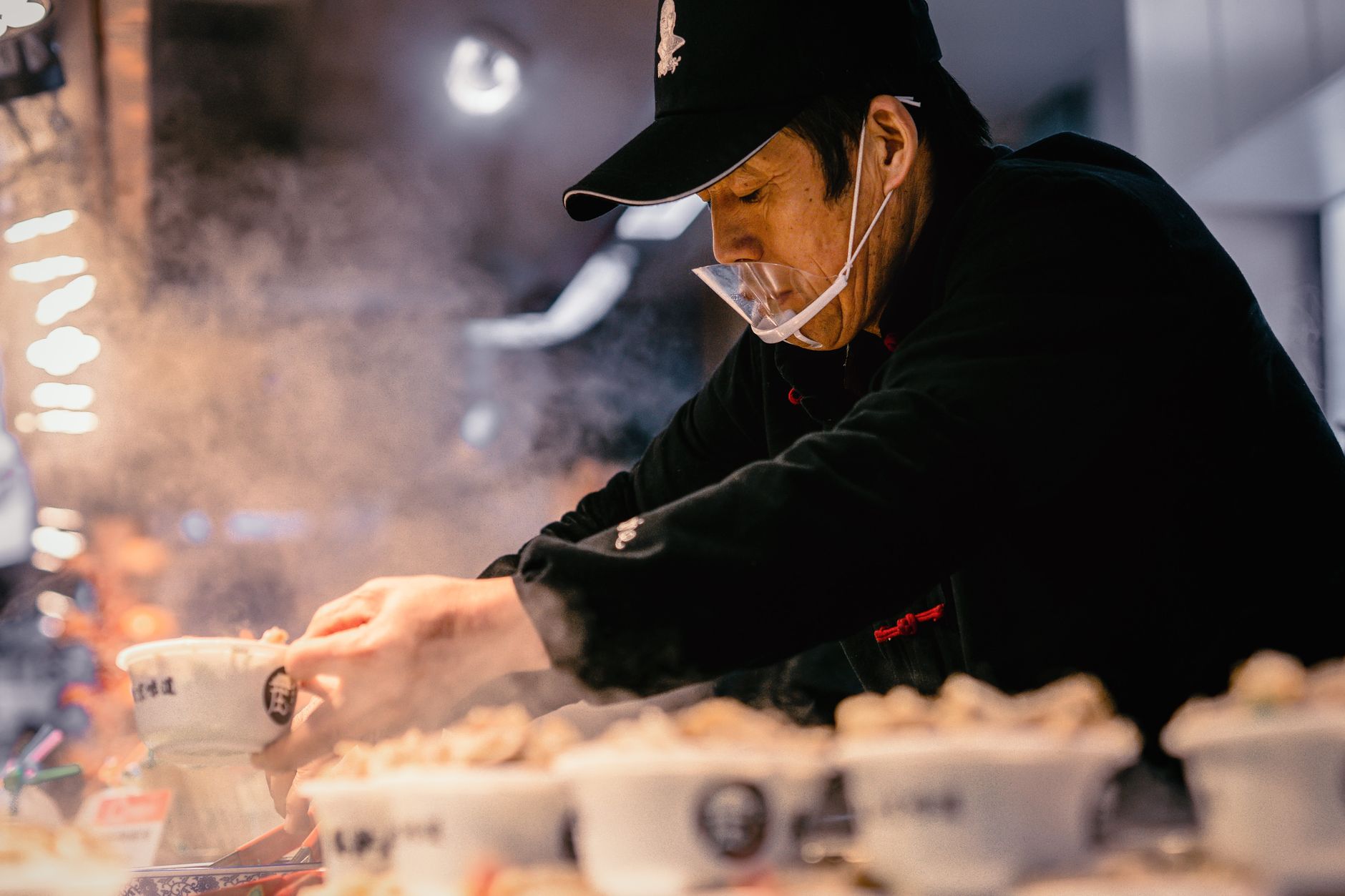
Chongqing cuisine is a branch of Sichuan cooking known for its ma la (numbing-spicy) flavor from dried chili peppers and Sichuan peppercorns. It’s heavier on street food and casual dining than Chengdu-style Sichuan food, with many dishes designed to be eaten on the go.
- Hot pot: Chongqing’s signature dish, typically served in a 9-grid iron pot with a deep red, oily spicy broth. Cook ingredients like fatty beef, tripe, lotus root, and tofu skin at the table. Casual restaurants charge 80–150 RMB per person (~$11–$21 USD), and most offer split pots with one mild broth side for people who can’t handle high heat.
- Spicy noodles (xiaomian): A cheap, filling breakfast staple. Thin wheat noodles are tossed in a sauce of chili oil, Sichuan peppercorns, garlic, soy sauce, and green onions, with optional toppings like braised beef or pickled mustard greens. A bowl costs 10–20 RMB (~$1.40–$2.75 USD) at street stalls.
- Hot and sour glass noodles (suanla fen): Tangy, spicy soup made with chewy sweet potato glass noodles, peanuts, pickled vegetables, and crispy soybeans. It’s a popular late-night snack, costing 10–15 RMB per bowl.
- Deep-fried stinky tofu (chou doufu): Fermented tofu cubes fried until crispy, served with chili sauce and pickled cabbage. It’s sold at most night markets for 5–10 RMB per serving.
- Spicy crayfish (xiaolongxia): A seasonal summer dish, with whole crayfish stir-fried in ma la sauce. It’s usually eaten at outdoor street stalls with cold beer, costing 80–120 RMB per kilogram (~$11–$16 USD).
Top Food Neighborhoods
Ciqikou Ancient Town, a preserved Ming and Qing dynasty street in Shapingba district, has dozens of street food stalls selling local snacks, but prices are slightly higher than in residential neighborhoods. For more local, lower-cost options, head to the alleyways around Jiefangbei (the city center) or the night market on Guanyinqiao Pedestrian Street. HXXC Travel’s 2-day Chongqing food tour includes stops at family-run hot pot restaurants and street food stalls that aren’t listed in mainstream guidebooks.

Best Chongqing River Night Experiences
Chongqing’s night skyline is defined by its stacked high-rises and hillside buildings, which reflect off the dark surface of the Yangtze and Jialing Rivers after dark. The city turns on most of its decorative lighting from 7:00 PM to 10:00 PM every night.

Yangtze River Night Cruises
The most popular way to see the river lights is on a 1–2 hour night cruise departing from Chaotianmen Wharf, the triangular point where the Yangtze and Jialing Rivers meet. Cruises sail along the Yangtze past Hongyadong, the Chongqing Grand Theater, and the Nan’an district skyline before turning back.
As of November 2026, standard cruise tickets cost 120–200 RMB per person (~$16–$27 USD), depending on the boat size and seat location. Upper-deck outdoor seats cost more than indoor lower-deck seats, and some boats offer VIP packages with snacks and drinks. Boats run every 30 minutes from 7:00 PM to 9:30 PM, with the last departure around 9:00 PM. During peak travel seasons (April–May, September–October), book tickets 1–2 days in advance to get a good seat.
Free and Low-Cost Viewpoints
If you don’t want to take a cruise, there are several free viewpoints with equally good views of the river and skyline:
- Hongyadong Observation Deck: The 11th-floor rooftop of the Hongyadong stilt-house complex has unobstructed views of the Jialing River and the north bank skyline. It gets very crowded after 7:00 PM, so arrive 30 minutes early to find a spot near the railing.
- Nanbin Road: A 5-kilometer riverside promenade on the south bank of the Yangtze, with flat walking paths and unobstructed views of the Yuzhong district skyline. You can walk, rent a shared bike, or stop at a riverside café to watch the lights.
- Eling Park: A hilltop park in the middle of Yuzhong district, with views of both the Yangtze and Jialing Rivers. It’s much quieter than Hongyadong, and there are several stone pavilions where you can sit and watch the sunset before the city lights turn on.
Practical 2026 Chongqing Travel Tips
Note: All time-sensitive details below are current as of November 2026. Re-check prices, schedules, and entry rules with official sources before your trip.
Best Time to Visit
Chongqing has a humid subtropical climate, with four distinct seasons. Summers (June–August) are hot and muggy, with daily high temperatures often above 35°C (95°F) — Chongqing is one of China’s “Three Furnaces” cities, so summer travel is not recommended for people who don’t handle heat well. Winters (December–February) are cool and damp, with average temperatures around 5–10°C (41–50°F), and rare snow. The most comfortable times to visit are spring (March–May) and autumn (September–November), when temperatures range from 15–25°C (59–77°F) and rainfall is low.
Getting There and Around
- By air: Chongqing Jiangbei International Airport is the main international gateway, located about 25 kilometers north of the city center. It has direct flights to cities like Los Angeles, Sydney, Singapore, Tokyo, and Seoul, plus dozens of domestic routes. As of November 2026, the airport express train (Line 10) takes 40–50 minutes to reach Jiefangbei, and a taxi costs 80–100 RMB (~$11–$14 USD).
- By train: Chongqing has three major train stations: Chongqing West (for high-speed trains to Chengdu, Xi’an, and Guangzhou), Chongqing North (for trains to Beijing and Shanghai), and Chongqing Station (closer to the city center, for regional trains). High-speed trains run between Chongqing and Chengdu every 15 minutes, with a travel time of 1.5 hours.
- Local transport: The monorail system has 10 lines covering most major attractions, with tickets starting at 2 RMB. Taxis start at 10 RMB (~$1.40 USD) for the first 3 kilometers, and ride-hailing apps like Didi have English support as of November 2026.
Visa and Entry Requirements
As of November 2026, most international visitors need a valid Chinese tourist visa (L visa) to enter Chongqing. If you are transiting through Chongqing to a third country, you may qualify for the 240-hour visa-free transit policy, which applies to passport holders of 57 countries, including the US, UK, Canada, Australia, New Zealand, and most EU nations. To qualify, you must have a valid passport (valid for at least 6 months), a confirmed onward ticket to a third country, and no entry restrictions. the 240-hour period starts from the time you enter China, and you can travel anywhere within the Chongqing municipality during that time. Always confirm your eligibility with your local Chinese embassy or consulate before travel.
How HXXC Travel Can Help
HXXC Travel is a China inbound tour operator based in Jiangmen, Guangdong, specializing in customized tours for international first-time visitors to China. We offer several Chongqing-focused itineraries, including:
- 2-day Chongqing Highlights & Food Tour: From $280 per person, including private English-speaking guide, all ground transport, 3 local meals, and entry tickets to major attractions.
- 4-day Chongqing + Yangtze Cruise Package: From $890 per person, including 3 nights of 4-star accommodation, a 2-day Yangtze River short cruise, private guide, and daily breakfast.
- Multi-city tours combining Chongqing with Chengdu (panda base), Zhangjiajie (sandstone peaks), or Guilin (Li River) for 7–10 day trips.
All our tours are fully customizable — you can adjust the itinerary to focus more on food, photography, history, or outdoor activities. We also provide 24/7 support during your trip and help with visa invitation letters if needed.
FAQ
Is Chongqing the most vertical city in the world?
Chongqing is often called China’s most vertical major city due to its steep hillside construction and stacked urban layout, but it is not the only vertically built city. Hong Kong, La Paz (Bolivia), and Valparaíso (Chile) also have steep, layered cityscapes. Chongqing’s layout is distinct because its entire urban core is built on rugged terrain at the confluence of two large rivers.
How many days do you need in Chongqing for a first visit?
Most first-time visitors spend 2–3 days in Chongqing. That’s enough time to see the main vertical attractions (Hongyadong, Liziba Station, Yangtze Cableway), try 5–10 local dishes, and take a river night cruise. If you plan to visit nearby sites like the Dazu Rock Carvings (a 2-hour drive from the city center) or Ciqikou Ancient Town, add 1 more day.
Is all Chongqing food extremely spicy?
Not all Chongqing food is spicy, but many iconic dishes use chili peppers and Sichuan peppercorns. Most restaurants offer mild (bu la) or less spicy (shao la) options, and hot pot places almost always have split pots with one mild broth side. There are also plenty of non-spicy local snacks, like sweet glutinous rice balls (tangyuan) and crispy rice cakes, available at street stalls.
How much does a Chongqing Yangtze night cruise cost?
As of November 2026, standard night cruise tickets cost 120–200 RMB per person (~$16–$27 USD), depending on the boat class and seat location. Upper-deck outdoor seats are more expensive than indoor lower-deck seats, and VIP packages with snacks and drinks cost extra. Prices may be higher during national holidays like National Day (October 1–7). Re-check current prices with official ticket providers before booking.
Can I visit Chongqing without a Chinese visa?
You can visit Chongqing without a visa if you qualify for the 240-hour visa-free transit policy. As of November 2026, this policy applies to passport holders of 57 countries (including the US, UK, Canada, Australia, and most EU nations) who have a confirmed onward ticket to a third country and a passport valid for at least 6 months. You can stay in Chongqing for up to 6 days under this policy. Always confirm your eligibility with your local Chinese embassy before travel.
What’s the best way to get around Chongqing’s hilly streets?
For long distances, use the monorail system, which runs on elevated tracks and avoids street-level traffic and steep hills. For short trips between elevation levels, use public escalators, cable cars, or ride-hailing apps — walking can be tiring due to the steep slopes. Use a 3D-enabled navigation app like Amap to avoid getting lost between different street levels.
Related private tours
- China Culture & Natural — 11 days · From US$3,135
- Grand China Odyssey — 19 Days Cross-Country — 19 days · From US$2,450
- Best Tour In China - 19 Days Trip — 19 days · From US$2,896