
China does not offer visa on arrival for general tourism. However, citizens of many countries can enter China visa-free under unilateral, mutual, or transit exemption policies as of November 2026. If your nationality is not covered by any visa-free route, you must obtain a regular visa from a Chinese embassy or consulate before travel.
Key facts at a glance
- China has no standard visa-on-arrival facility for tourists arriving without prior arrangement.
- A port visa system exists but requires a pre-arranged invitation from a Chinese host entity and is intended for urgent business or family visits, not tourism.
- China's unilateral visa-free policy allows citizens of select countries to enter for up to 15 days per entry without a visa.
- The 240-hour transit visa exemption is available at dozens of Chinese airports for citizens of 57 nationalities, provided you have a confirmed onward ticket to a third country.
- Hainan Island offers 30-day visa-free entry for citizens of 61 countries.
- China has mutual visa-free agreements with several countries, including Thailand, Singapore, Malaysia, and the UAE.
- All visa and entry policies should be re-verified before travel, as China frequently adjusts its visa framework.
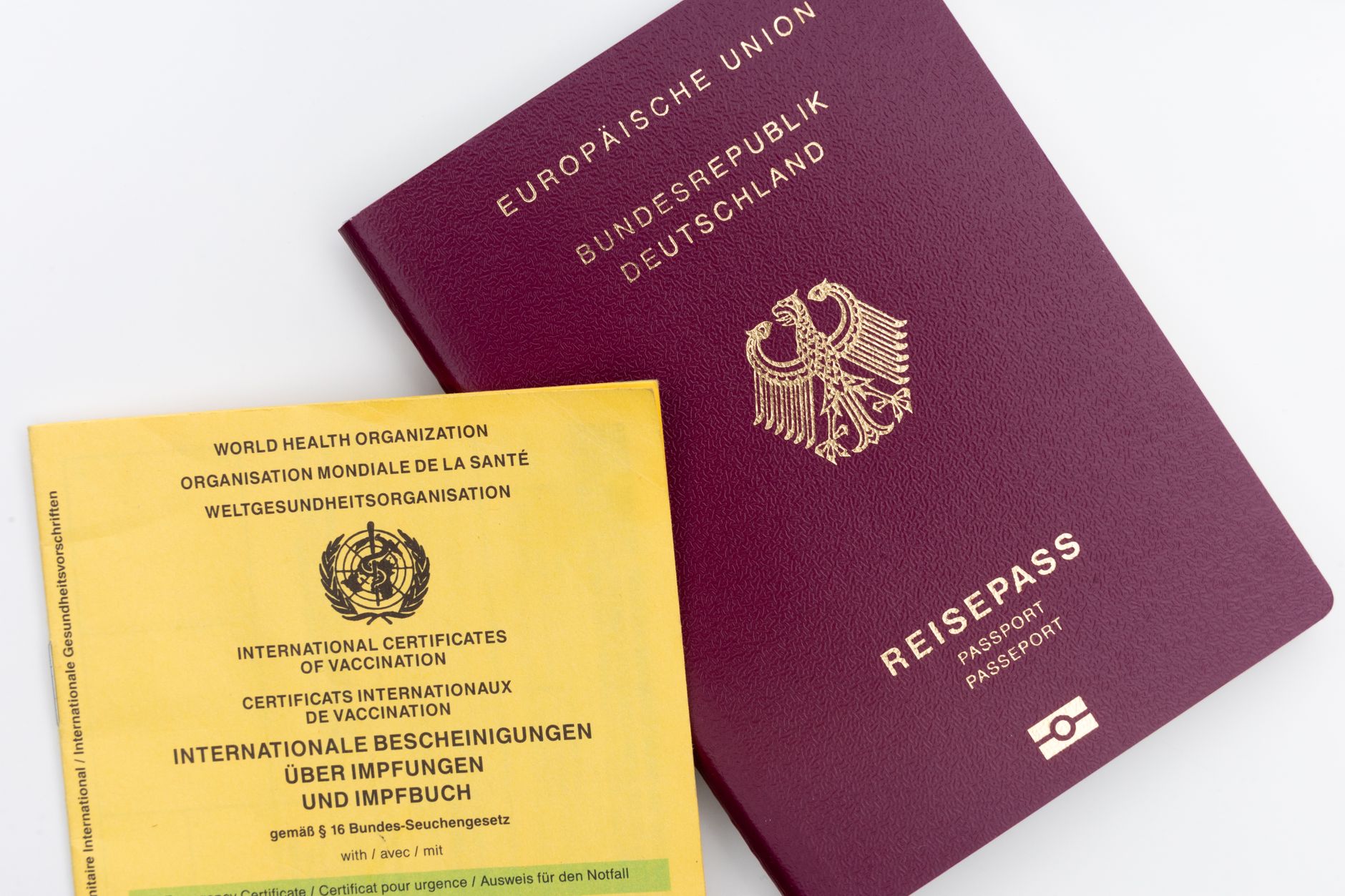
Does China have visa on arrival?
No. China does not offer a visa-on-arrival system comparable to countries like Thailand, Indonesia, or Cambodia. If you arrive at a Chinese airport or border crossing without a valid visa or visa-free eligibility, you will be denied entry and put on the next return flight.
The closest thing China has to visa on arrival is its port visa system. Port visas are issued at designated international airports and land border checkpoints, but they are not available to walk-up tourists. To obtain a port visa, you need an invitation letter from a registered Chinese entity, such as a company, institution, or individual. The inviting party must apply to the local exit-entry administration in advance, and approval must be granted before you board your flight.
Port visas are typically issued for urgent business travel, family emergencies, or similar situations. They are not a tourism pathway. If you are traveling for leisure and your nationality is not covered by a visa-free policy, you need to apply for a tourist visa (L visa) at a Chinese embassy or consulate before you travel.

China's unilateral visa-free entry policy
Since late 2023, China has unilaterally offered visa-free entry to citizens of an expanding list of countries. As of November 2026, this policy allows eligible nationals to enter China without a visa for stays of up to 15 days per entry, for tourism, business, family visits, or transit.
Countries confirmed on the unilateral visa-free list include France, Germany, Italy, Spain, Netherlands, Switzerland, Ireland, Hungary, Austria, Belgium, Luxembourg, Malaysia, Japan, and additional countries added in subsequent expansions. The list has grown steadily since the policy launched and should be re-checked before travel, as new nationalities are added periodically.
The 15-day limit is per entry. There is no formal published limit on the number of entries per year, but immigration officers may question travelers who enter frequently or attempt to use visa-free entry for extended stays. For stays longer than 15 days, a regular visa is required.
240-hour transit visa exemption
China's transit visa exemption allows eligible travelers to enter specific cities without a visa for up to 240 hours (10 days), provided they are transiting to a third country.
How the transit exemption works
- You must be a citizen of one of 57 eligible nationalities, including all EU member states, the United States, the United Kingdom, Canada, Australia, New Zealand, Japan, South Korea, and others.
- You must arrive from one country and depart to a different third country. You cannot fly from Country A to China and then back to Country A.
- You must have a confirmed onward ticket with a departure time within the 240-hour window.
- You must stay within the designated geographic area for the port of entry. For example, the Shanghai 240-hour zone covers Shanghai municipality, Jiangsu province, and Zhejiang province. The Beijing zone covers Beijing, Tianjin, and Hebei province.
- You must present your onward ticket and passport to the airline at check-in, and to immigration on arrival.
Cities offering 240-hour transit exemption
As of November 2026, 240-hour transit exemption is available at dozens of entry points, including Beijing (Capital International and Daxing International), Shanghai (Pudong and Hongqiao), Guangzhou, Shenzhen, Chengdu, Chongqing, Xi'an, Hangzhou, Nanjing, Kunming, Guilin, Qingdao, Xiamen, Wuhan, Tianjin, Dalian, and Harbin, among others. This unified 240-hour policy replaced the earlier 72- and 144-hour schemes on December 17, 2024. Check the specific port before booking.
The transit exemption is one of the most practical visa-free options for travelers who want to visit China on a short stopover. For example, a traveler flying from London to Sydney via Shanghai can spend up to 10 days in the permitted region without a visa, as long as they hold a confirmed onward ticket to Sydney.
Hainan Island visa-free entry
Hainan province, China's southernmost island, offers 30-day visa-free entry for citizens of 61 countries, including the United States, the United Kingdom, Canada, Australia, most EU member states, Japan, South Korea, and others. That is the same 30 days as the unilateral scheme, but granted under a separate regional policy with its own nationality list.
To use Hainan visa-free entry, you must enter and exit Hainan through designated ports, including Haikou Meilan International Airport, Sanya Phoenix International Airport, and designated seaports. Your booking must be handled by a registered Hainan travel agency or hotel, which files your details with the local exit-entry administration before you arrive. You must remain within Hainan province for the duration of your stay. Travel to mainland China from Hainan requires a visa.
Mutual visa-free agreements
China has mutual visa-free agreements with several countries, allowing citizens of both countries to enter without a visa for short stays, typically 30 days per entry. As of November 2026, these agreements cover countries including Thailand, Singapore, Malaysia, the United Arab Emirates, Georgia, Serbia, Belarus, and Ecuador, among others.
If your country has a mutual visa-free agreement with China, you can enter visa-free for the duration specified by the agreement. Check the specific terms for your nationality, as some agreements cover only ordinary passport holders.
How to apply for a Chinese tourist visa
If your nationality is not covered by any visa-free route, you need to apply for a tourist visa (L visa) before traveling. The standard process:
- Complete the online visa application form (COVA, China Online Visa Application) at the official Chinese visa application website.
- Book an appointment at the Chinese Visa Application Service Center (CVASC) in your country, or at a Chinese embassy or consulate.
- Submit your passport, application form, passport photo, flight itinerary, hotel bookings, and any other required documents.
- Pay the visa fee. Costs typically range from USD 30 to 140 depending on nationality, number of entries, and processing speed. Some nationalities pay reduced or no fees under reciprocal arrangements.
- Wait for processing. Standard processing takes approximately 4 working days. Express service takes 2 to 3 working days.
The L visa is typically issued as a single, double, or multiple-entry visa valid for 3 months to 10 years depending on your nationality and bilateral agreements.
Practical advice from HXXC Travel
At HXXC Travel, we help international travelers plan China itineraries from our base in Jiangmen, Guangdong, and visa questions are the first thing most clients ask. Here is what we tell everyone:
- Check your visa-free eligibility first. Many travelers from Europe, Southeast Asia, and Oceania are surprised to learn they can enter China without a visa under current policies.
- If you need a visa, apply early. Processing times can vary, and during peak travel seasons appointment slots at CVASC offices fill up quickly.
- If you are planning a transit stopover, the 240-hour exemption is an excellent way to see a Chinese city without the visa application process. Just make sure your onward ticket meets the requirements.
- Keep printed copies of your onward ticket, hotel bookings, and any visa-free eligibility documentation. Airline check-in staff in some countries are not always familiar with China's transit exemption and may ask for proof.
- Re-check all visa and entry requirements with the nearest Chinese embassy or consulate, or the official National Immigration Administration website, within two weeks of your travel date. China's visa policies have been changing frequently since 2023, and new updates can take effect with little notice.
This guide was reviewed by the HXXC Travel visa advisory team in October 2026. Entry policies are subject to change. Always verify current requirements before booking flights.
FAQ
Can I get a visa on arrival in China?
No. China does not offer visa on arrival for general tourism. The only similar facility is a port visa, which requires a pre-arranged invitation from a Chinese entity and is intended for urgent business or family visits, not leisure travel.
How long can I stay in China visa-free?
It depends on the policy and your nationality. The unilateral visa-free policy allows 30 days per entry for nationals of the 50 listed countries. The 240-hour transit exemption allows up to 10 days. Hainan's visa-free policy allows 30 days. Mutual visa-free agreements typically allow 30 days per entry.
Which countries can enter China visa-free in 2026?
As of November 2026, China's unilateral visa-free list includes a growing number of European and Asian countries including France, Germany, Italy, Spain, Japan, Malaysia, and others. Additionally, mutual visa-free agreements cover countries like Thailand, Singapore, Malaysia, and the UAE. The full list changes frequently, so check with the Chinese embassy or consulate for your nationality before booking.
What happens if I arrive in China without a visa?
If you are not eligible for any visa-free entry policy and arrive without a visa, you will be denied entry at the border. The airline that flew you to China is responsible for returning you to your origin point. Always verify your visa or visa-free eligibility before boarding.
Can I extend my stay in China if I entered visa-free?
Extensions are possible in limited circumstances but are not guaranteed. If you entered under the unilateral visa-free policy and need to stay longer, you must apply for a visa extension at the local exit-entry administration before your visa-free period expires. Extensions are granted at the discretion of immigration authorities and typically require a compelling reason. Do not plan a trip assuming an extension will be approved.
Is the 240-hour transit visa exemption available at all Chinese airports?
No. The 240-hour transit exemption is available at designated ports only, including major airports in Beijing, Shanghai, Guangzhou, Chengdu, Xi'an, and others. All 65 designated ports now use the same 240-hour window. Check the specific airport before booking your itinerary.
Related private tours
- 7 Days Yunnan Classic Private Travel Itinerary — 7 days
- Best of China — 19-Day Private Tour — 19 days · From US$2,450
- Grand China Odyssey — 19 Days Cross-Country — 19 days · From US$2,450