
What Are Chinese Night Markets?
Chinese night markets are open-air evening gatherings of food and goods stalls, typically open 6pm–midnight, with street snacks starting at ¥5 (US$0.70) and souvenirs from ¥10.
They are a core part of urban Chinese social life, where locals and visitors gather to eat, shop, and socialize after work or school. Unlike formal shopping malls, most night markets have a casual, low-key atmosphere and focus on affordable, everyday items and local snacks.
Night markets can be found in nearly every city and town across China, from large tourist-focused strips to small neighborhood spots frequented only by locals. HXXC Travel’s local advisors, based in Jiangmen, Guangdong, often include neighborhood night market stops on custom itineraries to give first-time visitors a casual introduction to local life.
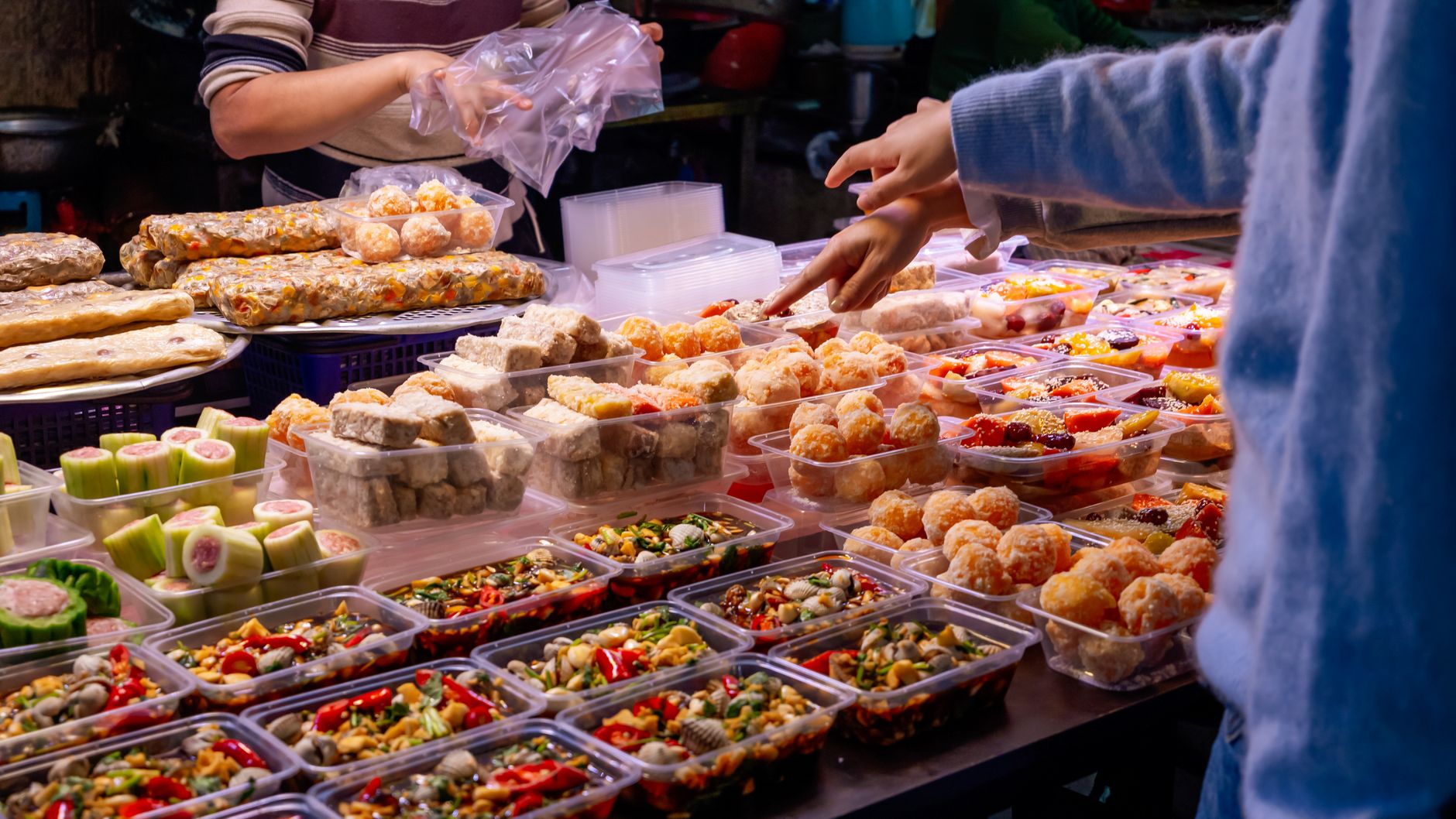
Top Street Foods to Try
Street food is the main draw for most visitors to Chinese night markets. Dishes vary widely by region, but many popular snacks are available across the country. As of November 2026, most street food items cost between ¥3 and ¥20 (US$0.40–$2.75), with tier-1 cities like Shanghai and Beijing priced 20–30% higher than smaller inland cities.
Universal Street Snacks (Available in Most Markets)
- Jianbing (savory Chinese crepe): A crispy wheat or mung bean crepe cooked on a flat griddle, topped with egg, scallion, cilantro, crispy fried dough, and sweet bean sauce. Costs ¥8–¥15 per serving.
- Chuanr (grilled skewers): Small pieces of meat, vegetables, or tofu grilled over charcoal and seasoned with cumin, chili powder, and salt. Lamb and beef skewers are the most common. Costs ¥2–¥10 per stick.
- Tanghulu (candied fruit skewers): Fresh fruit (traditionally hawthorn, now often strawberry, grape, or kiwi) dipped in melted rock sugar and left to harden into a crisp shell. Costs ¥5–¥12 per skewer.
- Stinky tofu (chou doufu): Fermented tofu deep-fried until crispy on the outside, served with chili sauce, pickled cabbage, or garlic sauce. The strong smell is characteristic, but the flavor is mild for many first-timers. Costs ¥6–¥15 per serving.
Regional Specialties to Look For
- Guangdong/Guangzhou: Fish balls, char siu skewers, double-skin milk, mango pomelo sago
- Chengdu/Sichuan: Spicy maocai skewers, dan dan noodles, boboji chicken skewers
- Xi’an/Shaanxi: Roujiamo pork buns, liangpi cold noodles, persimmon cakes
- Shanghai/Jiangsu: Shengjian bao pan-fried pork buns, scallion oil noodles, osmanthus cake

What to Buy at Chinese Night Markets
Night markets sell a wide range of affordable goods, from souvenirs to everyday apparel. Most non-food items are open to bargaining, while food and drinks have fixed prices. As of November 2026, mobile payment via Alipay and WeChat Pay is accepted at nearly all stalls, but older or smaller vendors may only take cash. Carry small RMB bills (¥10, ¥20, ¥50) for convenience.
Popular Souvenir Categories
- Handicrafts: Paper cuttings (¥5–¥30), Chinese knot ornaments (¥10–¥50), small porcelain tea cups (¥20–¥100), calligraphy brushes, and hand-painted fans. These make lightweight, easy-to-pack souvenirs.
- Apparel and accessories: Printed t-shirts with Chinese characters or motifs (¥20–¥80), embroidered cloth shoes (¥50–¥150), silk scarves (¥30–¥200; note that many cheap scarves are synthetic, so ask for 100% silk if you want real silk), and canvas tote bags. Sizes run smaller than US/EU standards, so try on items if possible.
- Packaged snacks: Dried fruits and nuts (¥20–¥50 per 500g), spicy gluten strips (latiao), tea samples (¥10–¥50 per pack), and seasonal treats like mooncakes or rice cakes. These are good for bringing home to friends and family.
Bargaining Tips
- Only bargain for non-food items; food, drinks, and marked fixed-price items are non-negotiable.
- Start at 50–60% of the asking price, and settle for around 70% in most cases.
- Keep the exchange friendly and polite; bargaining is a casual social custom, not a fight.
- Walk away if you cannot agree on a price – many vendors will call you back with a lower offer.
Top Night Markets to Visit Across China
With thousands of night markets across China, choosing which ones to visit depends on your itinerary. Below are five well-regarded markets popular with international travelers, each with a distinct local character. As of November 2026, opening hours are consistent, but may shift during holidays or bad weather; confirm before you go.
- Wangfujing Snack Street (Beijing): The most famous tourist-focused night market in Beijing, located near the Wangfujing shopping district. It is known for its wide range of snacks, from standard jianbing and chuanr to more exotic options like scorpion and silkworm skewers. Open 5pm–10pm daily, accessible via Subway Line 1 Wangfujing Station.
- Huimin Jie (Muslim Quarter) Night Market (Xi’an): A historic market run by the local Hui Muslim community, located near the Xi’an Drum Tower. It is best known for lamb skewers, roujiamo, persimmon cakes, and other northwest Chinese specialties. The street is lined with traditional architecture and is open 6pm–11pm daily.
- Jinli Ancient Street Night Market (Chengdu): A pedestrian street near Wuhou Shrine, decorated with traditional Sichuan-style wooden buildings. It offers Sichuan spicy snacks, Shu embroidery handicrafts, and occasional Sichuan opera face-changing performances. Open 5pm–10:30pm daily, accessible via Subway Line 3 Gaoshengqiao Station.
- Shangxiajiu Pedestrian Street Night Market (Guangzhou): A classic Cantonese night market in Liwan District, lined with colonial-era arcade buildings (qilou). It serves authentic Cantonese snacks like double-skin milk, fish balls, and shrimp dumplings, and sells traditional Cantonese handicrafts like Canton enamel and embroidered handkerchiefs. Open 6pm–11pm daily, accessible via Subway Line 1 Changshou Road Station. HXXC Travel’s Jiangmen-based advisors frequently recommend this market for visitors starting their trip in the Pearl River Delta.
- Yuyuan Garden Night Market (Shanghai): A traditional-style market located near Yuyuan Garden, with red lanterns and wooden architecture. It serves Shanghainese snacks like shengjian bao and osmanthus cake, and sells souvenirs like silk products and jade ornaments. Open 5pm–9:30pm daily, with extended hours during holiday lantern festivals.
Etiquette and Practical Tips for First-Time Visitors
Chinese night markets have unwritten rules that can confuse first-time international visitors. Follow these tips for a smooth experience:
- Queuing: Stand behind the last person at food stalls and wait your turn. Cutting in line is considered very rude.
- Eating: Eating while walking is acceptable. If you sit at a stall’s table, order at least one item from that vendor.
- Trash: Public bins are often limited; carry a small bag to hold trash until you find one.
- Allergies: Carry a Chinese translation of your allergy information, as shared cooking equipment makes cross-contamination common for severe allergies. HXXC Travel provides translated allergy cards for guests on custom tours.
- Safety: Night markets are generally safe, even for solo travelers, but keep your phone and wallet secure in crowded areas to avoid pickpocketing.
- Tipping: Tipping is not expected at street stalls or small shops, and rounding up the bill is unnecessary.
References & Updates
This guide is reviewed and updated monthly by HXXC Travel’s on-the-ground team of travel advisors based in Jiangmen, Guangdong. The current version was last updated on October 23, 2026.
Time-sensitive details (including opening hours, prices, and payment policies) are marked with their effective date. Always confirm these details directly with local venues before your trip, as schedules and policies can change without notice.
For custom China itineraries that include guided night market visits and local food experiences, reach out to HXXC Travel’s team for personalized recommendations based on your travel dates and destinations.
FAQ
Are Chinese night markets safe for solo travelers?
Yes, Chinese night markets are generally very safe for solo travelers, including women traveling alone. The crowds and active stall vendors create a low-risk environment. The main precaution to take is guarding your phone and wallet against pickpockets in very crowded areas.
What time do night markets in China usually open?
Most night markets open between 5pm and 6pm and close between 10pm and midnight, depending on the city and the time of year. Summer hours are often longer, while winter hours may start later and end earlier. Always check local listings for the latest times.
Can you use foreign credit cards at Chinese night markets?
As of November 2026, most night market stalls accept Alipay or WeChat Pay, which can be linked to foreign Visa, Mastercard, or American Express cards for small purchases. Some smaller or older vendors only accept cash, so carry small RMB bills as a backup.
Do you have to bargain at China night markets?
Bargaining is expected for non-food items like souvenirs, apparel, and handicrafts, but it is not required. If you are comfortable paying the asking price, you can buy the item directly. Food and drinks almost always have fixed prices and are not negotiable.
What is the most popular night market food in China?
Chuanr (grilled meat skewers) are the most widely available night market food across China, found in nearly every city and town. Jianbing (savory crepes) and tanghulu (candied fruit) are also extremely popular nationwide.
Related private tours
- Guangzhou Heritage & Wildlife — Lingnan Culture Meets Chimelong Safari — 5 days
- Grand China Explorer — 15 Days — 15 days · From US$1,500
- Six Cities, One China — 15-Day Family Circuit — 15 days