The easiest way for first-time travelers to order Cantonese dim sum is to start with 3-4 classic core dishes per person, follow basic tea etiquette, and flag cart staff politely instead of waving or shouting. As of November 2026, most dim sum restaurants in Guangdong serve meals from 7am to 2pm, with average per-person costs ranging from 60-120 RMB depending on restaurant tier.
Dim sum is the core food experience for travelers visiting Guangdong province and the Greater Bay Area, tied to the local tradition of yum cha, or "drinking tea" with friends and family. Unlike formal restaurant meals, dim sum is designed for shared, slow eating, with small plates of steamed, fried, and baked dishes rolled between tables or ordered fresh from the kitchen.
Key facts at a glance
- Cantonese dim sum originated in Guangdong province, and is the core food component of yum cha, the traditional Guangdong tea meal.
- Standard dim sum serving hours at most traditional Guangdong restaurants are 7:00am to 2:00pm, with some high-end locations serving limited evening dim sum from 5:30pm to 9:00pm as of November 2026.
- Average per-person cost ranges from 40 RMB at local neighborhood spots to 80-120 RMB at mid-range family restaurants, and 200+ RMB at premium hotel locations.
- Dishes are sorted into three to four price tiers (small, medium, large, premium) marked on menus or cart tally cards, with small dishes starting at 12-18 RMB and premium dishes (such as abalone siu mai) costing 48-88 RMB.
- Tipping is not expected at most local dim sum restaurants; a 10-15% service charge is only added at high-end hotel or tourist-facing locations as of November 2026.
- All restaurants charge a per-person tea fee (3-10 RMB per head) that applies even if you do not drink tea, as it covers table service and hot water refills.
Core dishes for first-time orderers
You do not need to order a dozen dishes to have a good dim sum meal. For a group of 2-3 people, 4-5 total dishes is a standard amount, with a mix of steamed, fried, and sweet options to balance flavors and textures. Order all dishes at once if using a paper menu, or start with 2-3 staples and add more as you go if ordering from carts.
Steamed staples (order 2 per table first)
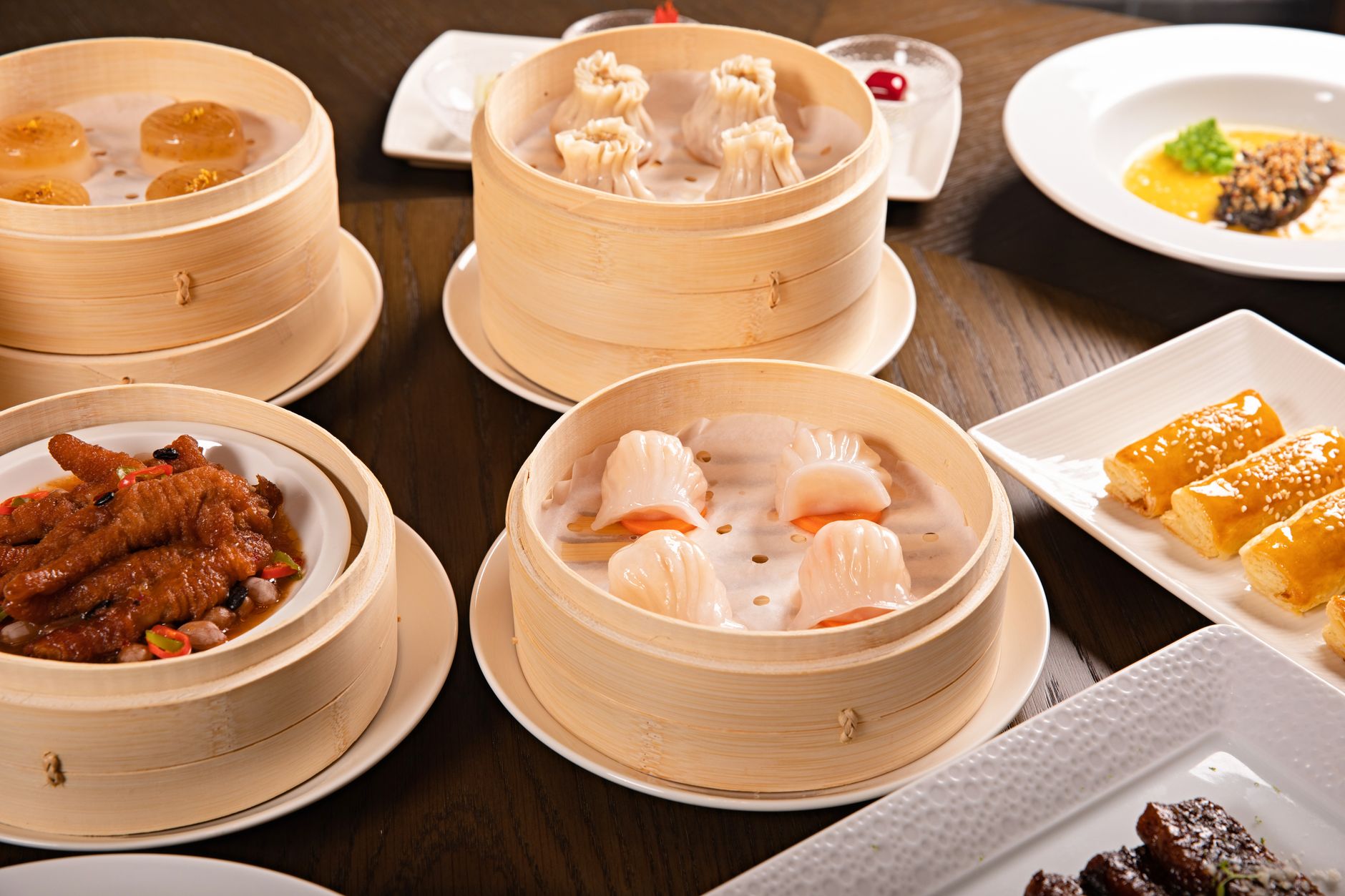
- Har gow: Translucent shrimp dumplings, the universal benchmark for dim sum quality. A well-made har gow has a thin, non-sticky wrapper with at least one whole shrimp inside, served 3-4 pieces per steamer basket.
- Siu mai: Open-topped pork and shrimp dumplings, often topped with a small dot of crab roe or shiitake mushroom. Served 4 pieces per basket, this dish is available at every dim sum restaurant regardless of price tier.
- Char siu bao: Soft, fluffy steamed buns filled with sweet, slow-roasted barbecued pork. Two versions are common: the traditional white steamed bun, and a baked variant with a crumbly sugar-glazed top, served 3 pieces per basket.
- Cheong fun: Wide, smooth rice noodle rolls filled with shrimp, beef, char siu, or served plain, dressed with a light savory soy sauce. These are very filling, so one order per table is enough for most groups.
Fried and baked dishes (order 1 per table)
- Wu gok: Deep-fried taro croquettes filled with savory minced pork, with a shatteringly crisp outer layer. These are served very hot, so allow 1-2 minutes to cool before eating to avoid burns.
- Pan-fried turnip cake: Sliced cakes made from shredded white radish and rice flour, mixed with dried shrimp and Chinese sausage, seared until crispy on both sides. Chili oil is available on request as a dipping sauce.
- Egg tarts: Small baked custard tarts with a flaky pastry shell, best served warm. Most restaurants make fresh batches every 45 minutes during peak service, so ask staff when the next fresh batch will arrive if you want the best version.
Sweet and shared sides (order 1 per table)
- Mango pudding: Chilled coconut and mango gelatin dessert, often served with a small pour of evaporated milk. This light, non-greasy option balances heavier fried and meat-heavy dishes.
- Lo mai gai: Glutinous rice wrapped in a lotus leaf, filled with chicken, mushroom, and sometimes salted egg yolk. This is one of the most filling dim sum dishes, so one order is enough for 3-4 people to split.
How to navigate ordering: push carts vs paper menus
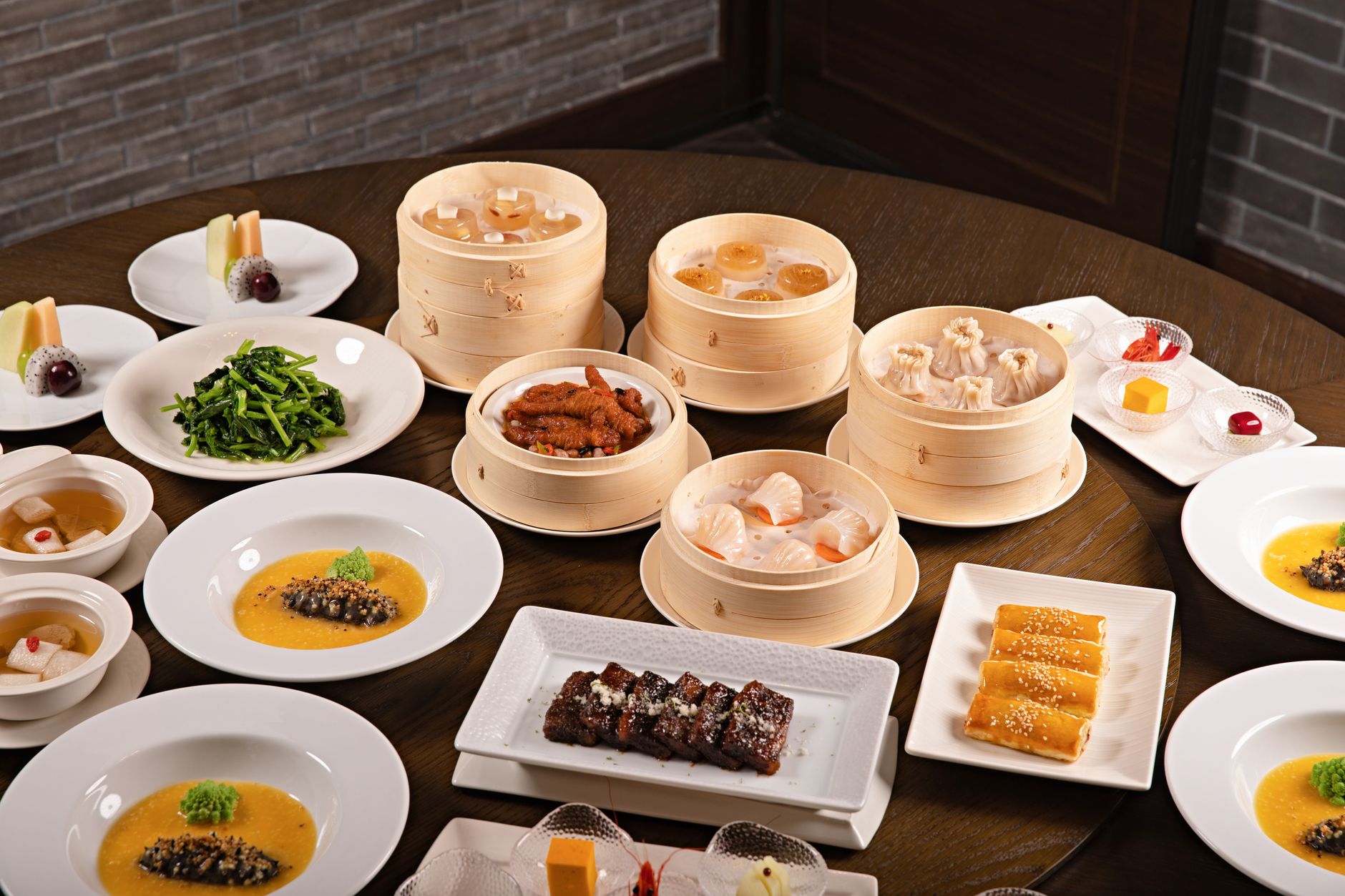
Older, neighborhood dim sum restaurants use push carts that roll along dining aisles, stacked with metal steamer baskets of pre-cooked dishes. Each cart is staffed by a server who marks a paper tally card kept on your table when you select a dish. You do not need to flag every cart that passes; simply make eye contact and point to the dish you want when a cart is near your table. The number of marks on your tally card is used to calculate your final bill.
Newer and mid-range restaurants use paper tick sheets or QR code menus, where you select dishes on paper or via a smartphone interface, and food is cooked fresh and brought directly to your table. For first-time travelers who do not read Chinese, QR code menus usually have English translations and photos, though translations are often inconsistent. If you are unsure what to order, you can point to dishes on nearby tables, or ask staff to bring the three core staples (har gow, siu mai, char siu bao) to start.
A common expensive mistake for first-timers is taking dishes from a cart without confirming the price tier. Premium dishes such as lobster dumplings or bird's nest tarts are served on distinct colored plates or marked with a special stamp, and can cost 3-4 times as much as standard dishes. If you are unsure of a dish's price, hold up one finger to ask for the cost before taking it; staff will point to the relevant price tier on your tally card.
Basic dim sum etiquette to avoid missteps
Dim sum has a small set of unwritten rules that are easy to follow, even for first-time visitors:
- Tea etiquette: When a server refills your teacup, tap two fingers on the table twice as a quiet, informal thank you. This custom dates to the Qing dynasty, and is used across all dim sum restaurants in Guangdong. If your teapot is empty, prop the lid at an angle on top of the pot instead of closing it fully; this is the universal signal that you need a hot water refill, and staff will attend to it without you needing to call out.
- Seating: During weekend peak hours (9am-11am), most busy neighborhood restaurants seat unrelated groups at shared tables to save space. This is standard practice, and you do not need to make small talk with other guests unless you want to. Do not leave bags or jackets on empty seats to hold space for late group members during peak hours, as staff will seat waiting guests in those spots.
- Shared food: Use the public serving chopsticks provided at the table to move food from shared steamer baskets to your own small plate, rather than using your personal chopsticks. Do not take the last piece of a dish from a shared basket without offering it to other people at your table first.
- Payment: At traditional cart restaurants, you take your stamped tally card to the front counter to pay when you are finished eating. At QR code restaurants, you pay directly through the smartphone order interface. As of November 2026, most mid-range dim sum spots in Jiangmen, Guangzhou, and Foshan accept international credit cards, but smaller family-run locations may only accept cash or local mobile payment. Carry 200 RMB in cash per person for small venue visits, and re-check payment options before traveling to restaurants outside major tourist areas.
Common first-timer mistakes to avoid
- Ordering too many starchy dishes first. It is easy to fill up on cheong fun, lo mai gai, and char siu bao before trying lighter seafood, vegetable, or dessert dishes. Start with 2 steamed staples, one fried dish, and one sweet dish for the table, then order more if you are still hungry.
- Adding large amounts of soy sauce or chili oil to every dish before tasting it. Most dim sum dishes are seasoned to the chef's specification, and over-saucing will overpower delicate flavors like the shrimp in har gow or the custard in egg tarts. Condiments are available on request for diners who prefer extra seasoning.
- Waving or shouting to get staff attention. Dim sum restaurants are loud during peak hours, but staff regularly circle every section of the dining room. If you need assistance, make quiet eye contact and raise your hand slightly; using the propped teapot lid signal for refills is always faster than calling out.
- Rushing the meal. Dim sum is designed to be a slow, social meal, especially on weekends when local families gather. Dishes may come out at staggered times, and there is no expectation that you will leave immediately after finishing your food. Many local diners stay for 2-3 hours chatting, reading, and drinking tea after their meal.
Where to try dim sum in the Greater Bay Area
In Guangzhou, long-running traditional dim sum restaurants are clustered in the historic Liwan district, with some locations operating continuously since the 1930s. In Jiangmen, where HXXC Travel is based, neighborhood dim sum spots in the Pengjiang district serve local specialties including water chestnut cake and braised duck feet wrapped in lotus leaf, which are less commonly found in Guangzhou or Shenzhen.
For first-time travelers who do not speak Cantonese or Mandarin, HXXC Travel's guided Greater Bay Area day tours include escorted dim sum meals with a local food guide, who will handle all ordering, explain dish origins, and walk through etiquette steps so you do not have to navigate the process alone. As of November 2026, all HXXC food tour stops are family-run local restaurants, with no pre-set tourist menus or marked-up pricing for visitors.
Frequently asked questions
How much does dim sum cost per person in Guangdong?
As of November 2026, budget neighborhood dim sum spots cost 40-60 RMB per person, mid-range restaurants popular with local families cost 80-120 RMB per person, and high-end hotel or premium restaurants cost 180-300 RMB per person. Tea fees are charged separately at 3-10 RMB per person, and tipping is not required at most non-tourist locations. Re-check pricing at individual restaurants before visiting, as rates may rise during national holiday periods.
Do I need to tip at dim sum restaurants in China?
Tipping is not expected at local, family-run dim sum restaurants across Guangdong, and staff may refuse cash tips if offered. A 10-15% service charge is automatically added to bills at most high-end hotel restaurants, international chain locations, and tourist-focused venues in major cities, so there is no need to add extra tip on top of that charge.
What time is dim sum served?
Most traditional dim sum restaurants serve dim sum from 7am to 2pm daily, with the busiest period between 9am and 11am on weekends. A smaller number of restaurants offer evening dim sum service from 5:30pm to 9pm, but these are mostly higher-end locations, as dim sum is traditionally a breakfast and lunch meal.
Can vegetarians order dim sum easily?
Most dim sum restaurants offer a small selection of vegetarian dishes, including steamed vegetable dumplings, pan-fried turnip cake, egg tarts, mango pudding, and steamed buns filled with sweet red bean paste. However, many dishes that appear vegetarian (including some cheong fun and turnip cake recipes) contain dried shrimp or pork for added flavor, so it is best to ask for a dedicated vegetarian menu or travel with a translator if you follow a strict vegetarian or vegan diet.
Related private tours
- Guangzhou Heritage & Wildlife — Lingnan Culture Meets Chimelong Safari — 5 days
- 25-Day China Cross-Country Travel Itinerary — 25 days
- Best of China — 19-Day Private Tour — 19 days · From US$2,450