
Seven days is enough for a first trip to China: spend 3 nights in Beijing, 2 in Xi'an and 2 in Shanghai, link them by high-speed rail, and you can see the Forbidden City, the Great Wall, the Terracotta Army and the Bund without ever rushing. This guide lays out the exact day-by-day plan, train times, ticket prices and visa rules as of November 2026.
Why Beijing, Xi'an and Shanghai Work in One Week
These three cities cover the three Chinas first-time visitors most want to see: imperial Beijing with the Forbidden City and the Great Wall, ancient Xi'an with the Terracotta Army, and modern Shanghai with its riverfront skyline. They sit on a rough diagonal across eastern China, and the high-speed rail network makes the hops painless — no domestic flight is needed for the first leg, and only one optional flight at the end.
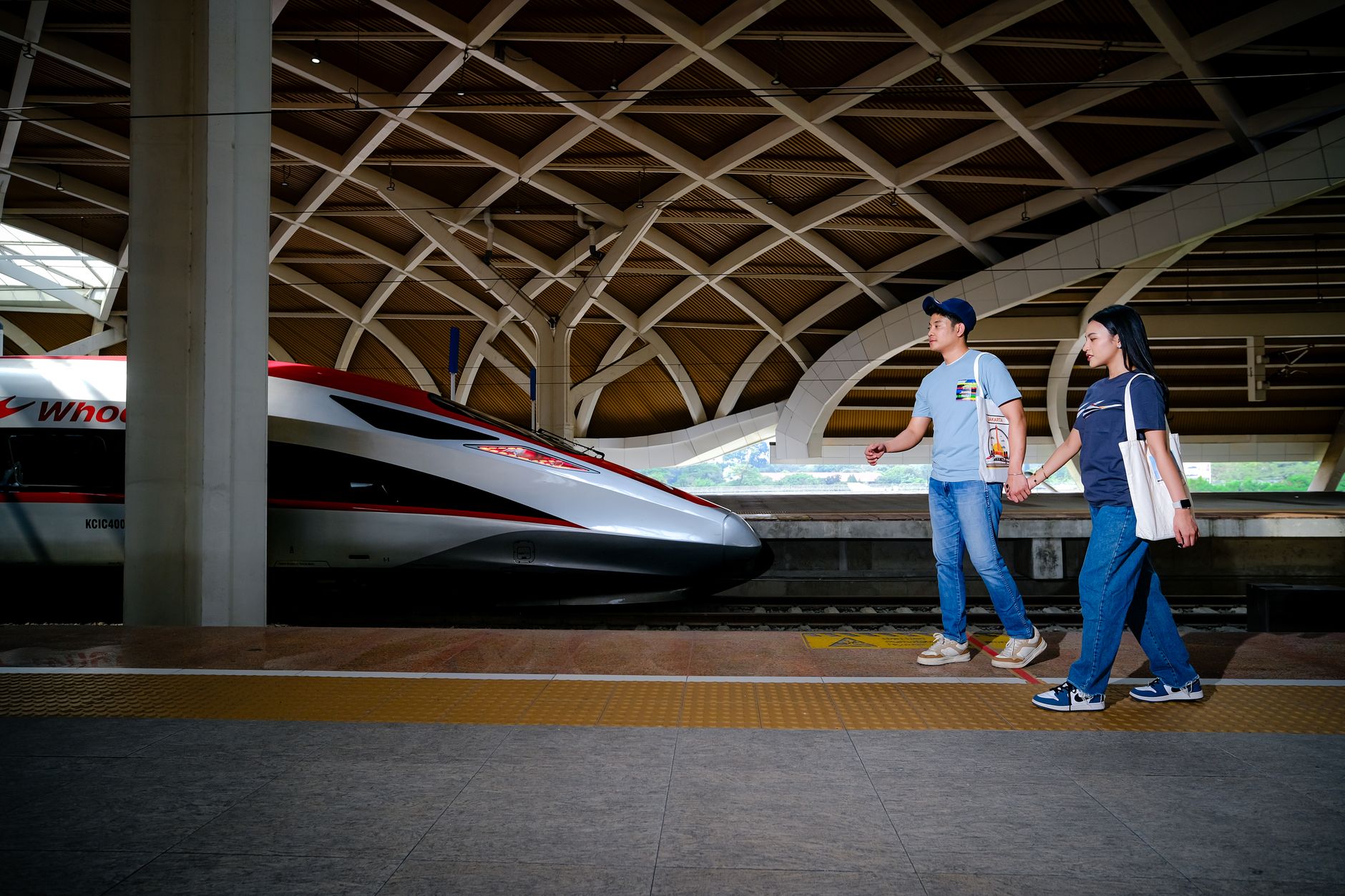
- Beijing to Xi'an: G-series high-speed trains run from Beijing West to Xi'an North in roughly 4.5 to 6 hours; second-class seats typically cost ¥500–600 (about US$70–85).
- Xi'an to Shanghai: trains from Xi'an North to Shanghai Hongqiao take about 6 to 7.5 hours (¥550–700 second class). Flights from Xi'an Xianyang to Shanghai take about 2.5 hours and save daylight hours.
- As of November 2026, tickets for both routes go on sale about 15 days in advance on the official 12306 app (English version available) or via Trip.com. Schedules change, so re-check times before you travel.
Visa Rules for a One-Week Trip (as of November 2026)
Entry rules have loosened sharply since 2023, and a one-week trip now fits inside several visa-free routes.
- Citizens of 50 countries — including most EU member states, Australia, New Zealand, Japan, South Korea, Singapore, Malaysia and Thailand — can enter visa-free for up to 30 days under a policy extended through the end of 2026.
- US, UK and Canadian passport holders are generally not on that list but can use the 240-hour visa-free transit scheme: up to 10 days, travel across provinces allowed, as long as you enter and exit through approved international ports and continue onward to a different country or region.
- Carry your passport at all times; it is your ID for trains, hotels and every major attraction.
- Country lists and transit rules have changed several times. Confirm current requirements with China's National Immigration Administration or your airline before booking flights.
Days 1–3: Beijing
Beijing gets three nights because it has the most ground to cover: two palace-scale sights plus a wall day trip.
Day 1: Arrive and Walk a Hutong
Fly into Beijing Capital (PEK) or Daxing (PKX); either airport takes 45 to 90 minutes to reach the city center. Keep the first day light to shake off jetlag: wander the Nanluoguxiang hutong lanes, loop the Shichahai lakes and pass the Drum and Bell Towers, then eat early — a bowl of zhajiang noodles or Mongolian hotpot both work.
Day 2: Tiananmen Square and the Forbidden City
Start at Tiananmen Square, which requires a free advance reservation as of November 2026 (your hotel or tour operator can arrange it, or book through the official WeChat mini program). The Forbidden City next door is closed on Mondays and releases tickets about seven days ahead; entry runs around ¥60 in high season. Walk it south to north through three to four hours of halls and courtyards — it is the largest palace complex in the world — then exit the north gate and climb Jingshan Park (¥2) for the classic panorama over the golden roofs. Book a Peking duck dinner at a spot such as Siji Minfu or Da Dong.
Day 3: The Great Wall at Mutianyu
Mutianyu, about 90 minutes northeast of the city, is the best wall section for a first visit: fully restored, far quieter than Badaling, with a cable car up and a toboggan ride down. Budget ¥150–250 per person all-in for entry, shuttle and cable car, and leave the city by 8 a.m. to have the ramparts nearly to yourself. Back by mid-afternoon, you have time for the Summer Palace if you still have energy — or a nap, which is also a valid itinerary item. This is the one day where a private transfer or small-group tour earns its cost; HXXC Travel includes Mutianyu transfers and wall tickets in its Beijing programs, which removes the ticket-office queue entirely.
Days 4–5: Xi'an
Xi'an was the capital of 13 dynasties and the eastern gateway of the Silk Road; two days covers its two headline sights comfortably.
Day 4: High-Speed Rail In, City Wall by Bike
Catch a morning G-train from Beijing West to Xi'an North (4.5 to 6 hours), check in near the Bell Tower or the South Gate, and spend the afternoon on the Ming-dynasty City Wall. The 14-kilometer rectangle is one of the best-preserved city walls in China; rent a bicycle on top (around ¥45 for three hours on top of the ¥54 entry fee) and ride it as the light turns gold. At night, eat your way through the Muslim Quarter: roujiamo (braised meat in flatbread), yangrou paomo (crumbled flatbread in mutton soup) and hand-pulled biangbiang noodles.
Day 5: The Terracotta Army and the Big Wild Goose Pagoda
Dedicate the morning to the Terracotta Army in Lintong District, about an hour east of downtown by tourist bus 5 (route 306) or taxi. Entry runs around ¥120 in high season; tickets are tied to your passport, so book online in advance and bring the passport itself. Pit 1, with several thousand life-size warriors, is the showpiece, and the full visit with Pits 2 and 3 and the bronze chariots takes about three hours on site. The army was built for China's first emperor, Qin Shi Huang, and was discovered by farmers digging a well in 1974.
Spend the afternoon back in town at the Big Wild Goose Pagoda, a Tang-dynasty Buddhist site linked to the monk Xuanzang (entry around ¥50, small extra fee to climb), or at the free Shaanxi History Museum if you managed to reserve tickets days ahead. In the evening, the fountain show on the pagoda's North Square is free; check local listings for times.
Days 6–7: Shanghai
Shanghai closes the trip with a change of pace: riverfront skyline, garden lanes and the easiest international departures.
Day 6: Rail to Shanghai, the Bund at Dusk
Take a morning train from Xi'an North to Shanghai Hongqiao (6 to 7.5 hours) or a 2.5-hour flight if you want more time on the ground. Drop bags near People's Square or the Bund, then spend late afternoon at Yu Garden (entry around ¥40) and the surrounding City God Temple bazaar, where the Nanxiang steamed-bun shop sells xiaolongbao worth the queue. Walk Nanjing Road east to the Bund and time it for dusk: the lights across the Huangpu River switch on over the Pudong skyline — the Oriental Pearl Tower, Shanghai Tower and their neighbors — and usually stay on until about 10 p.m. The Bund itself is free.
Day 7: Shanghai Tower, Then Fly Home
Ride to the 118th-floor observation deck of the 632-meter Shanghai Tower (around ¥180–200) for the wide view over Lujiazui, or spend the morning in the former French Concession — Wukang Road, Anfu Road and Tianzifang are all walkable, cafe-lined streets. The Shanghai Museum is excellent and free, but reserve ahead. For departure, Hongqiao Airport (SHA) handles most domestic flights; Pudong (PVG) handles most international ones, and the Maglev from Longyang Road station covers that trip in about 8 minutes (around ¥50 one-way as of November 2026, discounted if you show a same-day air ticket).
What One Week Costs (Per Person, Ballpark)
- High-speed rail, both legs in second class: ¥1,050–1,300 (about US$150–180).
- Major entries — Forbidden City, Mutianyu with cable car, City Wall and bike, Terracotta Army, Yu Garden, Shanghai Tower: roughly ¥500–650 combined.
- Mid-range hotels: ¥400–700 (US$55–100) per night for a double in a central location.
- Food and local transport: ¥100–200 per day is comfortable.
- All in, excluding international flights, most travelers land between US$800 and US$1,200 for the week.
Practical Tips for First-Timers
- Carry your passport everywhere. Stations, hotels and attractions all scan it, and train tickets are issued to your ID.
- Set up Alipay or WeChat Pay before departure; both link international Visa and Mastercard cards, and cash is rarely used.
- Google Maps, Gmail, WhatsApp and Instagram do not work on the mainland network without a VPN. Download offline maps before arrival, or use Amap or Apple Maps, which work without one.
- Book rail tickets about 15 days out, and reserve the Forbidden City and Terracotta Army as early as your dates allow — they sell out in April–May, July–August and around Golden Week.
- Avoid the first week of October (National Day Golden Week) and Chinese New Year. Late October, when this was written, is shoulder season: mild days in all three cities and thinner crowds.
- The route is very doable independently, but if you would rather hand off the reservations and station logistics, HXXC Travel — a China inbound operator based in Jiangmen, Guangdong — runs this three-city week with English-speaking guides and all bookings included.
FAQ
Is 7 days enough for a first trip to China?
Yes. Three nights in Beijing, two in Xi'an and two in Shanghai covers the headline sights at a sane pace. You will skip secondary stops such as the Summer Palace, Mount Hua or the Suzhou water towns, but nothing on the main list gets shortchanged.
Do I need a visa for a 7-day trip to China?
As of November 2026, citizens of 50 countries — most of the EU, Australia, New Zealand, Japan, South Korea, Singapore, Malaysia and Thailand — enter visa-free for up to 30 days. US, UK and Canadian passport holders can usually use the 240-hour visa-free transit scheme instead, provided they continue onward to a different country or region. Verify before booking; the lists change.
What is the best time of year for Beijing, Xi'an and Shanghai?
Mid-April to early June and September to early November give the best mix of weather and crowds. Late October is a sweet spot; avoid Golden Week (the first week of October) and Chinese New Year.
Should I take the train or fly between cities?
Take the train from Beijing to Xi'an — 4.5 to 6 hours, city center to city center, no airport detour. For Xi'an to Shanghai, either works: about 6 to 7.5 hours by rail versus 2.5 hours flying plus airport transfers. Choose the flight only if you want more afternoon time in Shanghai.
How much does a 7-day China trip cost?
About US$800–1,200 per person excluding international flights, based on second-class rail, mid-range hotels and paid entries. Privately guided versions of the same route through operators like HXXC Travel cost more but include transfers, tickets and an English-speaking guide — ask for a quote against your dates.
Related private tours
- Best Of China — 20-Day Private Tour — 20 days
- Golden Triangle — Beijing, Xi'an & Shanghai — 10 days · From US$1,000
- Imperial China Family Grand Tour — 17 Days with Disneyland — 17 days